

Everyone’s a builder.
AI AppGen Security keeps them building.
AI application generators let anyone in your organization ship a new production app in hours. Your security stack isn’t built for this.
The Challenge
Shadow IT used to be a SaaS subscription. Now it’s a running application built outside traditional pipelines.
The teams building with AI app generators don’t file a ticket or loop in security. You don’t know these apps exist unless someone tells you. This is the next generation of shadow AI and it exists across every department of your business.
Citizen developers create apps with a business challenge in mind, not security.
AI-generated apps with public URLs and crown-jewel access put data at risk.
Existing security tools only see fragments of these AI-generated apps.
CEO Perspective
A message from Gil Geron Co – Founder and CEO
The number of builders in your organization just increased by an order of magnitude
Two years ago, “developer” meant actual headcount. Every developer’s output ran through pipelines your company controlled. That model worked because building was hard.
Building isn’t hard anymore. Anyone in the org, aka “citizen developers,” can ship an app in an afternoon on rented infrastructure, without ever touching an environment you monitor.
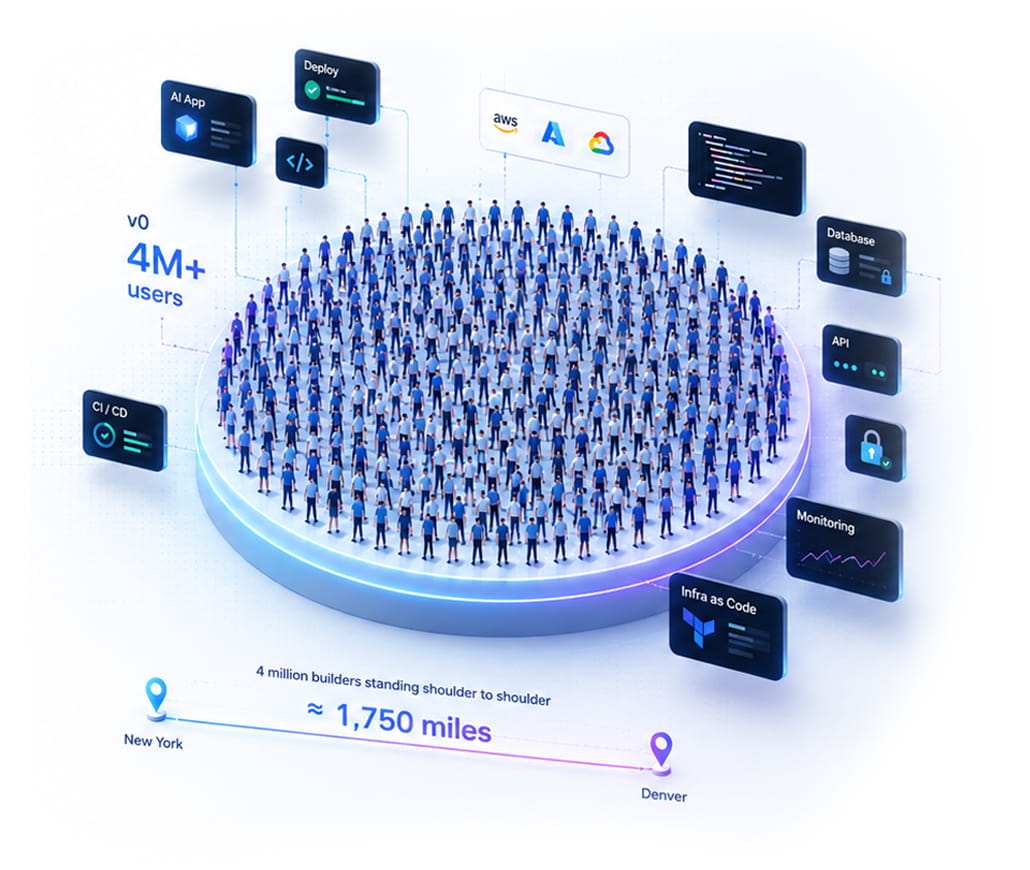
Vercel’s v0 crossed 4 million users in early 2026. Standing shoulder to shoulder, they’d form a line from New York to Denver, stretching roughly 1,750 miles.
The Orca Platform secures both cohorts of builders: traditional developers across code, cloud, and AI, and citizen developers with AI AppGen security.
AI-generated apps live on rented infrastructure
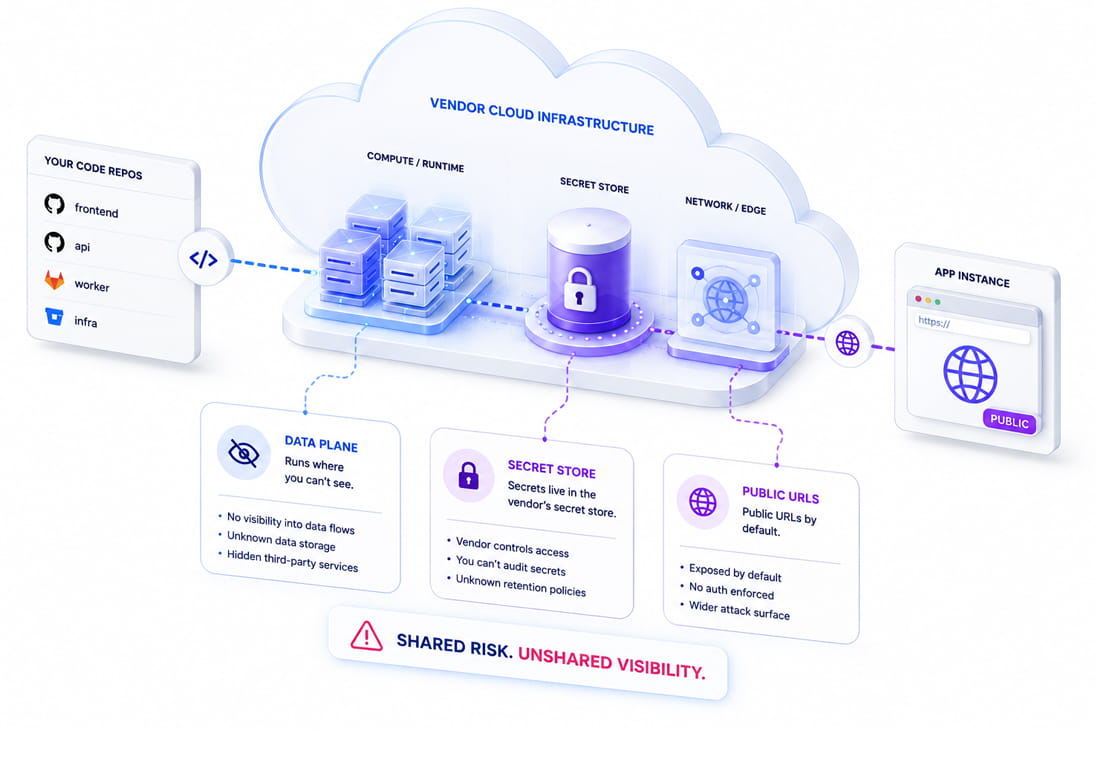
When your team publishes an app on an AI AppGen Platform, the app runs in the vendor’s cloud infrastructure, but the code repos are your own. You should have questions, because this creates shared risk with unshared visibility.
- The data plane runs where you can’t see.
- Secrets live in the vendor’s secret store.
- Apps ship with public URLs by default, circumventing any proper authentication or authorization.
The number of platforms your team now has to monitor has exploded from 5 cloud service providers to the 50+ vendors that support AI AppGen infrastructure and ecosystem.
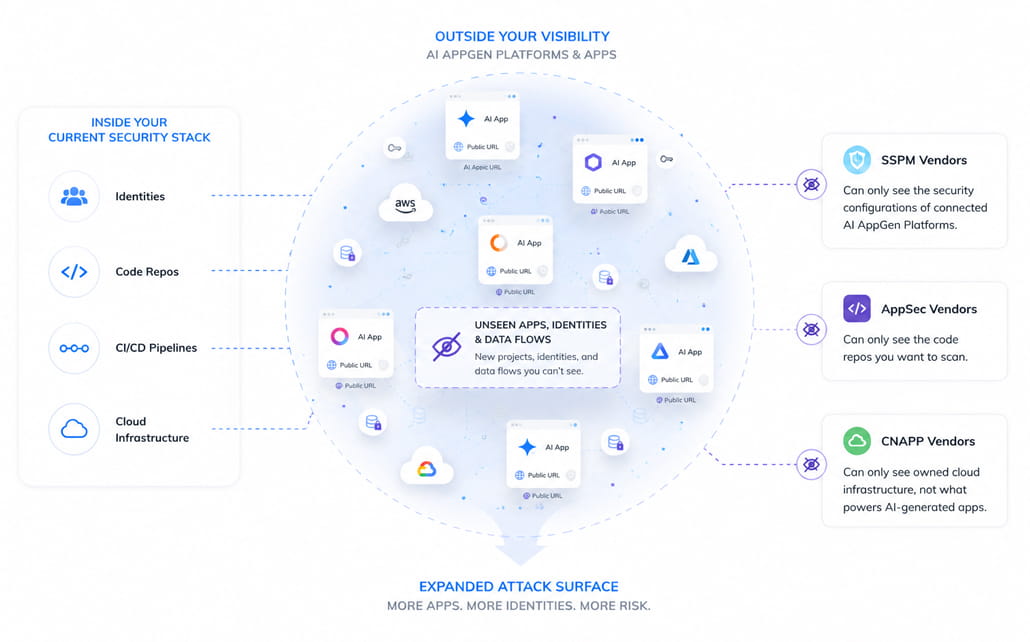
The attack surface extends beyond your current security stack
Every new builder is a new identity, a new project, and a new data flow outside your pipelines.
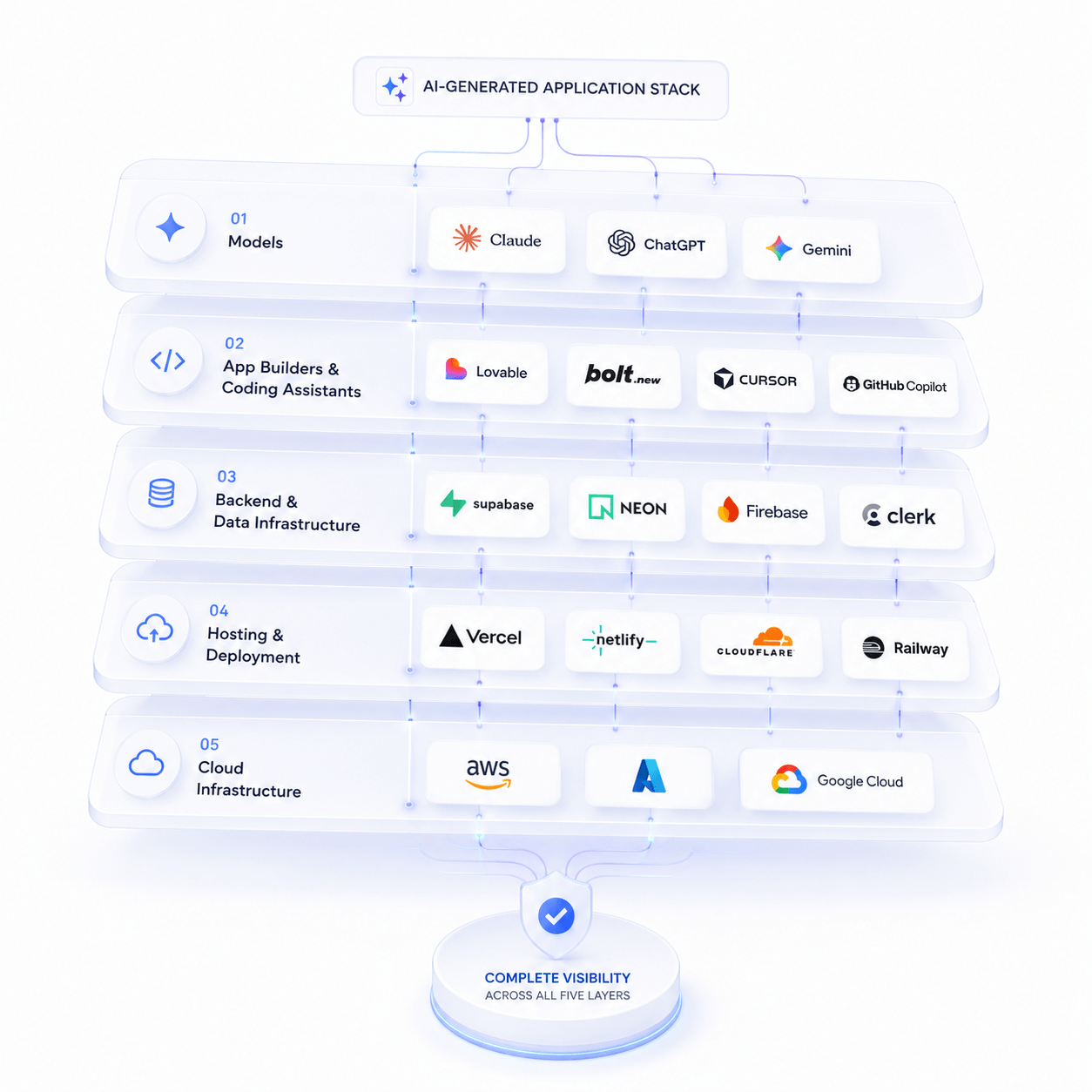
Securing AI-generated apps means securing all five layers
To provide comprehensive visibility, AI AppGen security platforms cover 5 key areas of AI-generated apps:
- Foundation models
- AI app builders & coding assistants
- Backend & data infrastructure
- Hosting & deployment tools
- Cloud infrastructure
Related Resources



Orca Security Extends Its Platform to the New Generation of AI Builders
Ahead of Black Hat USA 2026, Orca unveils AI AppGen Security and AI Code Security Auditor, giving security teams one…
Security for the Way You Work: Orca Integrates with Claude’s Compliance API
Anyone who can prompt Claude is now a builder. Engineers are writing code with it. Analysts are drafting research with…
2026 State of AI Security Report
In-Depth Research 2026 State of AI Security Report AI Security Findings from 1,200+ Production Organizations Get the Report AI Adoption…
Frequently Asked Questions
AI AppGen Security is posture management for applications built on AI app generator platforms like Replit, Lovable, Vercel, and Bolt. These tools let anyone in an organization describe an app and deploy it live in minutes, often without authentication, access controls, or IT and security involvement. AI AppGen Security continuously discovers these apps, identifies the misconfigurations they ship with by default, and connects each finding to the surrounding cloud environment so security teams know what’s actually exposed.
CNAPP, AppSec, and SSPM tools all assume you already know an app or platform exists before you can secure it: CNAPP covers cloud accounts your team provisions, AppSec scans code repos you point it to, and SSPM checks configurations of platforms you’ve connected. AI AppGen Security starts from a different assumption: most AI-generated apps are never reported to security in the first place. It discovers these apps directly from the cloud estate, rather than depending on someone opting in or pointing a scanner at a known repo.
AI app generators optimize for a working app, not a secure one, so they frequently skip authentication, leave production URLs public by default, and store secrets in plaintext. Independent research has found vulnerabilities in AI-generated code at roughly 2.7x the rate of human-written code, and one widely cited scan uncovered hundreds of thousands of publicly accessible AI-built apps, with thousands exposing sensitive corporate data. Because these apps typically bypass IT and security review entirely, no one owns their security lifecycle.
Orca extends the same agentless discovery it already uses to detect shadow AI across the cloud estate to AI AppGen platforms, so it can surface apps built on these tools. Orca evaluates risk in the context of your broader cloud environment, checking whether it’s internet-facing, whether it touches sensitive data, and how it connects to identities and attack paths. That combination is what separates discovery-first coverage from tools that can only assess an app once someone has already pointed them at it.
AI AppGen Security is a capability within Orca’s existing AI Security, not a standalone tool. Security teams already using Orca to detect shadow AI, models, and data across the cloud estate get AI-generated application coverage through the same platform, with findings prioritized in the same unified risk model as the rest of their cloud environment. That means no new console to manage and no additional point tool to fold into an already sprawling AI security stack.
Get Notified About New AI AppGen Security Capabilities
AI app generators make everyone a builder. Stay in the know as Orca provides the governance, controls and security for this emerging attack surface.