




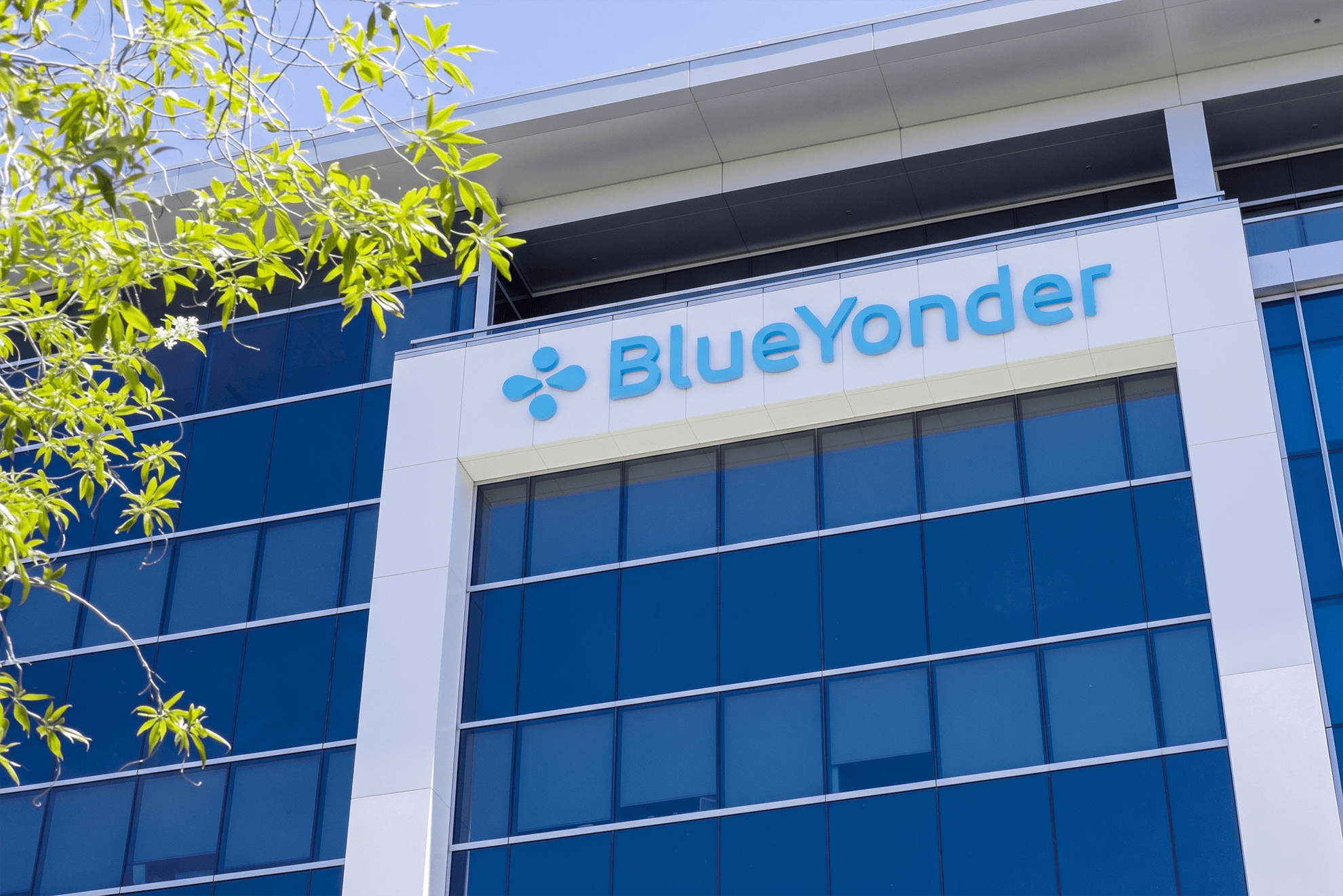
Blue Yonder is a global supply-chain software company undergoing large-scale cloud modernization. Like many enterprises moving from on-premises infrastructure, they inherited a fragmented security tooling environment with no cloud-native visibility and no clear path to correlate risk.
The real problem wasn’t tool count. It was clarity.” We had security activity, but no confidence it was actually driving risk down,” Erika Voss recalls. For a company where supply-chain continuity is business-critical, hidden exposures posed existential risk.
Security leaders also faced a translation problem: executives needed to understand cloud risk in business terms, not technical alerts. Engineers needed actionable guidance, not overwhelming backlogs of uncontextualized findings. The existing toolset couldn’t speak both languages and couldn’t scale without adding more people to the triage machine.
Blue Yonder didn’t default to the most visible vendor. They deliberately sought out Orca. They benchmarked Orca head-to-head against high-visibility vendors and intentionally chose Orca for three core reasons.
First, Orca’s risk-first philosophy cut through feature sprawl. Competitors were chasing breadth. Orca focused on “what actually matters.” Blue Yonder needed a platform that would align security decisions to business risk reduction, not feature accumulation. “Show me my biggest risk and how I drive it down. That’s where Orca shines,” Erika explains.
Second, Orca’s ability to communicate risk across organizational layers proved decisive. Risk scores, attack paths, and prioritization frameworks that executives understood. Remediation guidance that engineers could act on immediately. “I can put this in front of a CEO and they get it, and then an engineer can remediate it,” Erika notes.
Third, Blue Yonder wanted a multi-year platform partner aligned with their cloud-native future, not another tactical tool. Orca’s roadmap, including acquisitions like Opus for agentic remediation, signaled anticipation of where the industry was heading. The key distinction: Orca’s AI-assisted approach wasn’t about automating judgment away—it was about eliminating the analyst bottleneck so remediation could actually happen. AI handled correlation and contextualization; the team focused on meaningful technical remediation and building automation that scales.
Before Orca, Blue Yonder’s security team made sound risk decisions and said “no” when needed. But those decisions lived in siloed dashboards and technical reports. The gap wasn’t in their reasoning. It was in their ability to communicate it in ways that mattered to executives focused on business impact.
Orca closed that translation gap. Within weeks, Erika had what she needed: a way to frame security risk in business terms. Attack paths revealed how vulnerabilities could cascade into supply-chain disruption. “When we walked leadership through attack paths, they understood immediately,” Erika recalls. The team shifted from the ‘No’ team to the ‘Know’ team. They didn’t gain new knowledge. They finally found a way to translate the knowledge they already had. By framing risk in supply-chain terms (asset movement, disruption, impact), executives understood not just the “no”, but the business reason behind it.
Operationally, the impact was equally significant. Orca’s AI-powered contextual intelligence bucketed correlated vulnerabilities together, so a single patch could eliminate 10,000 to 20,000 related alerts. Instead of analyst teams drowning in uncontextualized findings, the security organization could focus on high-impact remediation and building meaningful automation. Teams moved from managing hundreds of uncontextualized alerts to working from a prioritized list of remediable risks. Remediation became achievable instead of overwhelming.
5 to 6 disconnected platforms became one unified platform powered by contextual intelligence and AI. Orca’s intelligent prioritization eliminated false positives competitors couldn’t match. Blue Yonder now has a single platform that speaks to the boardroom and engineering floor alike.
Erika has the CISO dashboard she needed to assess enterprise risk in minutes and tell the risk story to executives with confidence. She shifted resources from data consumption to automation and policy building. Most importantly, the team operates from a foundation of trust. “I can trust my data, I can trust my dashboard,” Erika emphasizes. “That’s the core foundation of any security team.”
For global enterprises undertaking cloud modernization, Blue Yonder’s experience shows how a risk-centric, executive-ready security platform powered by intelligent automation enables confident transformation while protecting business continuity.



Personalized Demo
Gain visibility, achieve compliance, and prioritize risks with the Orca Cloud Security Platform.
Chat with Us
Gain visibility, achieve compliance, and prioritize risks with the Orca Cloud Security Platform.
No Slack account required.
 Chat with an Orca Expert