
Orca Security vs Crowdstrike Falcon
One platform for cloud, code, and AI. No agents required.
CrowdStrike extended an endpoint platform into the cloud, and the architecture shows. Runtime protection requires Falcon sensors on every workload, AppSec isn’t native, and AI security is split across three products. Orca collects and connects risk across cloud, code, and AI in one data model, agentlessly, from day one.
to full Orca deployment, vs. months of agent rollout with the tool it replaced
Source: 360Learning Case Study
containers secured with zero agent injection
Source: Swiggy Case Study
to full cloud visibility across all accounts
Source: Paidy Case Study
Agentless for inventory. Sensors for everything that matters.
- Falcon’s agentless mode covers asset inventory and posture checks, the same class of visibility clouds offer natively
- Real runtime protection requires the Falcon sensor on every workload, and that sensor runs heavy
- Ephemeral containers and auto-scaling groups start unprotected and often never get a sensor
Full workload depth, no sensor required
- SideScanning™ reads workload snapshots directly through cloud APIs and surfaces malware, vulnerabilities, secrets, and PII at full depth. No agents, no DaemonSets, no coverage windows while a fleet catches up. Connect an account and reach complete visibility in 30 minutes.
No native application security, and AI security spread across three products
- No native SAST anywhere in Falcon. Application Explorer is runtime visibility, not static code analysis
- No pre-deployment SCA and no code-to-runtime tracing that ties a production alert back to the source file
- AI security is split across Falcon AIDR, Falcon Shield, and Project QuiltWorks, so the consolidation story breaks down where it counts
One platform, one data model, from code to cloud to AI
- Orca covers SAST, SCA with reachability, secrets, and AI Code Fix for code, CSPM, CWPP, CIEM, DSPM, API Security, and CDR for cloud, and AI-SPM for AI, all in one data model. Every finding carries the runtime context that tells you whether it actually matters.
How Orca compares to CrowdStrike
Capability by capability, across the dimensions that matter most to cloud security teams.
Security Solutions


Cloud
- Complete CSPM, CIEM, DSPM, API security, vulnerability management, CWPP, container, and Kubernetes coverage correlated in a single platform with a Unified Data Model
- Rich, multi-stage attack paths confirm which exposures are actually reachable and exploitable helping you prioritize by real impact rather than isolated severity
- Orca is powered by patented agentless SideScanning™ technology, giving you get deep, accurate, and actionable context for which risks matter, and which to fix first
- Falcon Cloud Security delivers CSPM, CIEM, and DSPM, with strong runtime threat detection rooted in the endpoint platform. However, DSPM only covers a defined set of managed data stores rather than the full estate meaning deep workload protection depends on a performance-heavy Falcon sensor per workload
- When Attack path and multi-cloud depth draw on separate Falcon modules such as Exposure Management and Insight XDR, full cloud coverage means running the sensor broadly and stitching modules together requiring you to adapt to Falcon’s scoring rather than tuning it to your environment
Code
- Complete application security coverage across SAST, SCA, secrets detection, IaC scanning, SCM posture, malicious-package detection, and container image scanning, correlated in one platform
- By connecting every finding to live cloud assets, Orca confirms real-world exposure and reachability, so prioritization reflects what’s actually exploitable rather than what’s merely flagged
- Powered by AI and unified cloud context, Orca seamlessly guides teams from discovery to in-code fixes that eliminate risk at the root and stop new risk before it ever hits production
- No native SAST, no pre-deployment SCA, and no code-to-runtime tracing that connects a production alert back to its source
- While Application Explorer does provide runtime application visibility, Charlotte AI is only focused on SOC workflows rather than code remediation
- With CrowdStrike, risk and remediation surface in a separate toolchain, so code and cloud stay two disconnected problems to manage
AI
- End-to-end AI coverage in one platform, from an AI-BOM inventory of every model, dataset, and pipeline to AI-SPM posture, sensitive-data access, exposed-key detection, and runtime threat monitoring
- Orca knows which models are internet-exposed, which can reach sensitive data, and which run in production and ranks accordingly
- Agentless discovery and the Orca Sensor connect build to runtime, flagging prompt injection, model exfiltration, and drift as they happen, so teams govern every AI system before it becomes a liability
- AI security capabilities exist but are distributed across Falcon AIDR, Falcon Shield, and Project QuiltWorks
- Capabilities are not unified in one posture model, so the picture has to be assembled across products
Explore the Orca platform
Self-guided tours tailored to your role. No form, no sales call.
Teams that adopted Orca
From organizations that evaluated and chose Orca.
I looked at CrowdStrike because they are putting inventory capabilities into their cloud platform. What they showed me was kind of interesting but the product was still in development and they weren’t prepared to sell it yet.”
Guillaume Seigneuret
Head of Security, 360Learning
Orca adds value practically from the first day of use. With other tools, we wait months to see value coming from them.”
Vivek Menon
Vice President and Chief Information Security Officer, Digital Turbine
Being able to consolidate tool sets creates efficiency, not just in cost but in how you manage all this stuff.”
Tony Wilson
General Manager, Information Security, Latitude Financial
Validated by peers and analysts
Independent recognition from practitioners and industry analysts.
PeerSpot reviews
“The best feature is Orca Side-Scanning. Because of this feature, the platform does not need to use agents for the detection of virtual machines, containers, and hosts.”
Cyber Security Consultant
“Orca Security goes beyond just basic vulnerability detection when analyzing risks contextually and holistically. I think it adds a strong contextual understanding.”
Cyber Security Analyst
Analyst recognition
Leader — CNAPP
Top-rated agentless CNAPP on G2. High scores for ease of use and time to value.

CNAPP market presence
Recognized in Gartner’s CNAPP market analysis for agentless architecture and unified visibility.
Cloud Security ROI Report
Independent analysis of ROI from real-world Orca deployments.
Related reading
Research and analysis to help you evaluate your options.
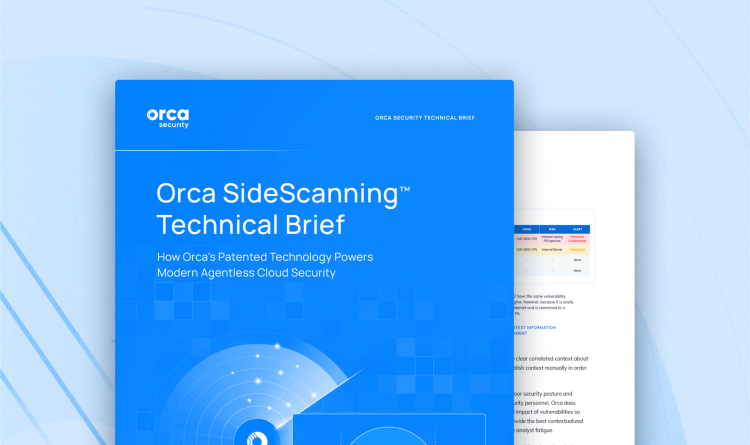


Orca SideScanning™ Technical Brief
Solution Brief Orca SideScanning™ Technical Brief In this technical brief, go under the hood and discover how Orca’s patented SideScanning…
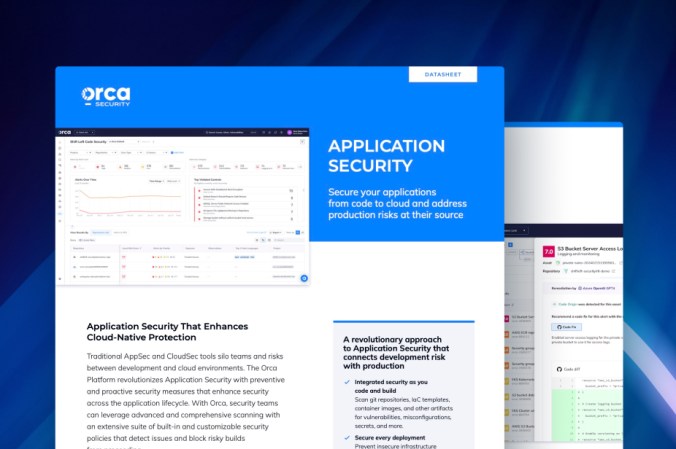
Application Security Solution Brief
The Orca Cloud Security Platform provides comprehensive security and compliance checks across the full application lifecycle, enabling your teams to…
Agentless vs. Agent-Based Security
Table of contentsWhat is agentless vs. agent-based security?What is agentless security?What is agent-based security? Advantages of agent-based securityDisadvantages of agent-based security Advantages…
Frequently Asked Questions
Yes. Orca connects through cloud provider APIs rather than deploying sensors, so it runs independently of Falcon with no conflicts. Teams typically compare findings from both platforms over a few weeks before making a switch.
No. Orca is built for cloud workloads, containers, and cloud-native infrastructure. For organizations using Falcon for traditional endpoint protection on laptops or on-prem servers, Orca is evaluated as a replacement for Falcon Cloud Security specifically, not for endpoint detection and response.
Orca typically reaches full visibility across a cloud account within 30 minutes of connection, since there’s no sensor to install or wait on. Falcon sensor rollout timelines vary by fleet size, since each workload needs the sensor installed before it’s covered.
Orca focuses on posture, vulnerabilities, malware signatures, secrets, and exposure at the workload level through snapshot-based scanning. It’s built to catch what’s present and exploitable rather than to monitor live process behavior in real time, so it complements rather than duplicates sensor-based runtime detection.
Orca is designed to operate as a standalone risk and prioritization platform. Most teams run Orca independently during evaluation and route its findings into their existing SOC or ticketing workflows through its own integrations, rather than feeding data into Charlotte AI directly.

Chat with Us
See Orca Security in Action
Gain visibility, achieve compliance, and prioritize risks with the Orca Cloud Security Platform.
 Chat with an Orca Expert
No Slack account required.