

Cloud Detection & Response
Catch Cloud and AI Attacks as They Happen
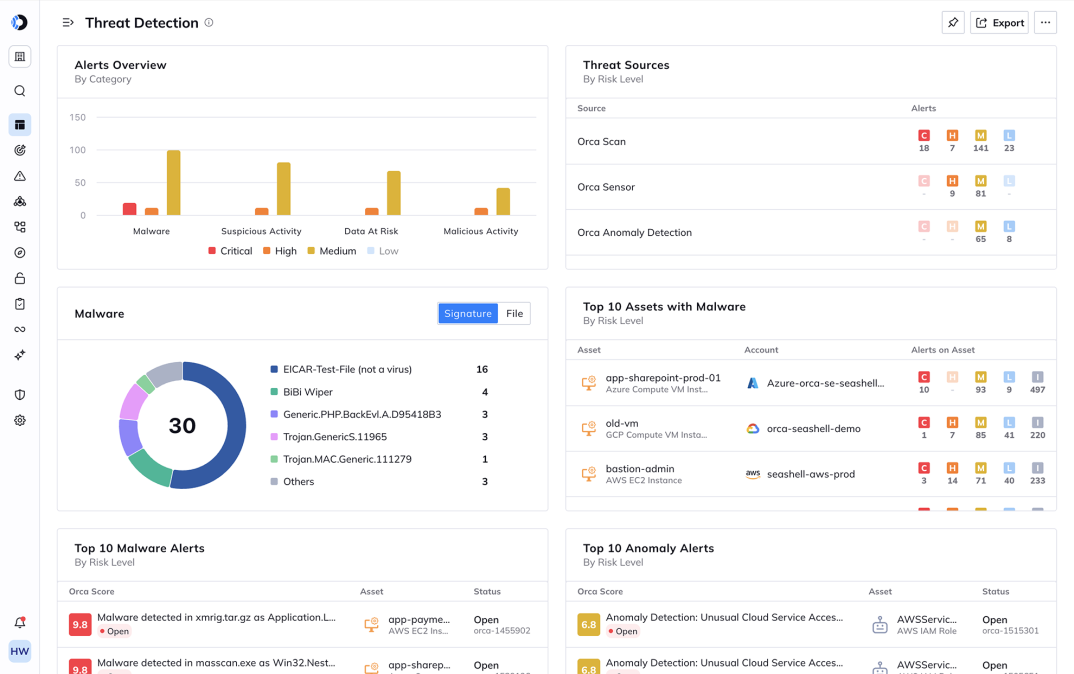
Orca detects active threats across your cloud and AI workloads in real time, connects every signal into one attack story, and gives your team the context to contain the blast radius before it spreads.
The Challenge
Detection Without Context Is Just More Noise
Cloud and AI environments generate alerts faster than any team can triage them. The hard part was never detecting that something happened — it’s knowing which signals are a real attack, how far it reached, and what to do before it spreads.
Detection tools fire thousands of disconnected alerts, leaving analysts to manually reconstruct what actually happened.
Runtime threats hide in workloads, containers, and AI systems that point tools never had visibility into.
By the time an incident is understood, the attacker has already moved — investigation lags behind the breach.
Orca Security has helped us reduce our overall security risk by 35% through improved vulnerability management and threat detection. We’ve also seen a 20% decrease in critical vulnerabilities.”
Barak Blima
Chief Information Security Officer at CHEQ
Validated Business Value
legacy tools replaced
Alert Volume Reduction
Annual Operating Savings
Return on Investment
Average Deployment
Catch Active Threats the Moment They Execute
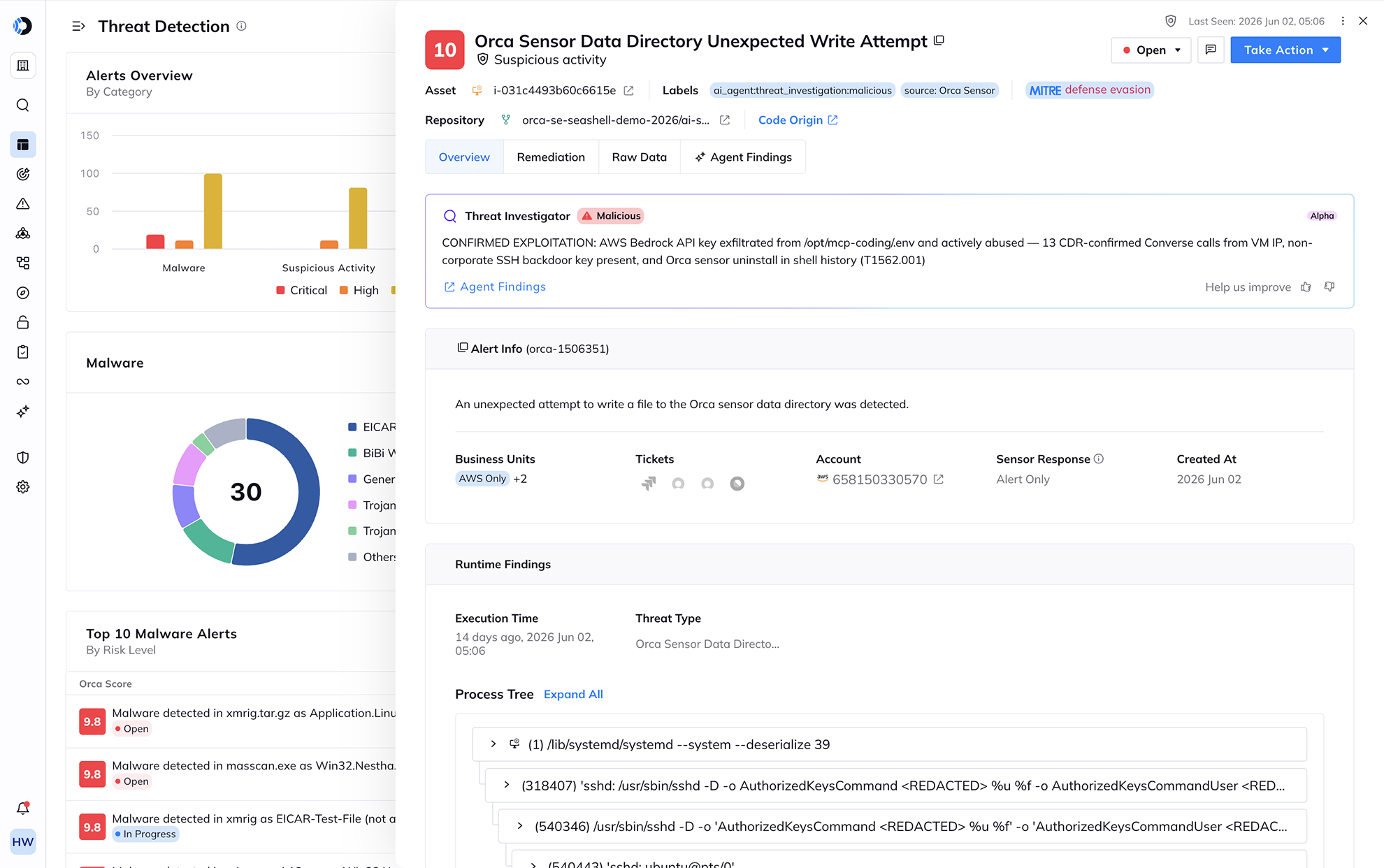
Stop discovering breaches in next week’s postmortem. Orca monitors your running workloads, containers, and AI systems in real time through the Orca Sensor, surfacing active threats — suspicious processes, lateral movement, data exfiltration attempts — as they unfold. Because every detection lands in the Unified Data Model, your team sees not just that something fired, but what it can reach.
Investigate in Minutes With an AI Analyst on the Team
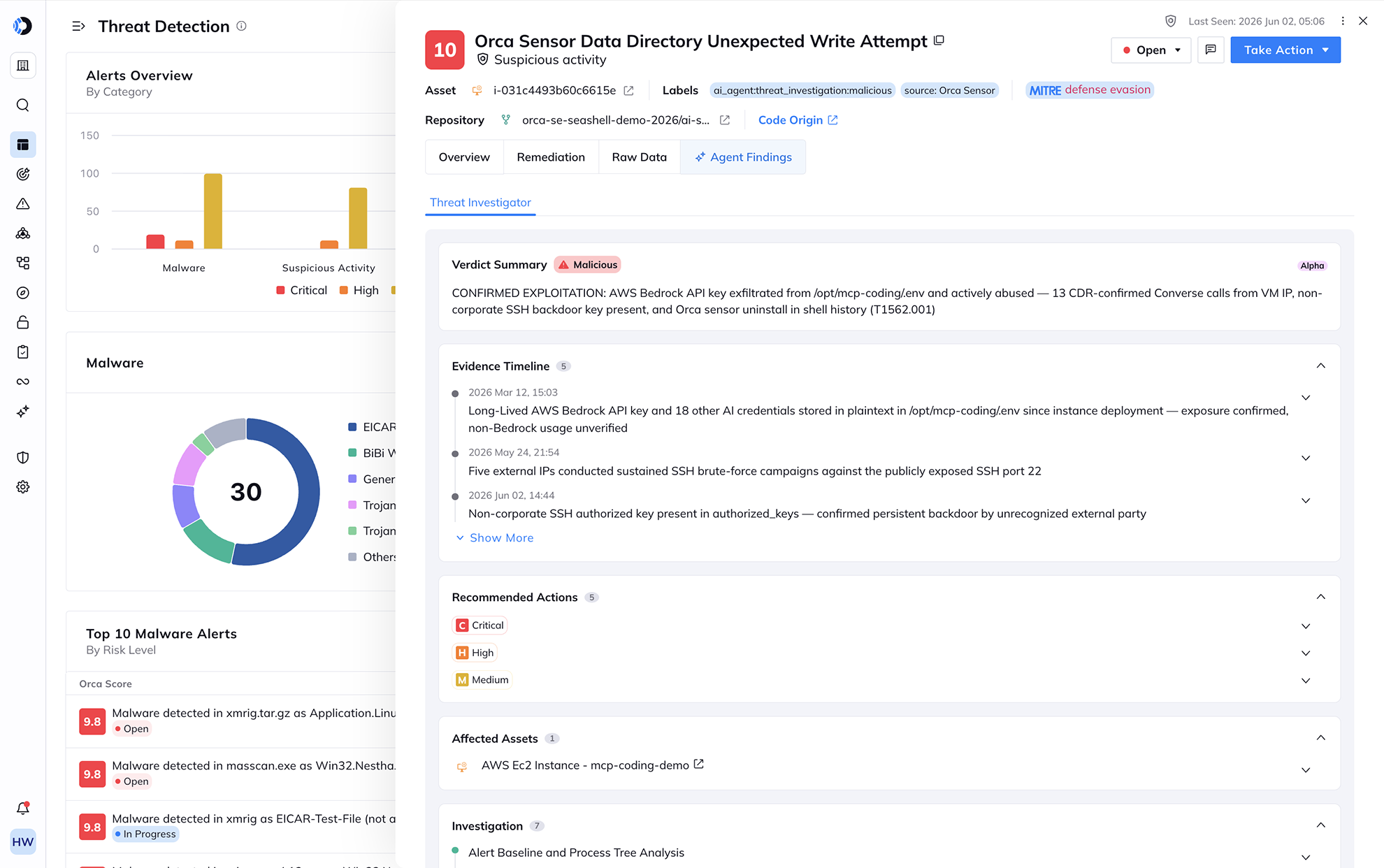
Lean teams can’t manually triage every alert, and the real ones can’t wait. The Threat Investigation Agent automatically contextualizes detections, reconstructs the sequence of events, and proposes the likely root cause — turning hours of manual correlation into a starting point your analysts can act on immediately. It multiplies the capacity of the team you already have.
Powered By Orca
The Risk Context to Scale Cloud Security with Confidence
Understand what’s at the core of the Orca Platform so your team can see how findings connect, which ones create real exposure, and where to act first.

Agentless scanning across every workload.

Runtime observability & protection.

The reasoning engine for for AI agents, workflows, and assistants.

Risk correlation to inform action with context, not just disparate data points.

Dynamic scoring & attack path analysis.
Monitor What Attackers Touch, Including AI Workloads
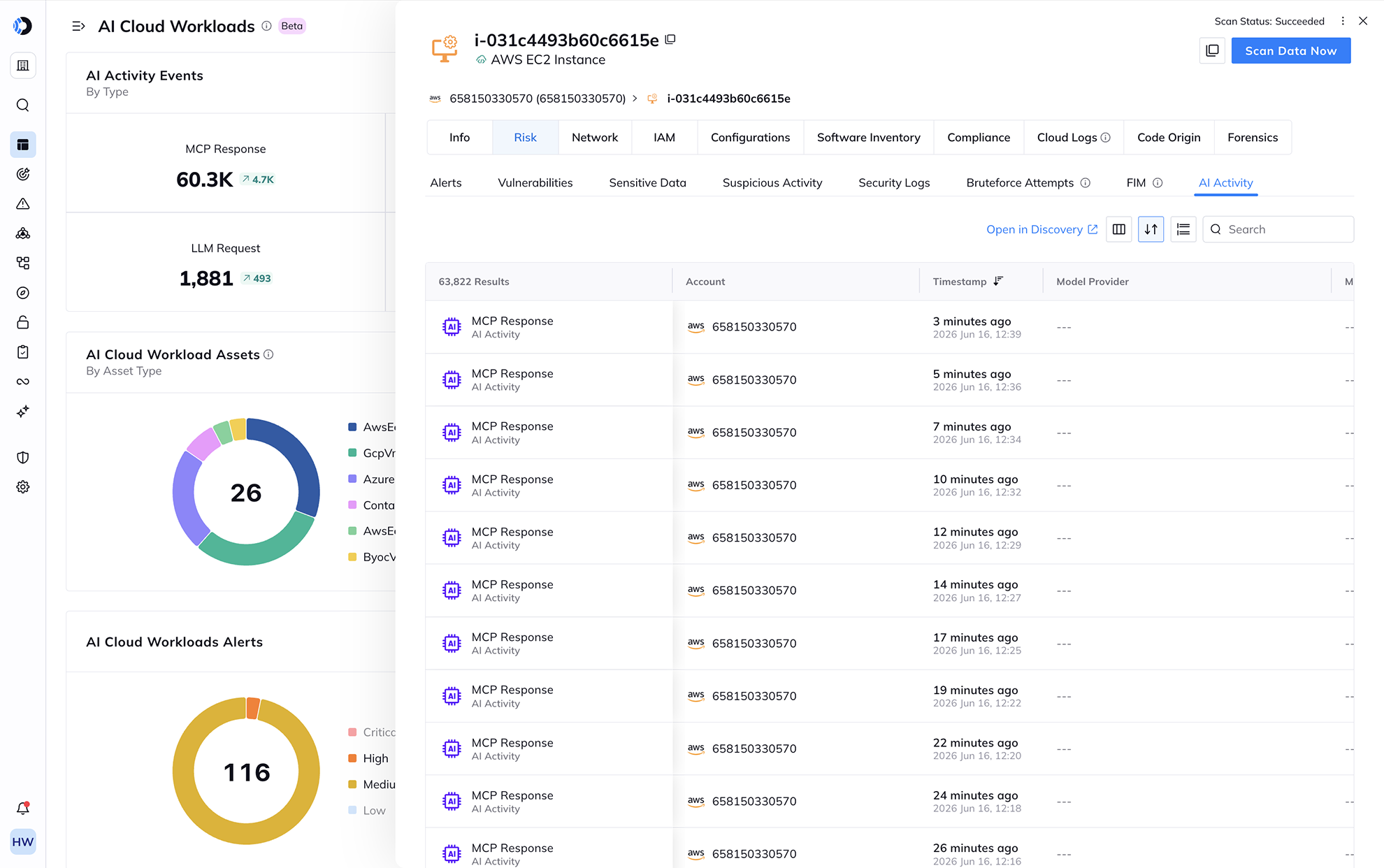
Orca continuously monitors cloud logs and runtime activity across your full estate and flags malware, anomalous behavior, and known threat indicators wherever they appear. Agentless SideScanning provides complete posture visibility; Orca Sensor adds the real-time runtime signal where active detection demands it.
Respond Inside the Workflows You Already Use
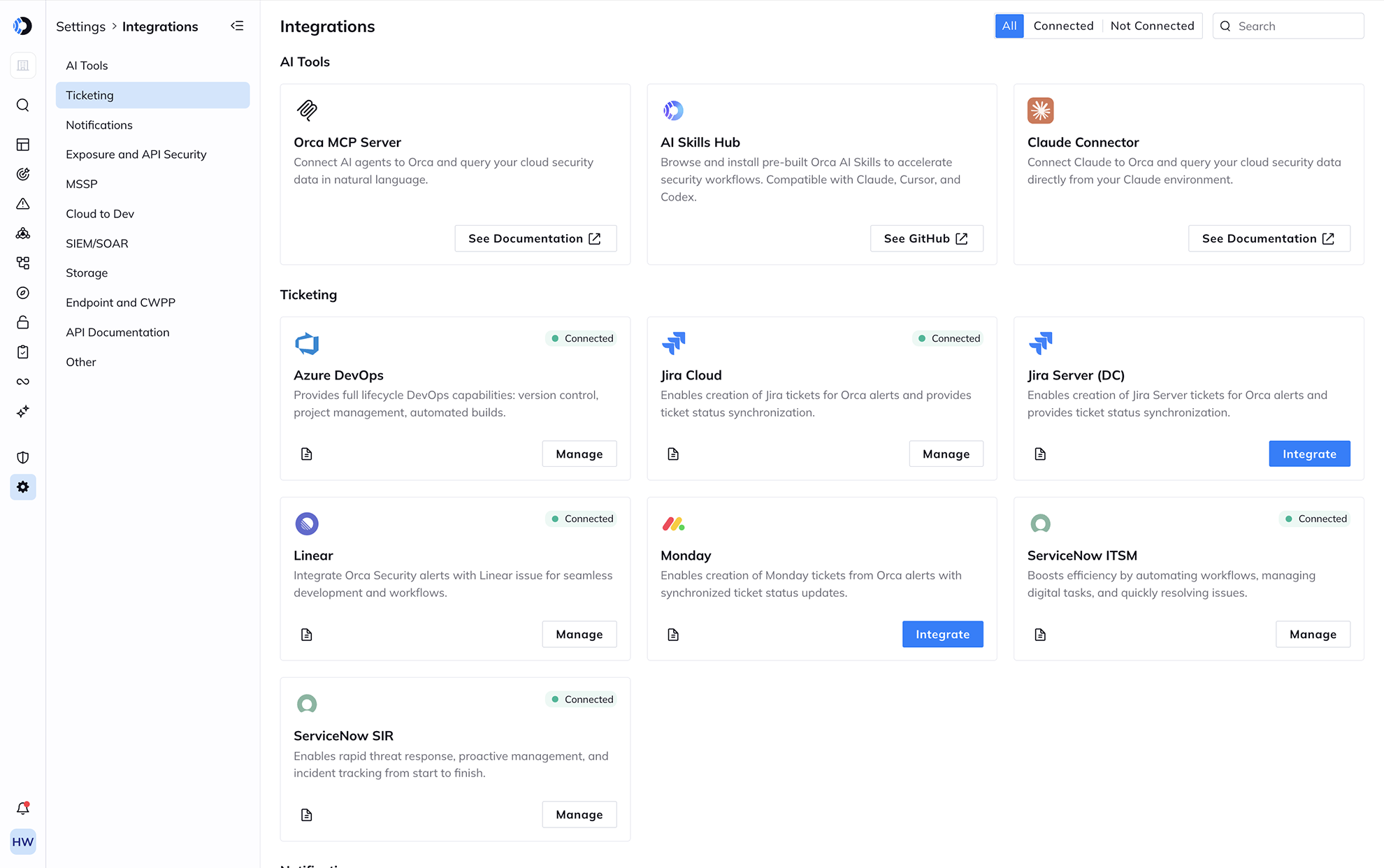
A detection that sits in a dashboard isn’t a response. Orca routes findings directly into your existing remediation and ticketing workflows, and supports auto-remediation for defined scenarios — so containment starts the moment a threat is confirmed, without context-switching or copy-paste handoffs. Response becomes part of the process your team already runs.
Related Resources
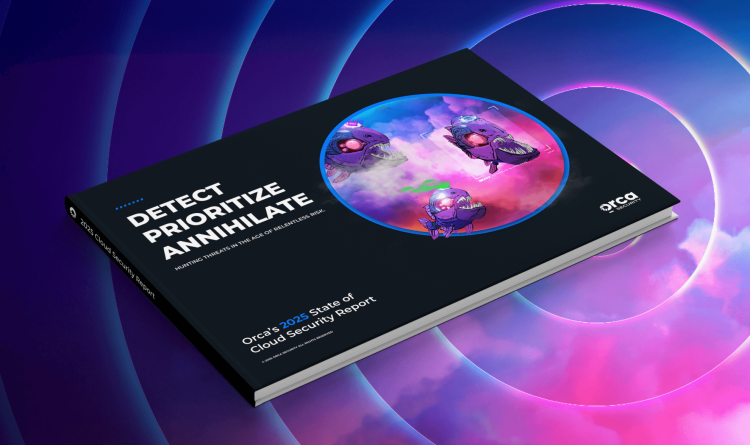


2025 State of Cloud Security Report
In-Depth Research 2025 State of Cloud Security Report Hunting threats in the age of relentless risk Get the Report Billions…
Frequently Asked Questions
Orca Security Platform provides around-the-clock monitoring of cloud provider logs and threat intelligence feeds. Orca ingests this information and integrates it with our insights into existing risks across the cloud estate and the location of an organization’s most critical assets. This enables Orca to quickly detect potentially dangerous events that require immediate attention.
With Orca’s CDR solution, you can detect, investigate, and respond to in-progress cloud attacks:
- Detect: Get prioritized alerts about events that endanger your most critical assets.
- Investigate: Gain quick insights into security events, including whether they’re malicious and if they threaten your critical assets.
- Respond: Remediate in-progress cloud attacks quickly with automated remediation steps and integrations.
Orca detects and prioritizes a broad range of cloud security risks, including vulnerabilities, misconfigurations, malware, lateral movement risk, sensitive data at risk, API risks, AI risks, overprivileged identities, and more.
Unlike solutions that simply report on the severity of each siloed security issue, Orca’s multi-dimensional approach prioritizes risks based on a consolidated assessment against multiple factors:
- Severity: What type of threat is it? What is the CVSS and EPSS score?
- Exploitability: How easy is it for someone to exploit this risk?
- Accessibility: Is the asset public facing? Is there a lateral movement risk?
- Business impact: Is the asset business-critical? Does it contain PII or is it adjacent to assets that do?
Alternative solutions to CDR include:
- Endpoint Detection and Response (EDR): EDR solutions treat endpoints as potential attack vectors. They use agents to record endpoint activity and identify potential threats, and rely on anomaly detection, machine learning, and other approaches.
- Network Detection and Response (NDR): NDR detects threats by analyzing organizational network traffic. NDRs look for potential threats based on anomalous or unauthorized protocols, port utilization, odd timing and transfer sizes, and more.
- Threat Detection & Response (TDR): TDR typically gathers information most relevant to a current threat. Endpoint TDR tools record data about an identified threat or analyze if an event or process constitutes a threat. Analytical TDRs leverage existing data and apply analytics to identify threats.
- Extended Detection & Response (XDR): XDR platforms detect threats by ingesting endpoint agent data, network level information, and device logs.
However these solutions don’t offer any actual cloud telemetry like CDR does and are siloed tools without any contextual insight into the existing cloud environment risks. Therefore these tools tend to have a higher rate of false positives since they cannot accurately assess the danger of certain actions.
Most organizations deploy five or more siloed security tools, many of them agent-based. This leads to alert fatigue, with a constant stream of (possibly duplicate) alerts that lack context and provide little insight into how and where to respond to the most critical threats. Agent-based security solutions are tedious to deploy and maintain, and only offer partial coverage. New agent installations are continually needed as the cloud environment grows, making it virtually impossible for security teams to keep up with DevOps.
As opposed to other solutions, the agentless-first Orca Platform deploys across your cloud estate in minutes, automatically discovers new assets as your environment expands, and has zero impact on your workloads. And Orca’s context-aware engine separates the 1% of alerts that demand quick action from the 99% that don’t, enabling security teams to avoid alert fatigue and fix the truly critical security issues before attackers can exploit them.

Chat with Us
See Orca Security in Action
Gain visibility, achieve compliance, and prioritize risks with the Orca Cloud Security Platform.
 Chat with an Orca Expert
No Slack account required.