

Orca Security vs Rapid7
One platform instead of four disconnected products.
Rapid7 spreads cloud security across InsightVM, InsightCloudSec, InsightIDR, and Exposure Command, each with its own data model. Orca delivers native security for Code, Cloud, and AI, all on one unified platform.
cloud alerts prioritized by blast radius so teams act on what matters
Source: Swiggy Case Study
separate security products consolidated into one Orca platform
Source: RSA Case Study
to full inventory, vs. months of multi-tool deployment
Source: Digital Turbine Case Study
Four products, still no unified view
- InsightVM, InsightCloudSec, InsightIDR, and Exposure Command are separate products
- Each carries its own data model, so findings are correlated by hand
- Teams spend more time reconciling tools than investigating risk
One data model. One platform. Complete coverage.
- Orca’s unified graph connects every asset, finding, and relationship in your cloud. One query surface, one prioritization engine, one risk score, no reconciliation required.
Real depth means more agents and more sensors
- InsightVM scans workloads with deployed agents, and deeper cloud runtime coverage relies on eBPF sensors and a third-party runtime layer
- Containers, Kubernetes, and serverless pull in more tooling and operational overhead as you scale
- Agent and sensor rollout, drift, and patching leave coverage windows in fast-moving environments
Instant-on agentless coverage at any scale
- SideScanning™ reads workload snapshots through cloud APIs, so Linux, Windows, containers, serverless functions, and Kubernetes workloads are covered immediately across all major clouds. No drift and no coverage windows, all without requiring agents.
How Orca compares to Rapid7
Capability by capability, across the dimensions that matter most to cloud security teams.
Security Solutions


Cloud
- Complete CSPM, CIEM, DSPM, API security, vulnerability management, CWPP, container, and Kubernetes coverage correlated in a single platform with a Unified Data Model
- Rich, multi-stage attack paths confirm which exposures are actually reachable and exploitable helping you prioritize by real impact rather than isolated severity
- Orca is powered by patented agentless SideScanning™ technology, giving you get deep, accurate, and actionable context for which risks matter, and which to fix first
- Rapid7 covers cloud posture and vulnerability management through InsightCloudSec and InsightVM. But DSPM relies on third-party classifiers such as AWS Macie that you enable and run separately
- API security isn’t part of the cloud product, and runtime detection and response come through a third-party integration
- Coverage is assembled across several products and vendors, so no single view shows which exposures are actually reachable or lead to sensitive data
Code
- Complete application security coverage across SAST, SCA, secrets detection, IaC scanning, SCM posture, malicious-package detection, and container image scanning, correlated in one platform
- By connecting every finding to live cloud assets, Orca confirms real-world exposure and reachability, so prioritization reflects what’s actually exploitable rather than what’s merely flagged
- Powered by AI and unified cloud context, Orca seamlessly guides teams from discovery to in-code fixes that eliminate risk at the root and stop new risk before it ever hits production
- IaC scanning is supported but SAST, SCA, secrets detection, and code-to-cloud reachability are not. This means application security is dependent on a separate toolchain
- Without a unified data model, teams manually reconcile findings across products with no single view showing how exposure chains into exploitable risk or reaches sensitive data
AI
- End-to-end AI coverage in one platform, from an AI-BOM inventory of every model, dataset, and pipeline to AI-SPM posture, sensitive-data access, exposed-key detection, and runtime threat monitoring
- Orca knows which models are internet-exposed, which can reach sensitive data, and which run in production and ranks accordingly
- Agentless discovery and the Orca Sensor connect build to runtime, flagging prompt injection, model exfiltration, and drift as they happen, so teams govern every AI system before it becomes a liability
- Rapid7 has no AI-SPM posture, so no AI-BOM, model, pipeline, or key posture and no shadow AI discovery
- AI coverage is limited to runtime monitoring of AI workloads, delivered through that same third-party runtime layer, so AI risk isn’t governed as posture or connected to the rest of your cloud risk
Explore the Orca platform
Self-guided tours tailored to your role. No form, no sales call.
Teams that adopted Orca
From organizations that evaluated Rapid7 and chose Orca.
I appreciate Orca Security because I can see CSPM, KSPM, and DSPM, and it works with major security frameworks such as NIST and CIS, allowing me to see comprehensive insights on my cloud environment, with CI/CD integration and shift-left configuration that helps me improve cloud maturity and DevSecOps maturity as a complete CNAPP platform with the most capabilities to work with cloud security.”
Cybersecurity Architect Lead
One aspect that stands out is the seamless integration. Once our organization is configured, any cloud account under that organization is automatically detected in Orca Security, along with all the assets associated with it. Another valuable feature is the side scanning technology using a snapshot mechanism. This technology allows for coverage of almost all cloud assets without interrupting their operations.”
Vulnerability Assessment Analyst
We used several other tools before Orca, such as Microsoft Defender, Twistlock (Prisma Cloud), Rapid7, and AlgoSec. Orca Security replaced these by consolidating their functionalities into a single platform, which helped us save significant costs.”
Cloud Security Automation Engineer
Validated by peers and analysts
Independent recognition from practitioners and industry analysts.
PeerSpot reviews
“The best feature is Orca Side-Scanning. Because of this feature, the platform does not need to use agents for the detection of virtual machines, containers, and hosts.”
Cyber Security Consultant
“Orca Security goes beyond just basic vulnerability detection when analyzing risks contextually and holistically. I think it adds a strong contextual understanding.”
Cyber Security Analyst
Analyst recognition
Leader — CNAPP
Top-rated agentless CNAPP on G2. High scores for ease of use and time to value.

CNAPP market presence
Recognized in Gartner’s CNAPP market analysis for agentless architecture and unified visibility.
Cloud Security ROI Report
Independent analysis of ROI from real-world Orca deployments.
Related reading
Research and analysis to help you evaluate your options.



Beyond the Sticker Price: Understanding the True Cost of Your Security Tools
Beyond the Sticker Price: Understanding the True Cost of Your Security Tools As cyber security leaders, our fundamental mission is…
Attack Path Analysis Datasheet
Attack paths represent the toxic risk combinations that attackers can exploit to endanger your high-value cloud assets. The Orca Cloud…
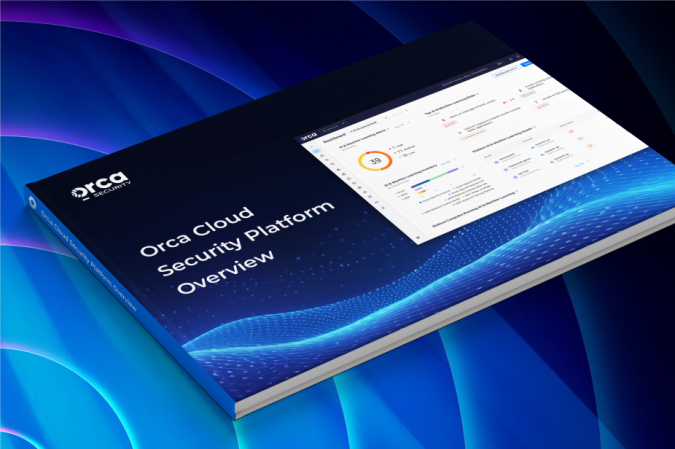
Orca Cloud Security Platform Overview Solution Brief
The Orca Cloud Security Platform unifies security across your organization, combining critical pre-deployment capabilities (AppSec) with runtime security (CNAPP) that…
Frequently Asked Questions
Yes. Orca connects through cloud provider APIs rather than deploying agents, so it runs independently of InsightVM, InsightCloudSec, InsightIDR, and Exposure Command without any conflicts. Teams typically compare findings from both platforms over a few weeks before deciding.
Orca replaces the cloud-security stack teams assemble in Rapid7: InsightCloudSec for CSPM and CNAPP posture, cloud workload and vulnerability coverage, IaC scanning, and the third-party add-ons Rapid7 relies on for runtime and data security. All of it runs on one agentless platform and one data model instead of separate modules and integrations. Orca is not a SIEM or a detection-and-response console, so it does not replace InsightIDR. Teams that want to keep InsightIDR run Orca alongside it and feed cloud risk through integrations.
Orca’s Unified Data Model was built to cover the functions those four products split apart: vulnerability management, cloud posture, identity risk, and exposure prioritization, all correlated in one graph from the start rather than assembled from separate outputs afterward.
Teams connect their existing cloud accounts to Orca through read-only API access, and Orca typically completes an initial scan within 30 minutes per account. There’s no agent reinstallation step, since Orca doesn’t rely on the InsightVM agent or eBPF sensors that Rapid7 uses for deeper coverage.
Orca is designed to operate as a standalone exposure and risk platform with its own prioritization engine. Most teams evaluate Orca as a full replacement for Exposure Command rather than an integration, since both tools aim to unify exposure data, just through different data models.
SideScanning reads workloads through cloud APIs and returns vulnerabilities, malware, secrets, and sensitive data across containers, Kubernetes, and serverless in one pass, with no agents to deploy. That is agentless posture and coverage. For runtime, Orca adds the Orca Sensor, our own first-party eBPF layer that detects and responds to threats as they happen. It is native to the platform, so runtime depth does not depend on a third-party integration the way Rapid7’s runtime coverage comes through ARMO on a premium tier.

Chat with Us
See Orca Security in Action
Gain visibility, achieve compliance, and prioritize risks with the Orca Cloud Security Platform.
 Chat with an Orca Expert
No Slack account required.