

Code Securely
Prioritize Code Fixes by What’s Reachable and Exploitable
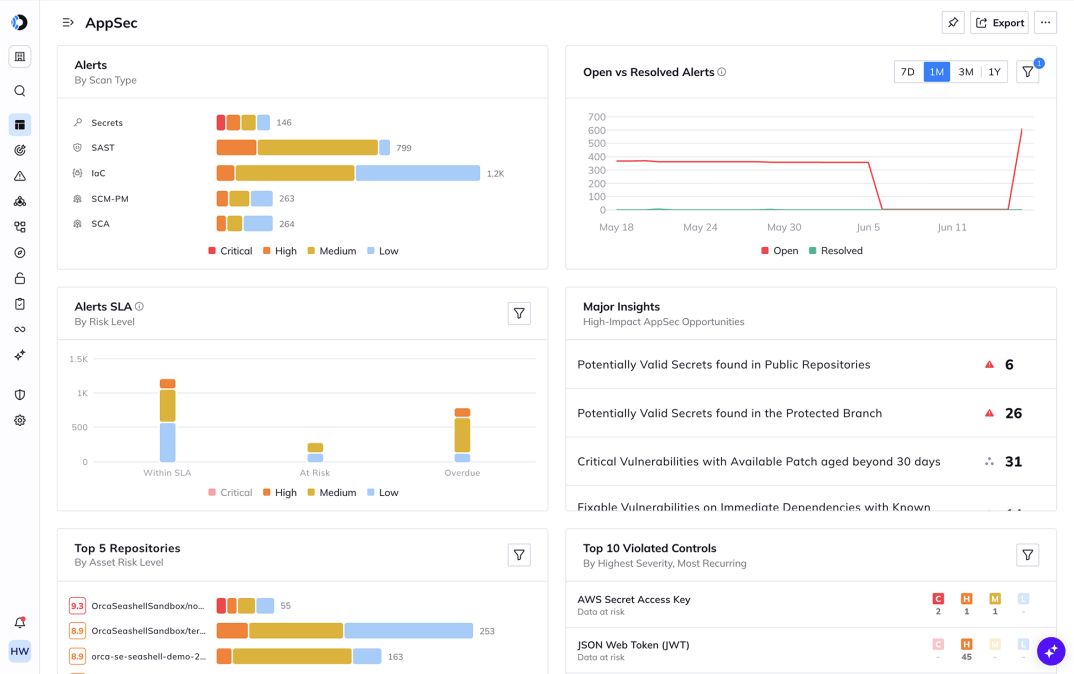
Scan your code, dependencies, IaC, images, and secrets agentlessly, then automatically prioritize each finding by what’s reachable and exposed in your running cloud. Your developers fix the small set that’s genuinely exploitable instead of chasing thousands of theoretical CVEs.
The Challenge
Your Tools Find Thousands of Vulnerabilities. They Can’t Tell You Which Ones Are Real.
SAST, SCA, and secrets scanners each produce findings in isolation, with no view of the cloud those applications actually run in. So developers get interrupted constantly and are still asked to fix the wrong things first, causing friction and operational inefficiency.
Findings overload: Standalone scanners rank by CVSS, not by what’s reachable in production. Everything looks critical and nothing gets fixed first.
Poor prioritization: A vulnerable package in an isolated dev container and one that’s internet-exposed and two hops from your database get the same score.
Disconnected tools: Findings pile up outside the tools developers work in, so tickets get ignored and risk ships anyway.
The thing that really set Orca apart was the shift-left capability. Being able to consolidate tool sets creates efficiency, not just in cost but in how you manage all this stuff.”
Tony Wilson
General Manager, Information Security at Latitude Financial
Validated Business Value
legacy tools replaced
Alert Volume Reduction
Annual Operating Savings
Return on Investment
Average Deployment
Fix What’s Reachable by Attackers, Not Every CVE
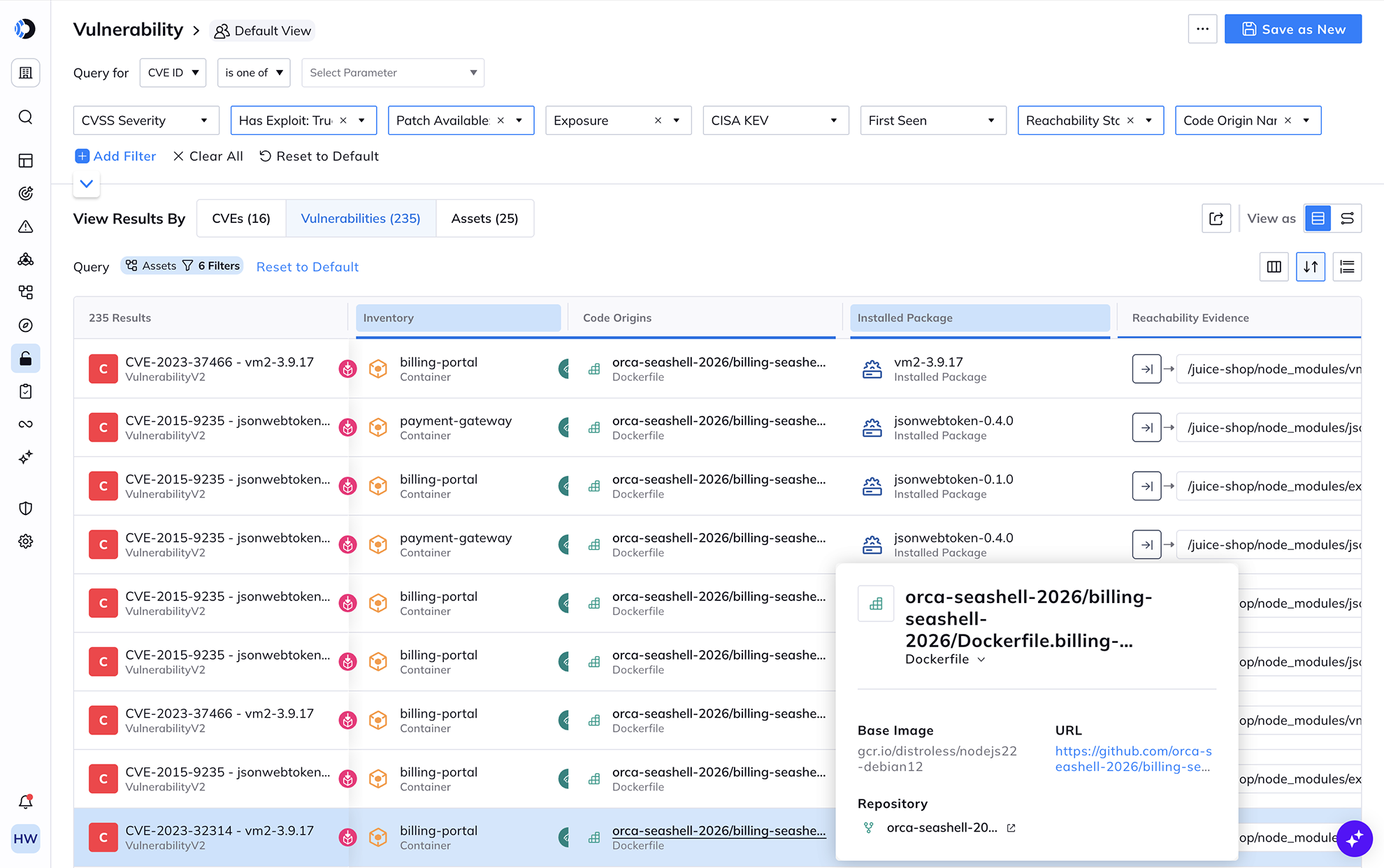
A vulnerability scoring 9.8 in an isolated dev container is not the thing your team should drop everything for. Orca scores every code vulnerability against live cloud context—reachability, internet exposure, identity permissions, and proximity to sensitive data—and traces its code origins. Your developers get one short, ranked list of what’s genuinely exploitable instead of thousands of findings ordered by a score that ignores your real stack.
Scan Everything Your Developers Build
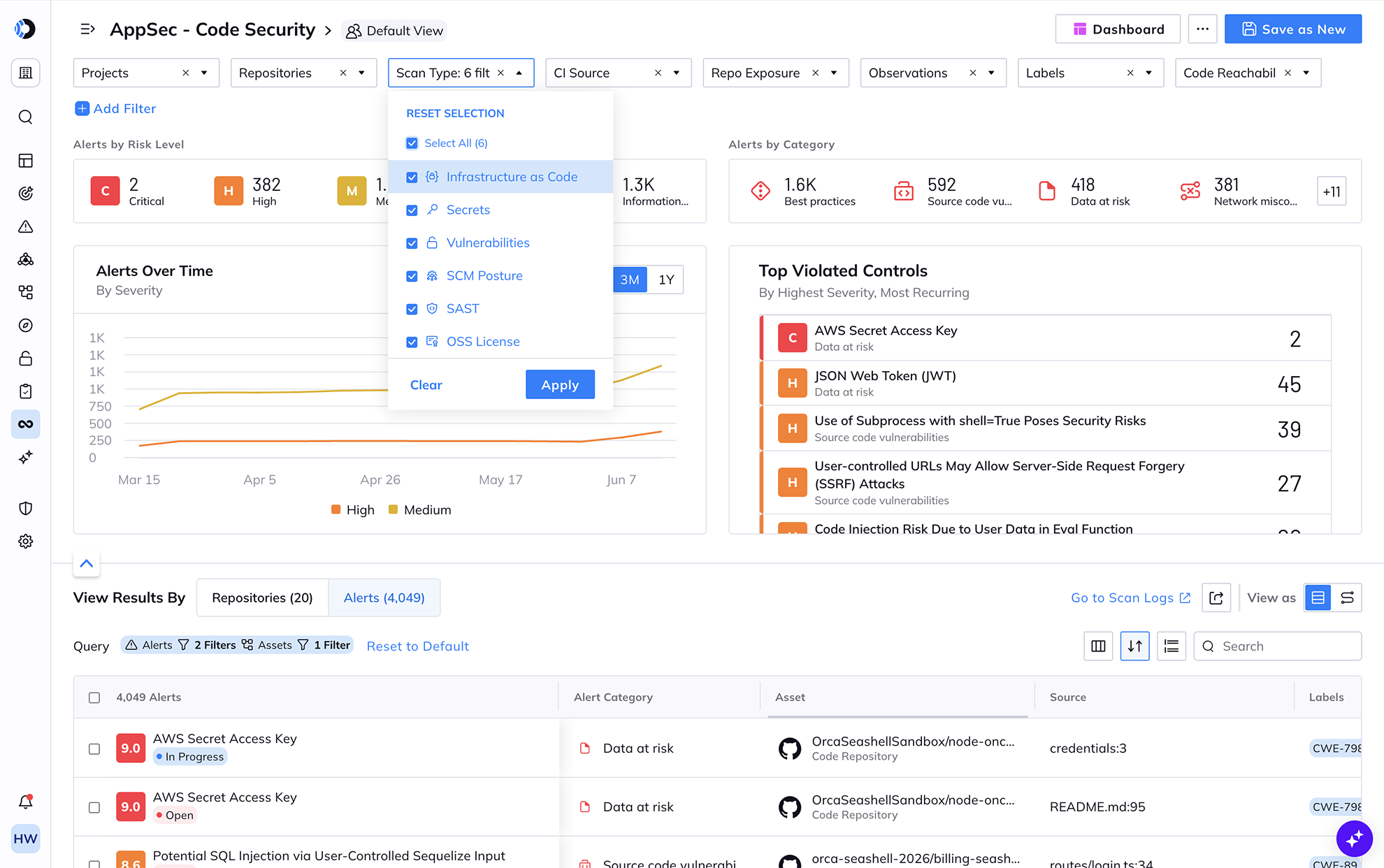
Stop running and maintaining a separate scanner for every layer. From one platform, Orca scans source code (SAST/SCA), infrastructure-as-code (IaC) templates, container images, exposed secrets, and embedded malware. Fewer tools to manage, fewer consoles to check, one risk model instead of five disconnected ones. Customers consolidate 6+ legacy tools onto Orca.
Powered By Orca
The Risk Context to Scale Cloud Security with Confidence
Understand what’s at the core of the Orca Platform so your team can see how findings connect, which ones create real exposure, and where to act first.

Agentless scanning across every workload.

Runtime observability & protection.

The reasoning engine for for AI agents, workflows, and assistants.

Risk correlation to inform action with context, not just disparate data points.

Dynamic scoring & attack path analysis.
Know Exactly What’s in Your Software Supply Chain
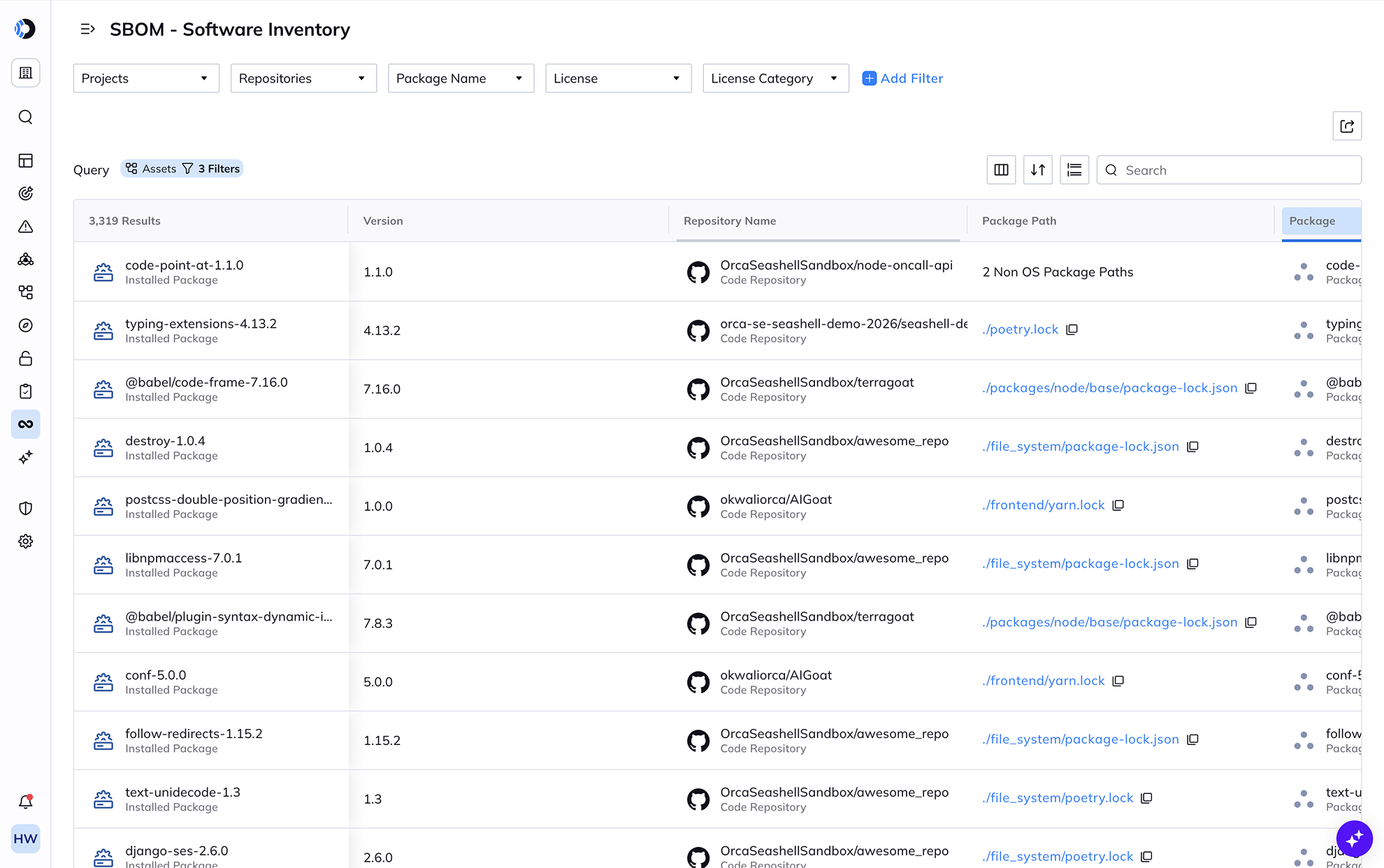
You can’t secure dependencies or repositories you can’t see. Orca generates SBOMs, flags vulnerable and license-risky open-source packages before they ship, and catches misconfigured repos, weak branch protections, and over-permissioned access at the source. License obligations surface early, not during an audit.

Fix at Developer Speed (or Faster) in the Tools You Already Use
Security that lives outside the developer workflow gets ignored. Orca pushes findings and context straight into your IDE, repos, and ticketing tools. For high-impact issues, Orca drafts AI-generated fixes and opens pull requests, so remediation is already started when a developer picks it up.
Separate Real Risk With AI
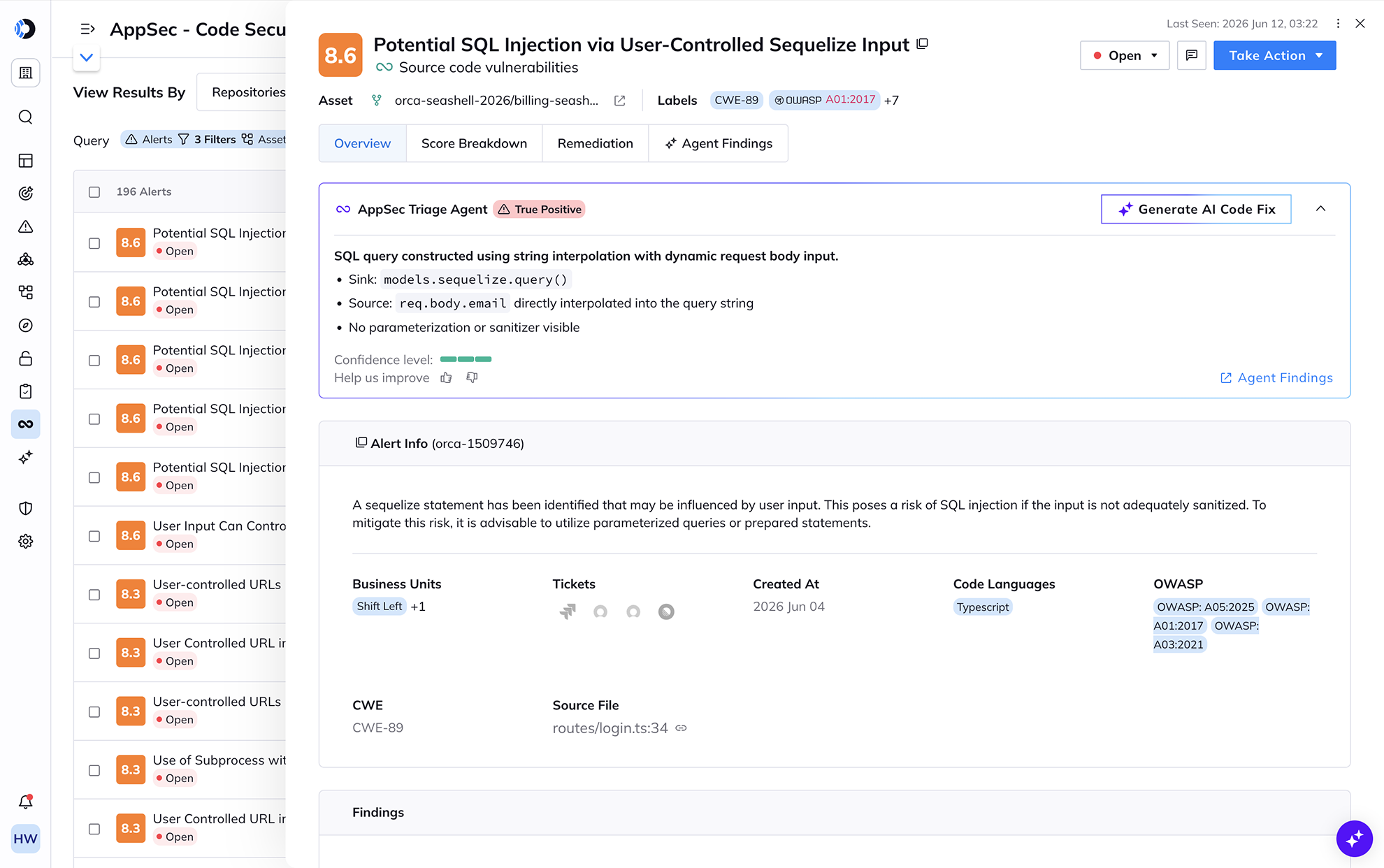
Code scanners are notorious for false positives. Orca’s AppSec Triage Agent uses code context to automatically deprioritize false positives and escalate true positives. Automatically trigger workflows based on the agent’s conclusions and zip through your backlog in no time.
Related Resources
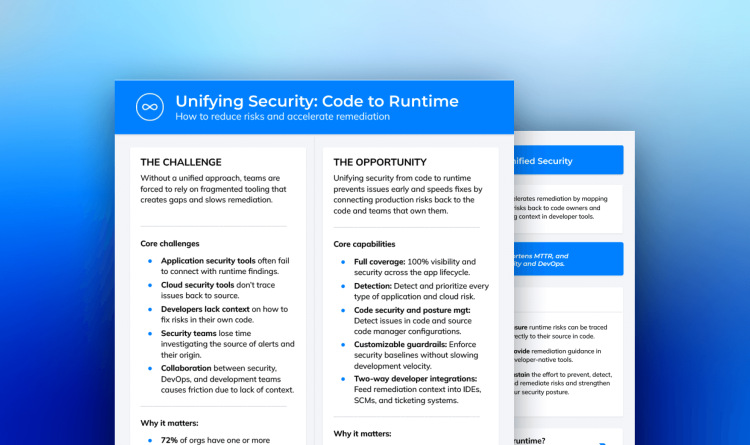


Unifying Security from Code to Runtime
CHEAT SHEET Unifying Security from Code to Runtime Security issues often begin in code, yet most teams rely on fragmented…
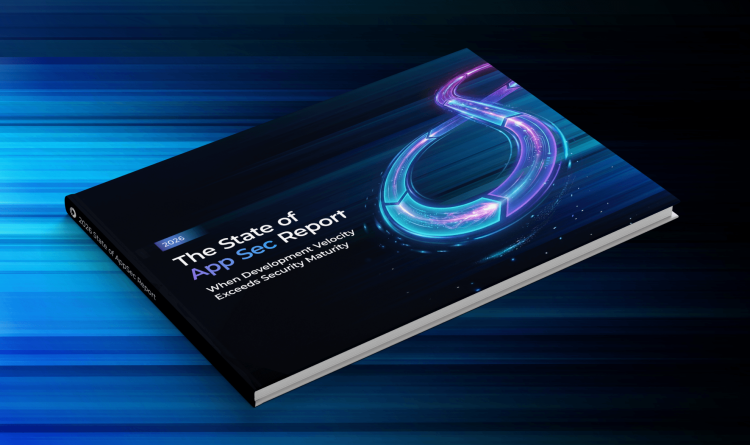
2026 State of Application Security Report
In-Depth Research 2026 State of Application Security Report When Development Velocity Outpaces Security Get the Report One clear picture of…

Frequently Asked Questions
Shift Left Security is a collection of cloud security strategies, technologies, and practices that incorporate security and testing into the early phases of the software development lifecycle (SDLC). Shift Left Security attempts to detect and fix security risks and issues before applications are deployed into production, when issues are much less costly to fix.
Organizations face inherent challenges shifting security left, including:
- Resistance to change: To shift “security left,” development and DevOps teams must take ownership of promoting security across the SDLC.
- Alert fatigue: Traditional tools generate alerts but fail to prioritize them based on contextual factors that impact risk. This comes from a lack of visibility into the entire cloud estate.
- Lack of visibility: Security teams lack visibility into development workflows and existing security and compliance risks.
- Lack of integration: Conventional Shift Left Security tools are slow, require developers to use another siloed application outside their current workflows, and provide feedback too late into the SDLC.
- Training and time constraints: Developers tend to lack experience in security and need significant training on shift left practices. This, coupled with demands to meet tight deadlines, makes it difficult to get developers up to speed, even after getting their buy-in.
Orca Cloud Security Platform provides comprehensive security and compliance checks across the SDLC, including IaC template and container image scanning. Orca analyzes the control and data planes for misconfigurations, vulnerabilities, malware, API risks, data risks, IAM risks, and lateral movement. Orca also links findings from the production environment back to the original application development artifacts so risks can be fixed quickly and collaboration between security, development, and DevOps teams is enhanced.
Orca Cloud Security Platform offers API Security that instantly helps organizations identify, prioritize, and address API misconfigurations and security risks across their entire cloud estate, without requiring agents or network changes. Within minutes of deploying the solution, Orca provides a complete and continuously updated inventory of managed and unmanaged APIs, contextualized alerts on potentially risky API drift and changes, and insight into API misconfigurations and vulnerabilities with actionable remediation steps.
Orca combines detected weaknesses in APIs with other identified cloud risks to effectively prioritize the API risks that are most critical. The result allows security teams to focus on the time-sensitive alerts that matter most, saving time, accelerating response, and eliminating alert fatigue.
While a necessary function of cloud security, vulnerability management solutions can present several challenges, including:
- Lack of visibility into the full cloud estate increases the likelihood a vulnerability goes undetected.
- Lack of vulnerability prioritization forces security teams to spend time diagnosing alerts and determining which deserve immediate attention.
- False positives exacerbate alert fatigue and delay the time it takes to respond to actual vulnerabilities.
- Vulnerability growth makes vulnerability management an ongoing challenge, requiring a sustainable approach to ensure continued protection.

Chat with Us
See Orca Security in Action
Gain visibility, achieve compliance, and prioritize risks with the Orca Cloud Security Platform.
 Chat with an Orca Expert
No Slack account required.