


A critical vulnerability chain combining CVE-2026-63030 (CVSS 9.8) and CVE-2026-60137 (CVSS 5.9) was disclosed affecting WordPress Core, allowing attackers to achieve unauthenticated remote code execution via chained REST API batch-route confusion and SQL injection flaws. Due to the potential for full server compromise on default installations, immediate patching is required.
About CVE-2026-63030 & CVE-2026-60137
The issue originates from two components in WordPress Core. CVE-2026-63030 is a REST API batch-route confusion flaw in WP_REST_Server::serve_batch_request_v1() introduced in WordPress 6.9, while CVE-2026-60137 is a SQL injection in the author__not_in parameter of WP_Query that lacks proper type validation. By chaining specially crafted /wp-json/batch requests, attackers can forge an administrator account and gain full web-server code execution, potentially leading to persistent backdoors, data exfiltration, and lateral movement across cloud environments. No authentication is required to exploit this issue, and no plugins or special configuration are needed on the target.
Affected Systems
The following components are affected: WordPress Core versions 6.9.0 through 6.9.4 and 7.0.0 through 7.0.1 are vulnerable to the full pre-authentication RCE chain. WordPress Core versions 6.8.0 through 6.8.5 are vulnerable to the SQL injection alone, which carries data exposure risk. Default installations released since December 2025 are at risk. Security firm research showed that 60% of WordPress organizations had vulnerable instances at the time of disclosure, dropping to 50% within 24 hours. Sites using persistent object caching (Redis/Memcached) may have narrower exploit pathways, but this is not a comprehensive mitigation.
Risk Impact
Users should upgrade to WordPress 7.0.2, 6.9.5, or 6.8.6, all released on July 17, 2026. WordPress.org has enabled forced automatic updates for supported installations, but teams should verify updates have been applied successfully. As interim mitigations (not substitutes for patching), defenders can block anonymous access to /wp-json/batch/v1 and ?rest_route=/batch/v1, or disable anonymous REST API access using a trusted plugin. Cloudflare has deployed WAF protections across all plan tiers.
At the time of writing, public proof-of-concept exploit code is widely available, and active in-the-wild exploitation has been confirmed by multiple security firms as of July 18-20, 2026. Post-exploitation activity includes malicious plugin uploads for persistence, PHP webshells disguised as fake security plugins, and attempts to read wp-config secrets. Researchers have noted that rapid PoC development was partly aided by AI-assisted patch diffing. Both high-volume opportunistic scanning and targeted attacks have been observed. A high-fidelity detection signal is /wp-json/batch requests returning HTTP 207/200 multi-status responses, and defenders should also check for unexpected administrator accounts, new or modified plugins, and user-agent strings referencing wp2shell tools.
Regardless, the severity and ease of exploitation make this vulnerability chain high risk, especially in internet-facing deployments. Successful exploitation could allow attackers to create rogue administrator accounts, execute arbitrary code on the web server, and install persistent backdoors, leading to service disruption, data exposure, or full infrastructure compromise.
How Orca Can Help
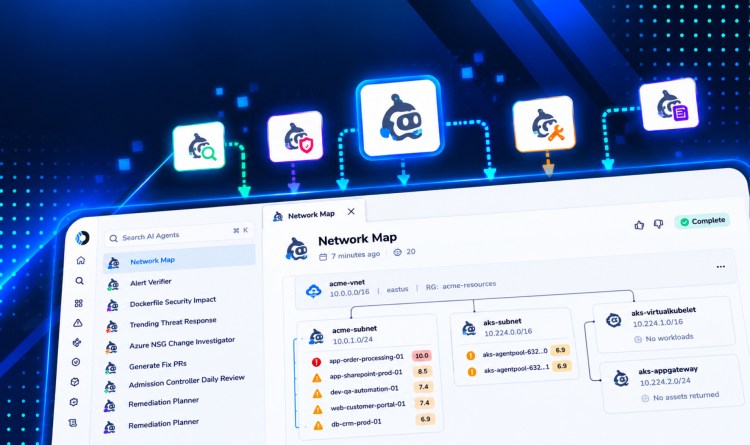
Orca enables customers to quickly identify assets running vulnerable WordPress versions, understand their exposure in context, including internet accessibility, runtime reachability, and asset criticality, and prioritize remediation based on real risk rather than CVSS alone. Orca’s platform highlights affected assets directly in the newItem view, helping security teams focus on the most critical remediation paths first.




 Chat with an Orca Expert