


Executive Summary
A high-severity supply-chain attack was disclosed affecting the npm package @dforge-core/dforge-mcp, allowing attackers to distribute a remote-shell implant via a legitimate-looking update carrying valid npm provenance signatures. Due to the potential for full system compromise and the difficulty of forensic detection, immediate action is recommended for any organization that consumed version 0.2.21.
Technical Overview
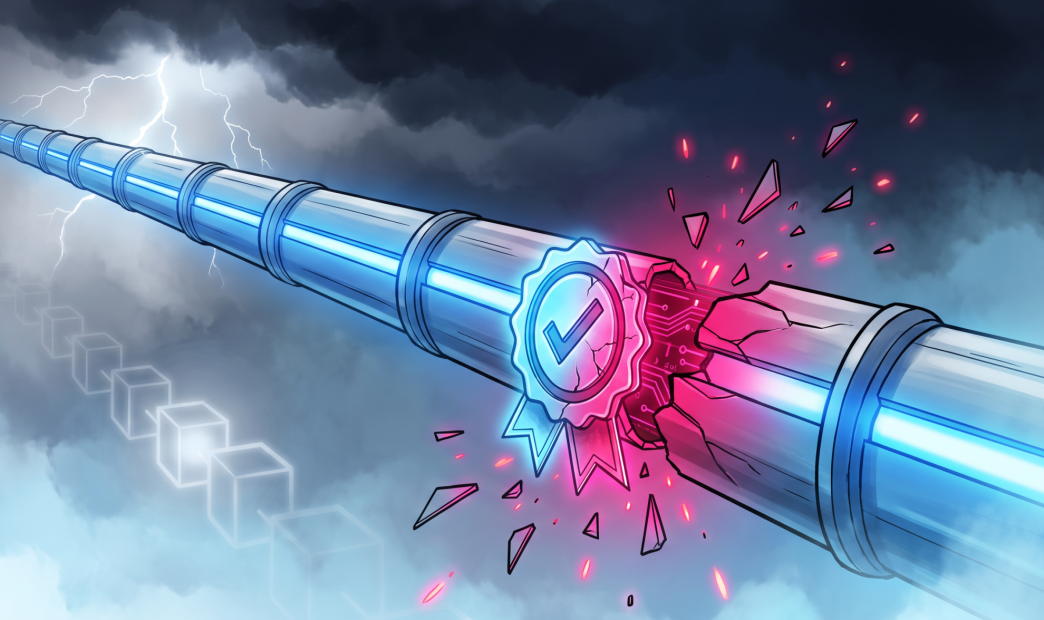
The attack exploited a fundamental limitation of npm trusted publishing: provenance attests where an artifact was built, not whether its source was honest. On September 9, 2026, attackers compromised the maintainer account and modified the GitHub Actions release workflow so that any push to the main branch triggered an automated release through OIDC trusted publishing. With push access converted into publish access, the GHAPPIER loader was shipped as version 0.2.21, a single malicious line hidden at line 3320 of a 99KB configuration file. The release carried valid provenance through GitHub Actions OIDC, with attestation recorded in Sigstore’s append-only public log.
The four-stage payload chain activated only when the MCP server was launched, not during package installation. The final implant established a general-purpose remote shell and then deleted itself from disk upon execution, leaving no file-based forensic trace. Version 0.2.21 remained the latest release for approximately 35 minutes before the maintainer published a clean version 0.2.22.
CloudSEK traced the GHAPPIER loader across 65 public repositories, 73 infected files, and 22 accounts. A second payload in another victim’s repository matched PolinRider, a DPRK-linked campaign tracked since March 2026 that uses Ethereum blockchain transactions for command-and-control configuration. By writing configuration into the twenty bytes of a recipient address on empty transactions, the operators created a C2 channel with no domain to suspend, no host to seize, and no account to disable.
Affected Systems
The following component is affected: @dforge-core/dforge-mcp version 0.2.21. Version 0.2.20 was also a malicious release attempt but failed and broke installation. These versions were published during a 105-minute compromise window. No CVE has been assigned, and no advisory currently exists in OSV, the GitHub Advisory Database, or from the maintainer.
Organizations should take the following steps:
- Pin @dforge-core/dforge-mcp to version 0.2.22 or later
- Treat any lockfile pinning version 0.2.21 as an indicator of potential compromise
- Search for intermediate artifacts left by the four-stage chain rather than the final implant, which self-deletes at startup and leaves no disk trace
- Block the socket endpoint and two delivery hostnames identified in the CloudSEK report
- Monitor for release workflow trigger modifications in GitHub Actions configurations
- Audit whether any CI/CD systems executed version 0.2.21 of the MCP server
- Rotate credentials on any system where version 0.2.21 was executed
At the time of writing, no CVE or formal advisory has been published. The attack is confirmed through CloudSEK’s published analysis, and the GHAPPIER campaign remains active across dozens of repositories. The sophistication of the attack, valid provenance signatures providing false assurance, blockchain-based C2 resilient to takedown, and a self-deleting implant, makes this a significant risk for any organization with exposed npm supply chains.
Risk Impact
Successful exploitation allows attackers to execute arbitrary commands on affected systems, exfiltrate credentials and sensitive data, and pivot to connected infrastructure, leading to service disruption, data exposure, or full infrastructure compromise.
How Orca Can Help
Orca enables customers to quickly identify assets running vulnerable package versions, understand their exposure in context, including internet accessibility, runtime reachability, and asset criticality, and prioritize remediation based on real risk. While no CVE or OSV advisory currently exists for this incident, Orca’s SCA scanning will flag the malicious version once advisories are published. In the meantime, organizations should manually check their dependency lockfiles for @dforge-core/dforge-mcp version 0.2.21. Orca’s platform highlights affected assets directly in the item view, helping security teams focus on the most critical remediation paths first.





 Chat with an Orca Expert