
Workload Protection
Secure Cloud and AI Workloads Without the Deployment Friction
Secure containers, Kubernetes clusters, VMs, and serverless deployments. Trace runtime risk back to its code origins. Your team ships fast without inheriting production exposure, and you skip the agent sprawl.
The Challenge
Your Workloads Spin Up Faster Than Agent-Based Security Can Keep Up
Every new container, function, and cluster is a workload security has to find, instrument, and watch. Agent-based tools can’t keep pace with ephemeral infrastructure, and posture scanners flag thousands of issues without telling you which ones are actually running.
Installing, patching, and babysitting an agent on every container, VM, and function never ends at your scale.
Posture scanners surface thousands of findings but can’t tell you which are reachable, running, or being exploited right now.
Runtime tickets land in your backlog with no context, so fixes stall.
By offering a seamless scan with the agentless functionality, the solution is transparent. We can scan our managed resources like containers in Kubernetes, and Orca gives us suggested improvements for roles and identity management. This list continues on for what agentless does for us.”
Sébastien Gaucher
IT Operations Manager at Mailinblack
Validated Business Value
legacy tools replaced
Alert Volume Reduction
Annual Operating Savings
Return on Investment
Average Deployment
Cover Every Compute Type Without an Agent on Each One
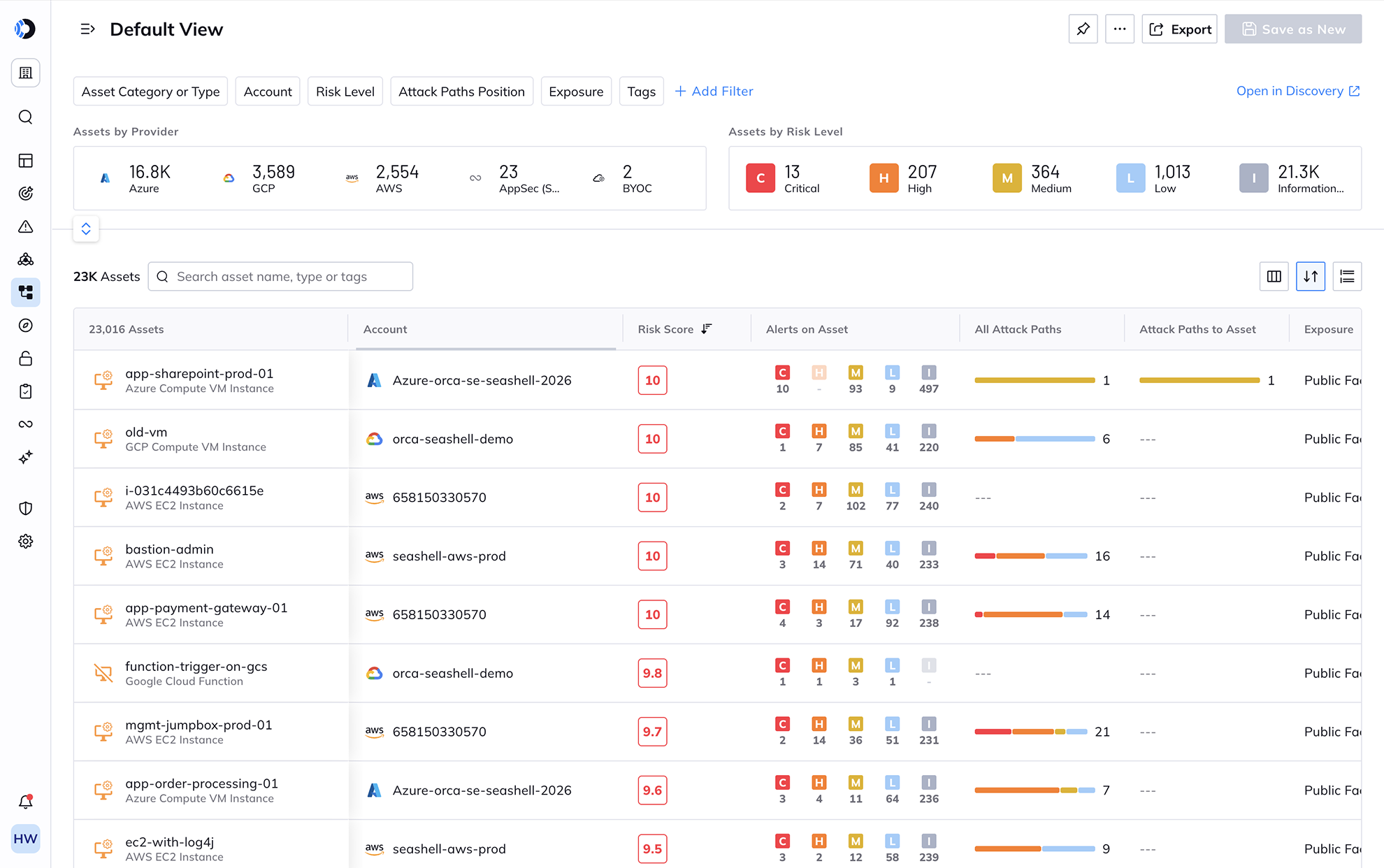
See and protect VMs, containers, and serverless functions from a single platform, deployed agentlessly in minutes. SideScanning reads cloud storage directly, so there’s zero performance impact on running workloads and no coverage gap the moment something new spins up. One platform replaces the separate workload tools you’re maintaining today.
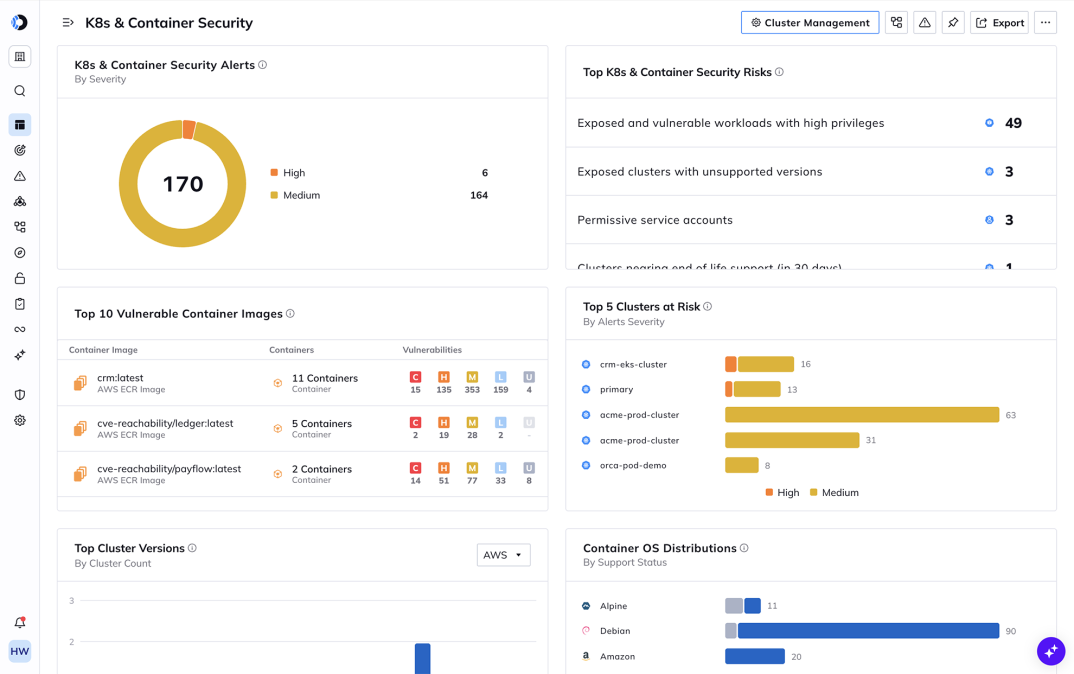
Secure Kubernetes Without Becoming a Kubernetes Security Specialist
Orca maps your clusters, workloads, and configurations, then surfaces the misconfigurations and exposures that actually create a path to your data. Findings arrive ranked by real blast radius instead of a wall of pod-level alerts, so your team knows which cluster issue to fix first. Admission control stops risky workloads before they reach production, on the teams that want the gate.
Powered By Orca
The Risk Context to Scale Cloud Security with Confidence
Understand what’s at the core of the Orca Platform so your team can see how findings connect, which ones create real exposure, and where to act first.

Agentless scanning across every workload.

Runtime observability & protection.

The reasoning engine for for AI agents, workflows, and assistants.

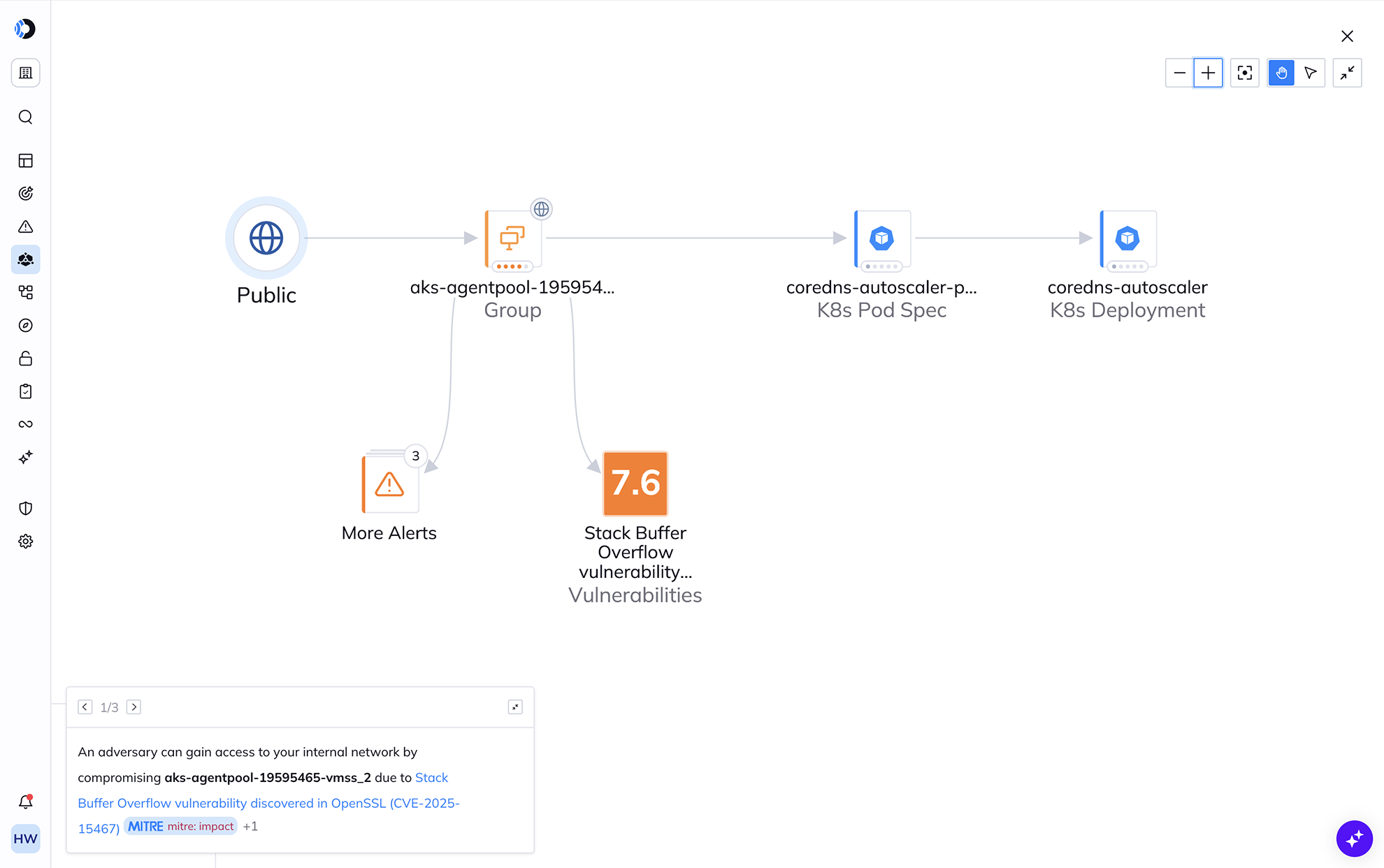
Risk correlation to inform action with context, not just disparate data points.

Dynamic scoring & attack path analysis.
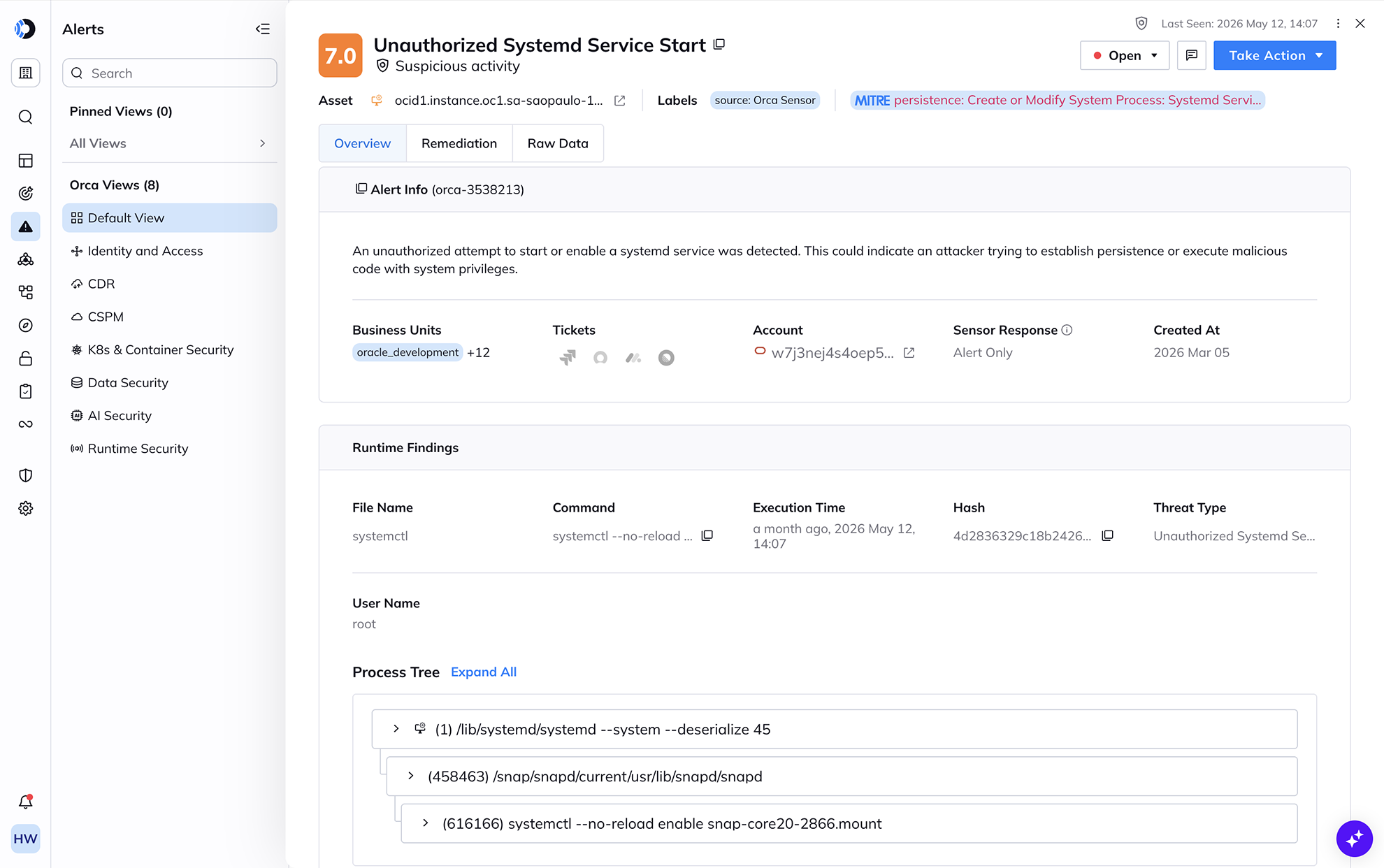
Catch Active Threats in Production as They Happen
Orca Sensor detects malicious behavior, anomalous activity, and malware on running workloads in real time. Detections arrive correlated with full cloud context, so you immediately know whether an event is contained noise or a reachable threat to your crown jewels — without stitching together signals from separate consoles.
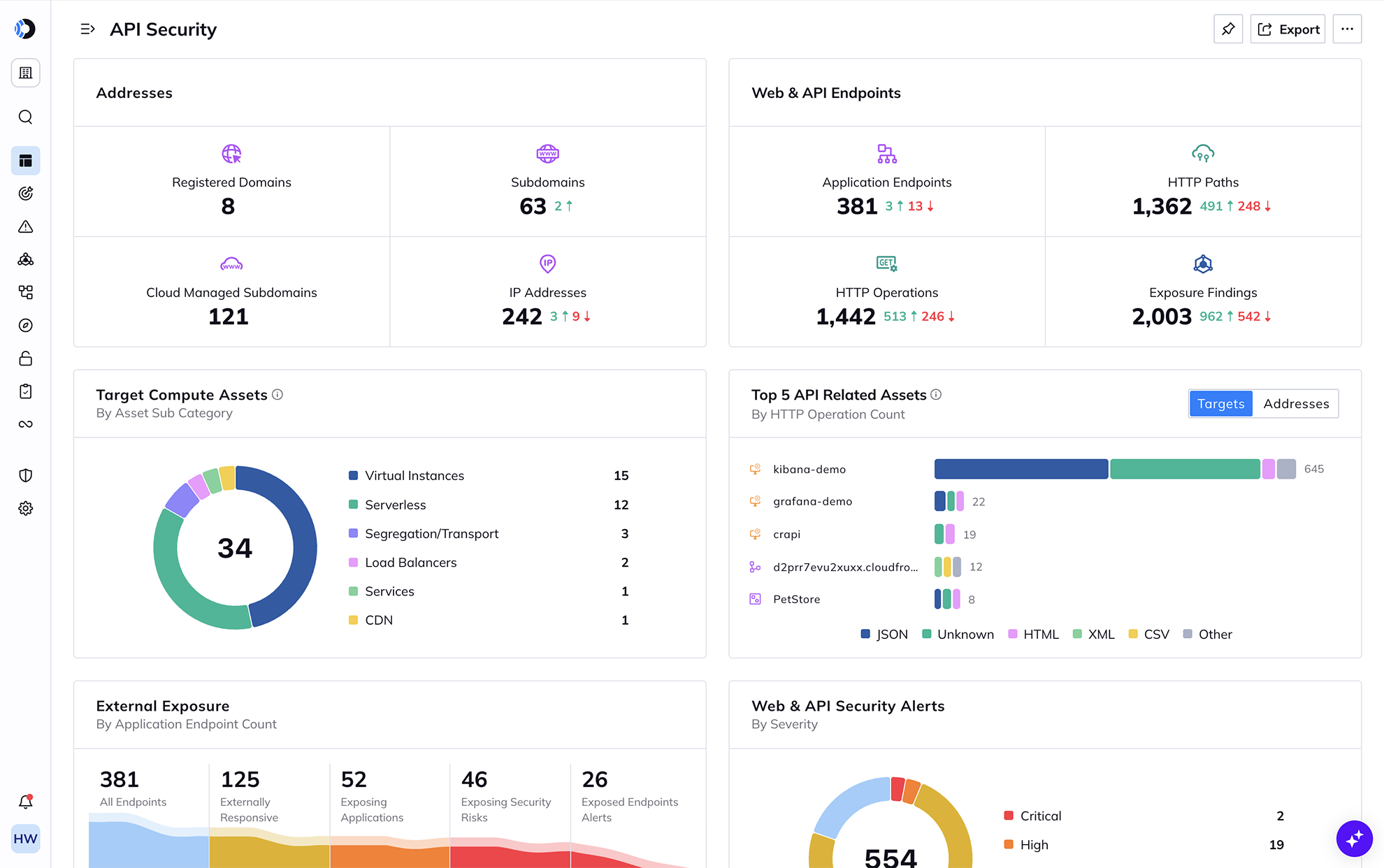
Find Every API Before an Attacker Does
Orca discovers your APIs — including the undocumented and forgotten ones — and continuously checks their posture and drift. Exposed or misconfigured endpoints surface ranked by exposure and data access, not by raw count, so your team fixes the handful that matter instead of triaging an inventory.
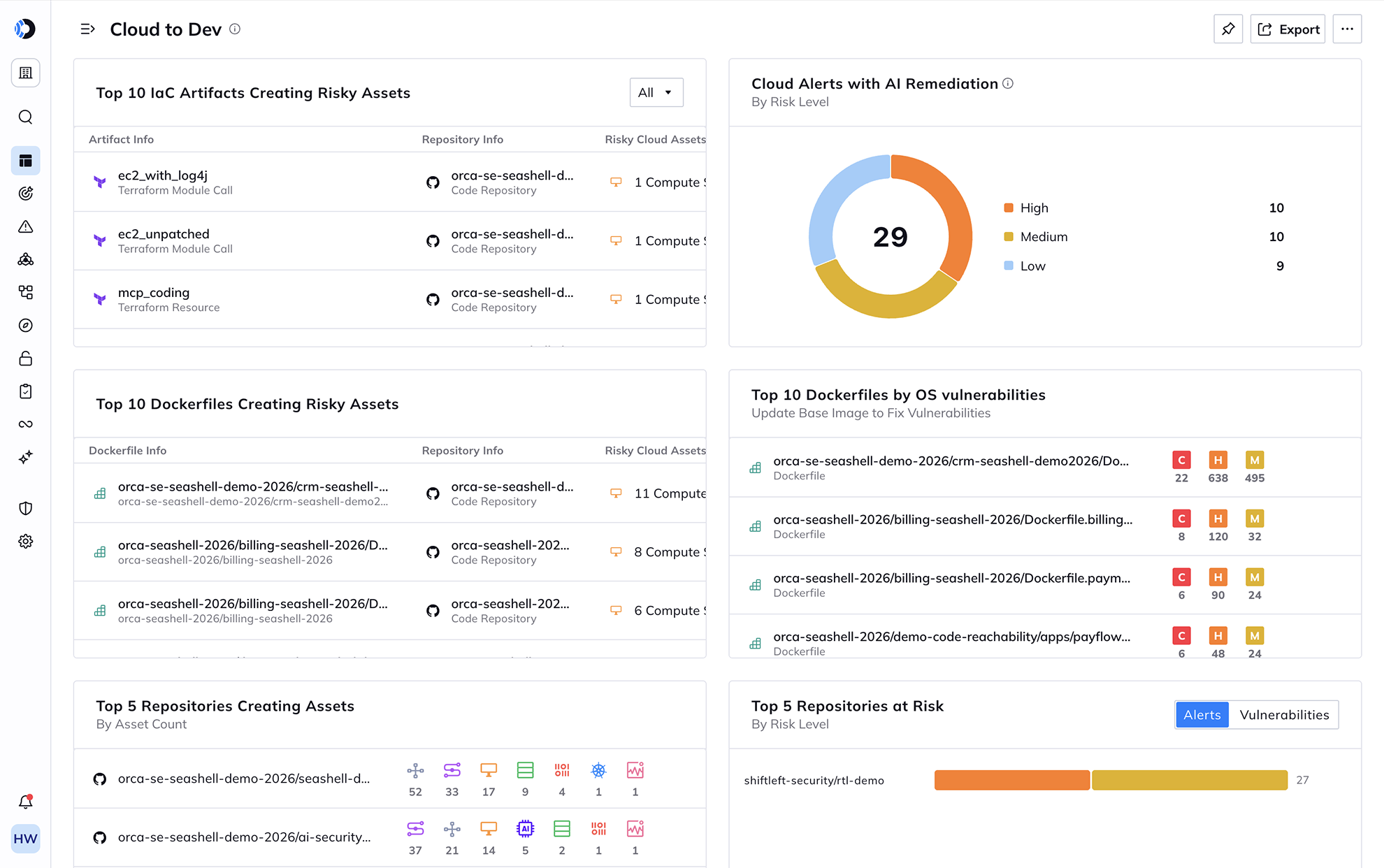
Fix Runtime Risk at the Source, in the Tools You Already Use
Trace runtime findings back to the IaC template, image, or commit that introduced it, with fixes routed into Git and your ticketing system. Scan IaC and container images before they deploy to cut the CVE spikes that hit production — so you ship faster without inheriting exposure, and you do it without leaving your existing developer workflows.
Related Resources
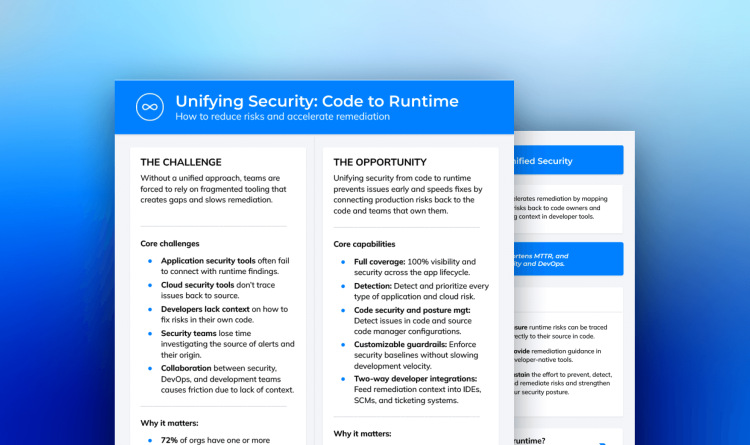


Unifying Security from Code to Runtime
CHEAT SHEET Unifying Security from Code to Runtime Security issues often begin in code, yet most teams rely on fragmented…
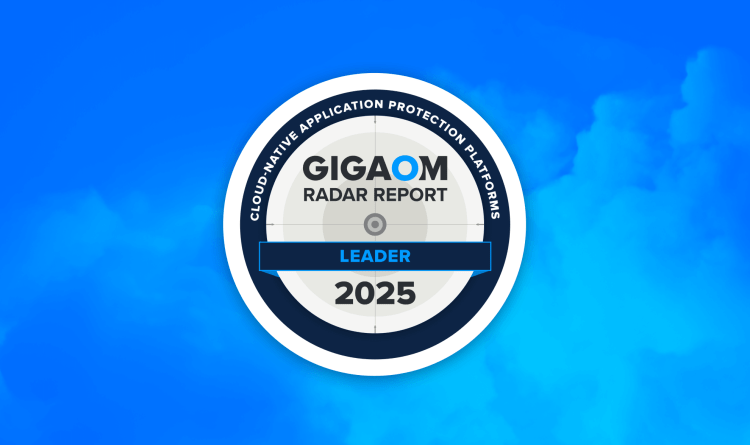
2025 GigaOm Radar Report for CNAPP: Orca Security Named Leader
Report 2025 GigaOm Radar Report for CNAPP: Orca Security Named Leader Analyst firm GigaOm evaluated 18 Cloud-Native Application Protection Platform…
Frequently Asked Questions
Despite being a crucial cloud security solution, CWPP tools present important limitations, including:
- No visibility into the control plane: CWPPs only provide visibility into and security for workloads, not the cloud control plane, including misconfigurations such as publicly exposed storage buckets.
- Inability to contextualize risks: Because CWPP solutions can’t see into the cloud control plane, they also can’t account for contextual factors that may make a risk more or less severe. As a result, they can’t effectively alert teams and prioritize their efforts to focus on the most critical risks.
- Limited coverage: Traditional CWPPs are agent-based and therefore require individual agents to be installed and maintained for every cloud asset. This creates blind spots in cloud security. However modern CWPPs, such as the Orca Platform, provide instant 100% workload coverage and combine CWPP with other cloud security capabilities such as CSPM, CIEM, DSPM, and more.
- No detection for lateral movement: Without an additional solution, CWPP tools can’t identify keys that hackers could exploit to move laterally and access other assets.
Agent-based CWPPs require tedious deployments and management for each workload, leading to high TCO. Vendors offering a choice between agents and agentless approaches only add to the complexity and often have hidden limits on their ‘agentless’ capabilities. In addition, CWPPs only cover cloud workloads and miss risks in the cloud control plane, such as misconfigurations and overly permissive identities.
This limited visibility impacts the tool’s ability to provide full security coverage and effective alert prioritization. Any risks due to cloud misconfiguration (such as MFA not being enabled for the ‘root’ user account or KMS encryption keys not being rotated) cannot be detected by a CWPP. This lack of visibility also means CWPPs lack the context necessary to understand the full implications of a security issue and are therefore unable to prioritize alerts based on environmental context. This causes “swivel chair” alert triage, which leads to alert fatigue.
The Orca Platform provides full-stack visibility of your cloud estate, spanning the cloud infrastructure, OS, application, and data layers, without requiring a single agent and providing instant and continuous 100% coverage of your cloud assets.
Container and Kubernetes vulnerabilities can result in data breaches, unauthorized access to sensitive information, and disruption to business continuity. Since containers and Kubernetes were originally designed for functionality and not security, they lack important security controls and capabilities to address issues such as misconfigurations, vulnerable images or components, sidecar injection, and orchestration layer privilege escalation. Container and Kubernetes Security allows organizations to proactively detect and mitigate security risks, prevent unauthorized access, and maintain a robust security posture.
Traditional API Security tools present several challenges, including:
- API sprawl: The inability to effectively inventory APIs, preventing organizations from discovering rogue endpoints.
- Lack of visibility into unmanaged APIs: Unmanaged APIs create vulnerabilities that can lead to security incidents.
- Understanding high vs. low priority API risks: API Security tools lack visibility into the cloud plane or workload data. As a result, they can’t effectively communicate or contextualize API risks.
- APIs change fast and often: The speed of cloud-based application development and growing adoption of CI/CD processes make it unrealistic to manually track changes in APIs. Each API change requires the manual reconfiguring of traditional security tools.
- Understanding API risk exposure is difficult: As a result of incomplete API inventories, not keeping track of API changes, and incomplete insight into context, organizations can’t easily get answers to their API exposure questions.
However, Orca Cloud Security Platform solves these problems by offering agentless API Security in combination with comprehensive insights into cloud workloads and configurations to provide security teams with a 360-degree view of APIs and related risks, effortlessly scaling as your cloud environment grows.
While a necessary function of cloud security, vulnerability management solutions can present several challenges, including:
- Lack of visibility into the full cloud estate increases the likelihood a vulnerability goes undetected.
- Lack of vulnerability prioritization forces security teams to spend time diagnosing alerts and determining which deserve immediate attention.
- False positives exacerbate alert fatigue and delay the time it takes to respond to actual vulnerabilities.
- Vulnerability growth makes vulnerability management an ongoing challenge, requiring a sustainable approach to ensure continued protection.

Chat with Us
See Orca Security in Action
Gain visibility, achieve compliance, and prioritize risks with the Orca Cloud Security Platform.
 Chat with an Orca Expert
No Slack account required.