



A critical vulnerability (CVE-2026-48282, CVSS 10.0) was disclosed affecting Adobe ColdFusion, allowing attackers to achieve full remote code execution via a path traversal in the Remote Development Services (RDS) FILEIO handler. Due to the potential for complete server compromise and the confirmed in-the-wild exploitation, immediate patching is required.
About CVE-2026-48282
The issue originates from the RDS FILEIO endpoint at /CFIDE/main/ide.cfm?ACTION=FILEIO, where insufficient path validation leads to arbitrary file write on the underlying file system. By sending a specially crafted HTTP request, attackers can upload a CFML webshell containing <cfexecute> tags, potentially gaining full remote code execution as the ColdFusion service account (NT AUTHORITY\SYSTEM on Windows). No authentication is required to exploit this issue when RDS authentication is disabled.
Adobe addressed this flaw on June 30, 2026 as part of security bulletin APSB26-68, which resolved 11 ColdFusion vulnerabilities total, seven of which carried a CVSS score of 10.0. Users should upgrade to ColdFusion 2025 Update 10 or ColdFusion 2023 Update 21 immediately. Organizations that have not yet patched should also disable RDS unless strictly required, block external access to /CFIDE/administrator and RDS endpoints via WAF or firewall rules, and hunt for unauthorized .cfm, .cfc, .cfml, or .jsp files in the ColdFusion web root.
Affected Systems
The following components are affected: Adobe ColdFusion 2025, update 9 and earlier, and Adobe ColdFusion 2023, update 20 and earlier. These components are deployed across enterprise web application stacks, including government, financial, and healthcare organizations, particularly when RDS is enabled and RDS authentication is left in its default disabled state. Other applications relying on ColdFusion as a backend runtime may also be impacted.
Risk Impact
At the time of writing, a detailed technical analysis from WatchTowr is publicly available and serves as a functional exploitation guide. KEVIntel honeypots detected active exploitation within two hours of that analysis going public, and both the Canadian Centre for Cyber Security and the Centre for Cybersecurity Belgium have issued alerts. Shadowserver tracks approximately 750 to 800 internet-facing ColdFusion instances, though the actual vulnerable subset depends on RDS configuration. Regardless, the maximum severity score, the lack of authentication requirements, and the speed of exploitation make this vulnerability extremely high risk, especially in internet-facing deployments.
Successful exploitation could allow attackers to deploy webshells for persistent access, execute arbitrary commands on the underlying operating system, and pivot laterally through the network, leading to service disruption, data exposure, or full infrastructure compromise. Organizations should also rotate credentials on any ColdFusion server that was internet-facing since the June 30 disclosure date.
How Orca Can Help
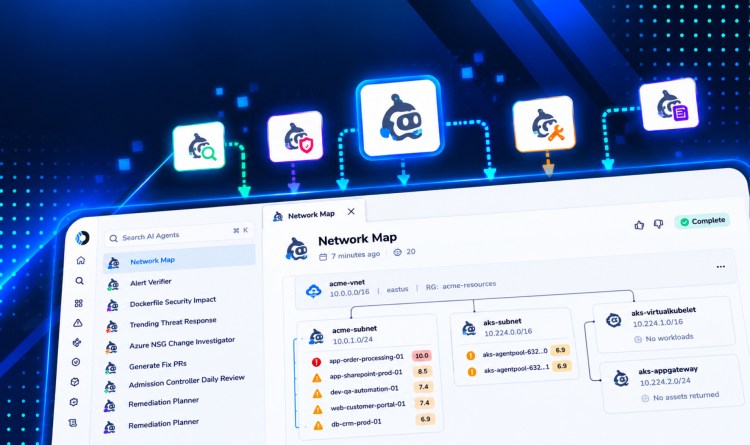
Orca enables customers to quickly identify assets running vulnerable versions of Adobe ColdFusion, understand their exposure in context, including internet accessibility, runtime reachability, and asset criticality, and prioritize remediation based on real risk rather than CVSS alone. Orca’s platform highlights affected assets directly in the alert view, helping security teams focus on the most critical remediation paths first.





 Chat with an Orca Expert