

Cloud Security
Reduce Cloud Risk With One Unified Platform
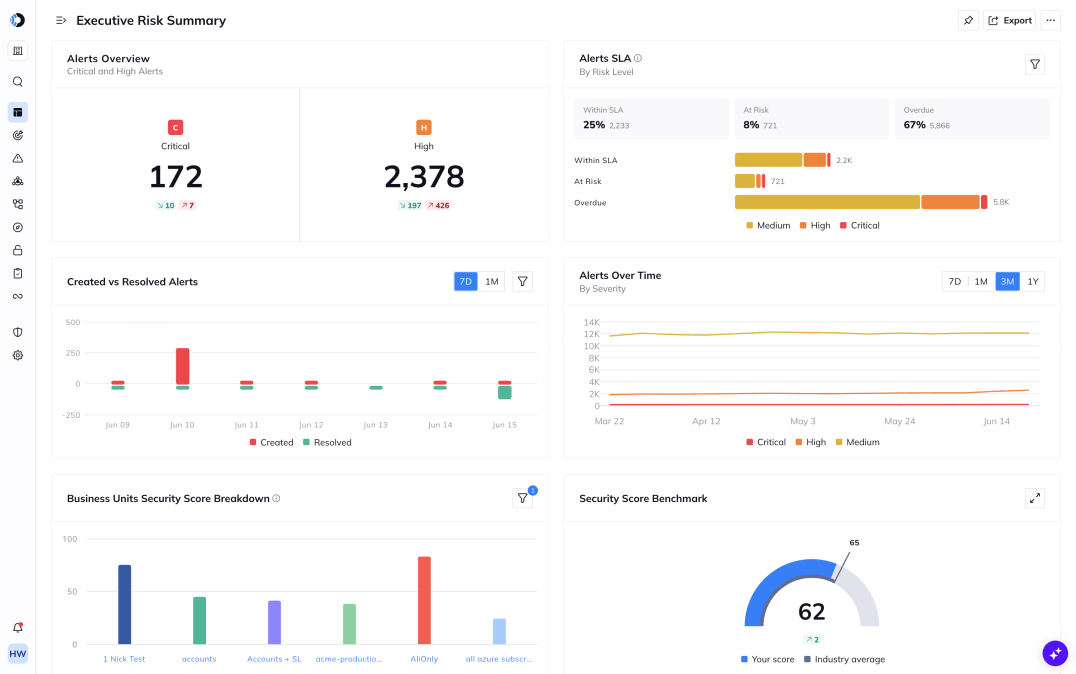
One connected view across multi-cloud infrastructure, workloads, identities, data, AI, and code. Know what actually matters, demonstrate a clear security posture to your board, and act at the scale your business demands.
The Challenge
Your Cloud Is Growing Faster Than Your Ability to See Risk
Cloud environments now span workloads, identities, APIs, data stores, and AI systems. AI is accelerating development faster than security can track. Point tools see their slice, but none of them see how the pieces connect, which is exactly where attackers move.
Juggling 6 or more data sources leaves security teams with blind spots between tools and less time to fix the risks that matter.
Alert volume has outpaced headcount, with no reliable way to know which finding leads to a breach.
Without automated risk correlation, critical exposures across identity, workloads, and data look like low-severity findings in separate dashboards.
I can put this in front of a CEO and they get it, and then an engineer can remediate it.”
Erika Voss
Senior Vice President, Chief Security Officer at Blue Yonder
Validated Business Value
legacy tools replaced
Alert Volume Reduction
Annual Operating Savings
Return on Investment
Average Deployment
Get a Board-Ready Posture View and Precise Configuration Details to Act
Close security gaps before attackers find them.
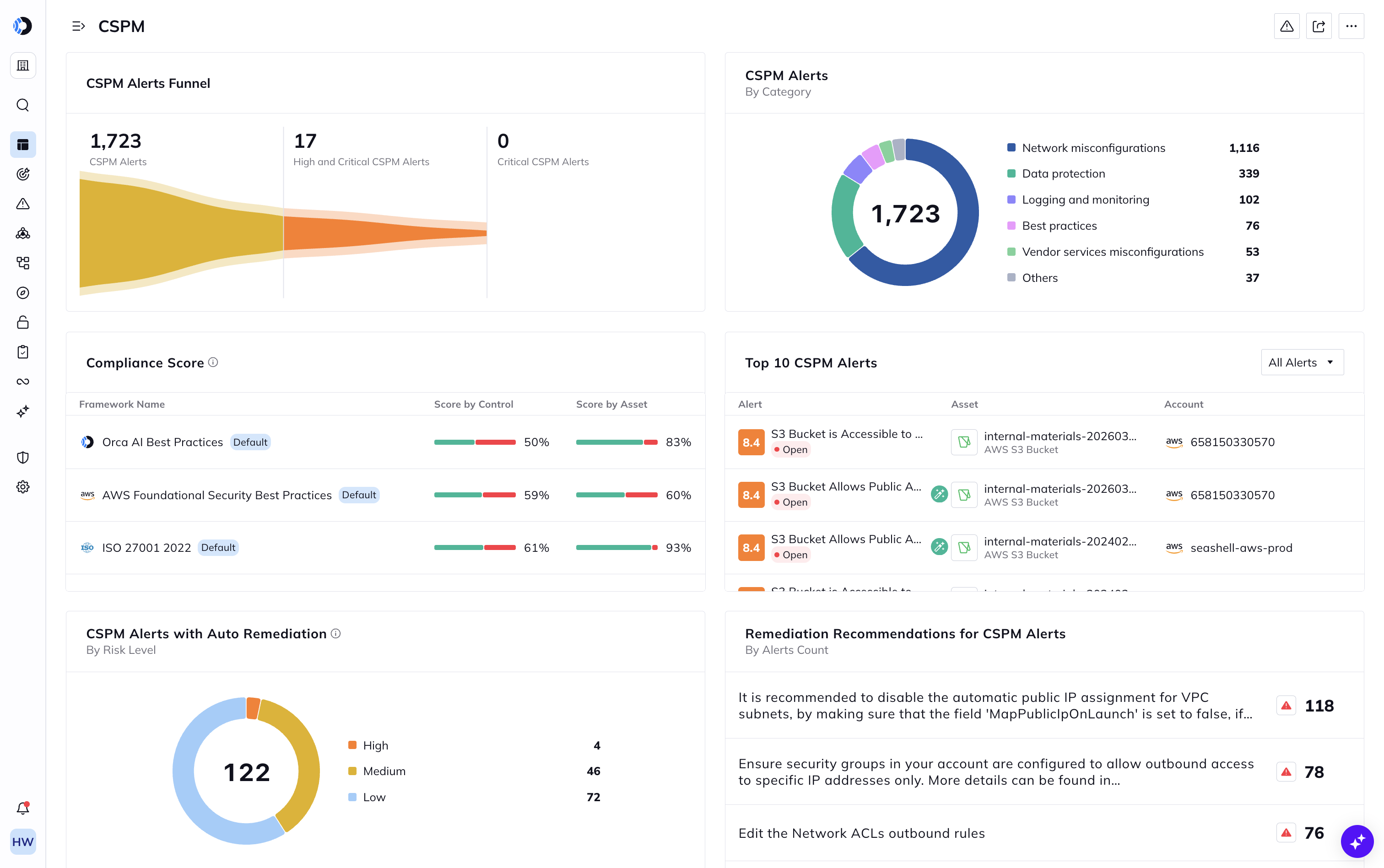
Orca’s Cloud Native Application Protection Platform (CNAPP) gives you continuous, agentless visibility into misconfigurations, policy violations, and risky posture settings across every cloud account and service. Risks are surfaced with attack path context so you’re not chasing findings in isolation. Instead, you’re closing the doors attackers actually use.
Stop Identity Risk Before It Becomes a Breach
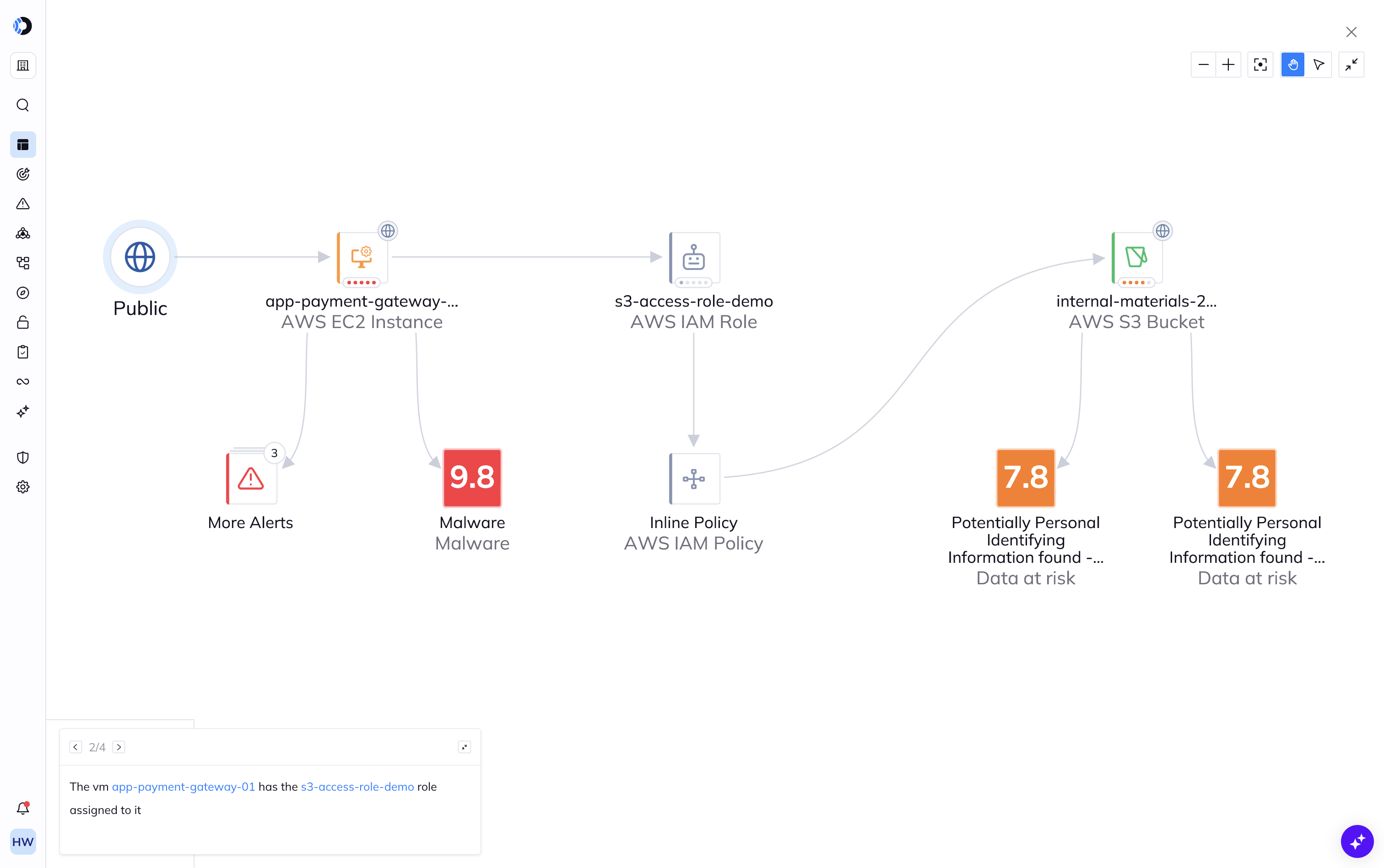
See a prioritized view of which identity risks lead somewhere dangerous.
Overprivileged identities—human and non-human—are now the most common initial access vector in cloud breaches. Orca maps every identity, permission, and access relationship across your cloud environment and surfaces the ones that create real exposure: unused admin roles, cross-account trust misconfigurations, and credentials left in workload environments.
Powered By Orca
The Risk Context to Scale Cloud Security with Confidence
Understand what’s at the core of the Orca Platform so your team can see how findings connect, which ones create real exposure, and where to act first.

Agentless scanning across every workload.

Runtime observability & protection.

The reasoning engine for for AI agents, workflows, and assistants.

Risk correlation to inform action with context, not just disparate data points.

Dynamic scoring & attack path analysis.
Fix Vulnerabilities Based on Real Risk, Not Raw Severity
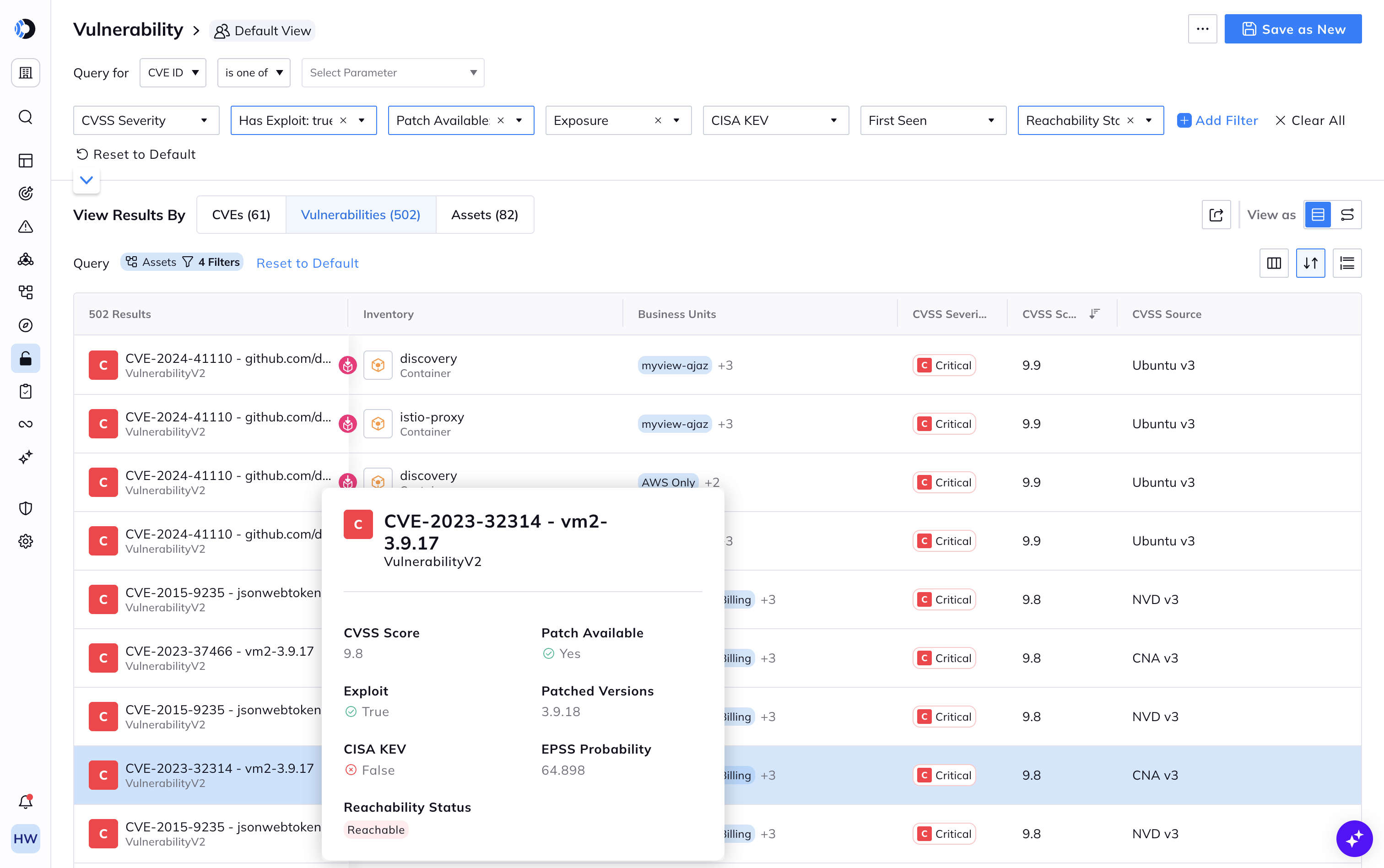
Drive faster fix cycles on the findings that count. Defend why others remain unpatched.
Traditional vulnerability management buries security teams in CVEs ranked by CVSS scores that don’t account for your environment. Orca adds reachability analysis so vulnerabilities can be filtered by whether an attacker can actually reach the vulnerable asset. Combined with exposure context (internet-facing, sensitive data, access paths), your team works the vulnerabilities that could lead to a breach, not just the ones with a high severity score.
Protect Workloads Without Slowing Down DevOps
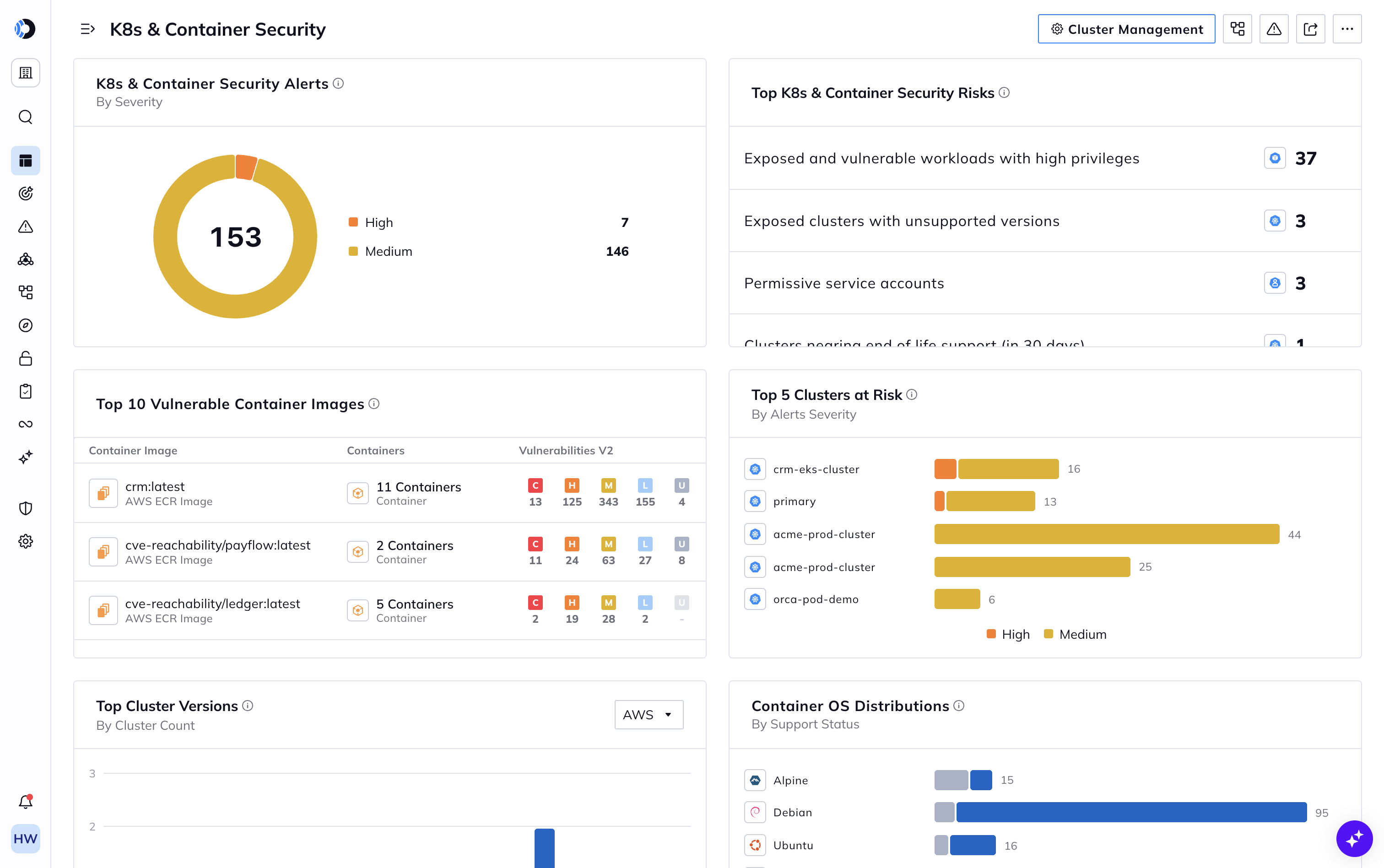
Get assurances that you’re protected and scale coverage agentlessly with the environment.
Orca’s Cloud Workload Protection Platform (CWPP), container security, and API security capabilities give you runtime-level visibility across containers, VMs, serverless functions, and APIs—without the performance impact or management burden of agents. For advanced cloud detection and response, Orca Sensor can be deployed to workloads.
Know Exactly What Auditors Will Find, Before the Audit
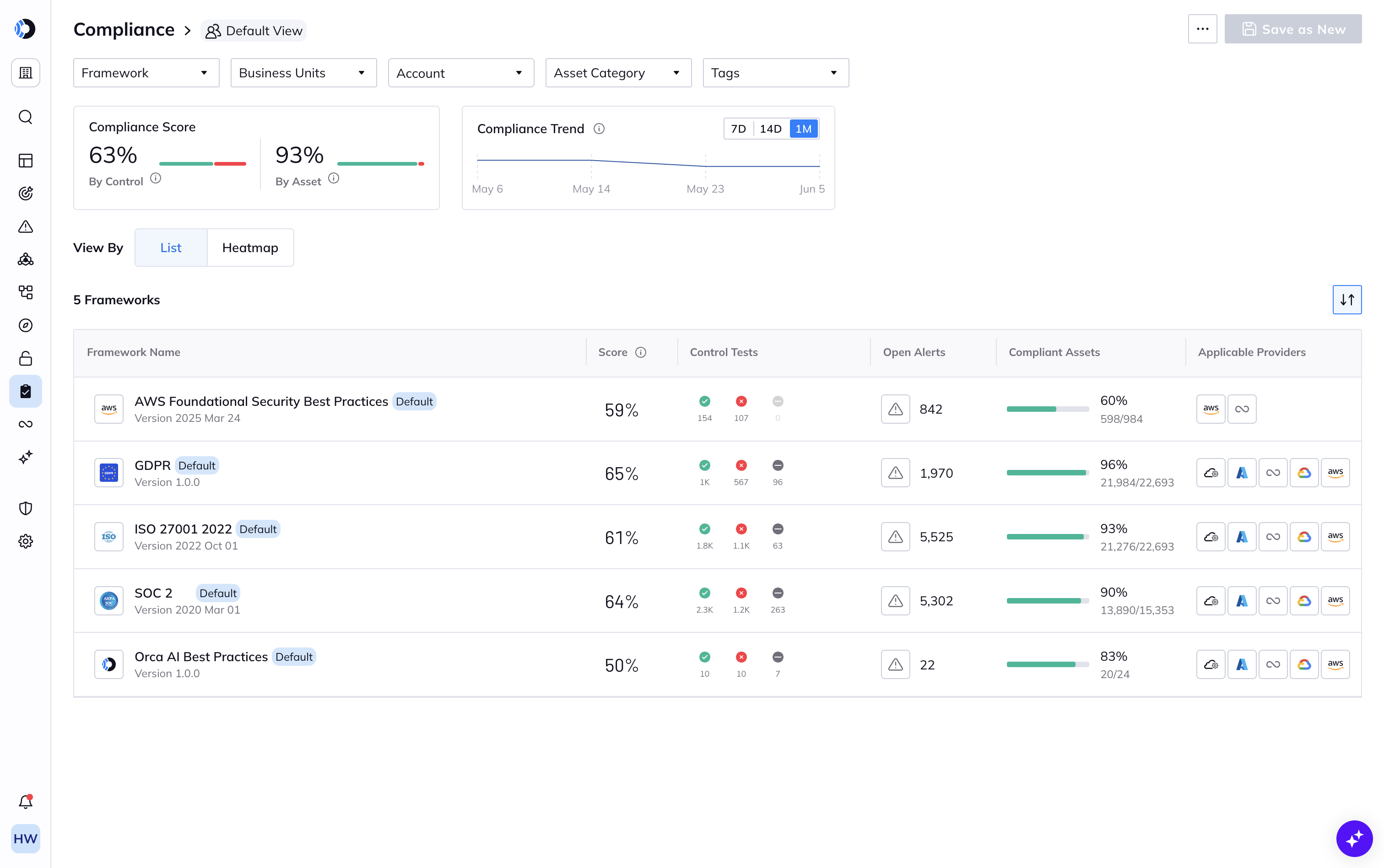
Embrace the flexibility of customizable controls. Download your report with a single click.
Orca maps your multi-cloud environment against the frameworks that matter to your business—PCI DSS, HIPAA, SOC 2, CIS, NIST, ISO 27001, and more—out of the box, with no custom configuration required. Findings are mapped to specific control requirements so your team knows exactly what to fix.
Related Resources
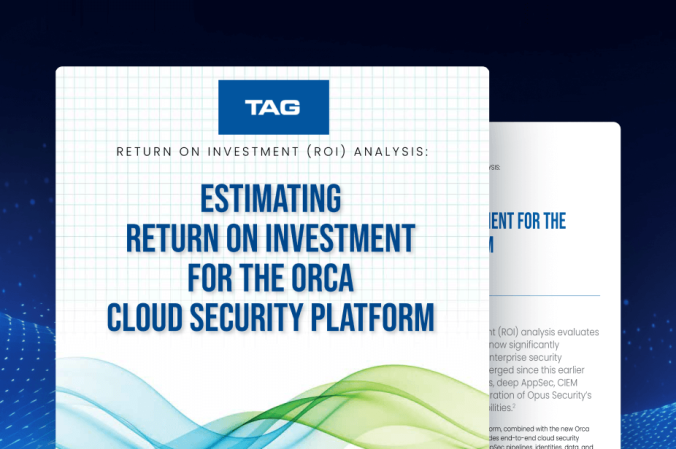


Orca Cloud Security Platform Delivers 198% ROI
Report Orca Cloud Security Platform Delivers 198% ROI In this updated 2026 Return on Investment (ROI) analysis, TAG Analysts evaluated…
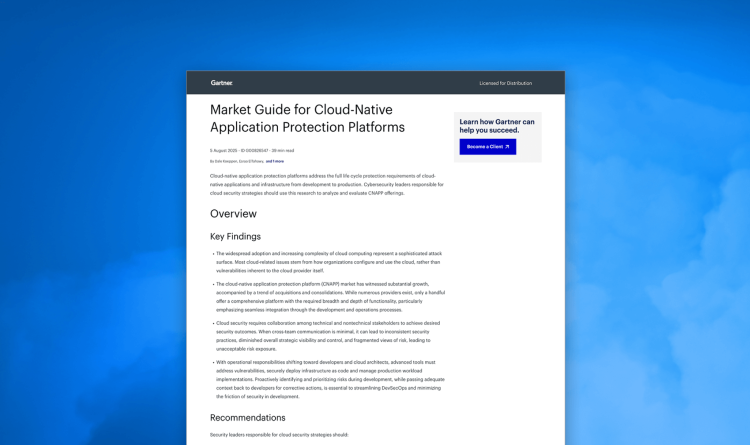
2025 Gartner® Market Guide for CNAPP
2025 Gartner® Market Guide for Cloud-Native Application Protection Platforms (CNAPP) Read the report to learn why Gartner is recommending that…
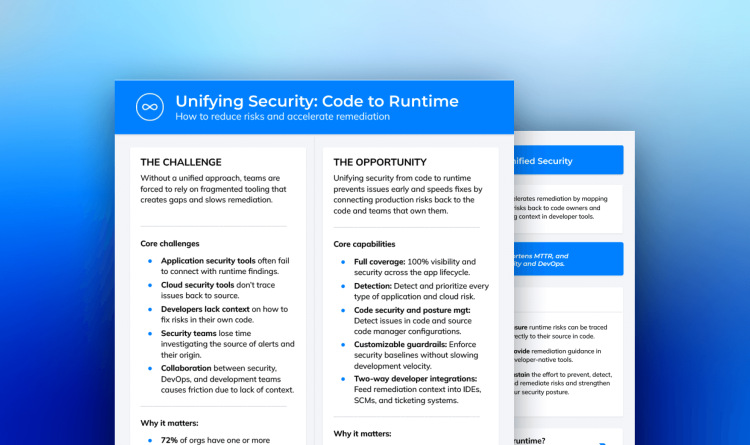
Unifying Security from Code to Runtime
CHEAT SHEET Unifying Security from Code to Runtime Security issues often begin in code, yet most teams rely on fragmented…
Frequently Asked Questions
Most organizations deploy five or more siloed security tools, many of them agent-based. This leads to alert fatigue, with a constant stream of (possibly duplicate) alerts that lack context and provide little insight into how and where to respond to the most critical threats. Agent-based security solutions are tedious to deploy and maintain, and only offer partial coverage. New agent installations are continually needed as the cloud environment grows, making it virtually impossible for security teams to keep up with DevOps.
As opposed to other solutions, the agentless-first Orca Platform deploys across your cloud estate in minutes, automatically discovers new assets as your environment expands, and has zero impact on your workloads. And Orca’s context-aware engine separates the 1% of alerts that demand quick action from the 99% that don’t, enabling security teams to avoid alert fatigue and fix the truly critical security issues before attackers can exploit them.
CSPMs are essential for cloud security, however traditional CSPM solutions present important limitations, including:
- Only cover control plane: CSPMs provide visibility into cloud configurations (control plane) but not cloud workloads (data plane). As a result, they have no insight into vulnerabilities, malware, or exposed secrets.
- Alert fatigue: Without visibility into workloads, CSPM solutions lack the unified insight to fully contextualize risks and prioritize alerts based on the full context.
- No identity and permissions management: CSPM tools also don’t manage access controls, permissions, or entitlements. To support and enforce the principle of least privilege (PoLP), organizations need a cloud infrastructure entitlement management (CIEM) solution.
For this reason, CNAPPs (Cloud-Native Application Protection Platforms) have emerged to address the challenges of using siloed traditional cloud security solutions. A CNAPP is a cloud security solution that detects risks across the full technology stack (control plane and data plane), including cloud misconfigurations, mismanaged identity access, vulnerabilities, malware and data at risk.
Orca provides Cloud Infrastructure Entitlements Management (CIEM) by:
- Promoting identity hygiene, including enforcement of Principle of Least Privilege (PoLP).
- Detecting deviations from identity best practices.
- Using identity data to help understand and prioritize the risks that are found in your system.
- Calculating optimal policy configurations based on role usage in the past 90 days, using Orca’s IAM Policy Optimizer.
While a necessary function of cloud security, vulnerability management solutions can present several challenges, including:
- Lack of visibility into the full cloud estate increases the likelihood a vulnerability goes undetected.
- Lack of vulnerability prioritization forces security teams to spend time diagnosing alerts and determining which deserve immediate attention.
- False positives exacerbate alert fatigue and delay the time it takes to respond to actual vulnerabilities.
- Vulnerability growth makes vulnerability management an ongoing challenge, requiring a sustainable approach to ensure continued protection.
The Orca Cloud Security Platform simplifies multi-cloud compliance across AWS, Azure, Google Cloud, Alibaba Cloud, and Oracle Cloud. Orca performs out-of-the-box compliance checks across cloud workloads, configurations, identities, and data, ensuring that security and compliance policies in all cloud provider platforms are aligned. Orca enables organizations to achieve continuous compliance by effectively prioritizing the most critical risks and providing automated and guided remediation options.
Orca also enhances compliance by enabling organizations to easily create custom frameworks, manage and tailor internal and external reporting, and leverage automation workflows and integrations.

Chat with Us
See Orca Security in Action
Gain visibility, achieve compliance, and prioritize risks with the Orca Cloud Security Platform.
 Chat with an Orca Expert
No Slack account required.