


Table of contents
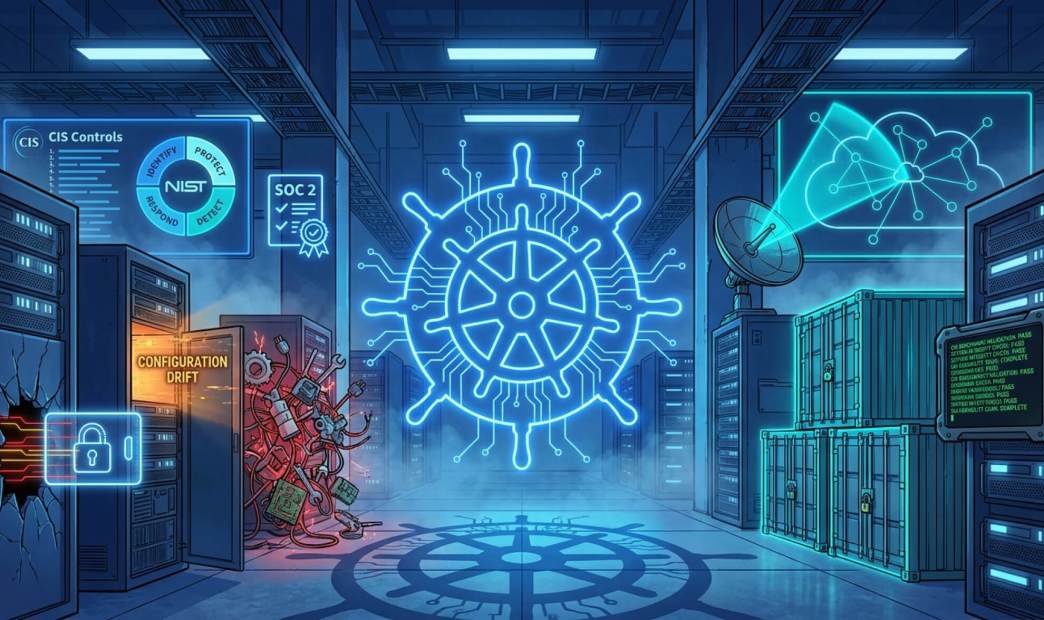
Kubernetes compliance tools automate the enforcement of CIS Benchmarks, enabling teams to continuously validate cluster configurations against industry-accepted security baselines without slowing release velocity. The right tooling replaces manual audits with policy-driven checks that run across the CI/CD pipeline, from build to runtime, catching misconfigurations before they reach production.
Maintaining multi-cloud compliance across dozens or hundreds of Kubernetes clusters is an operational reality that manual processes simply cannot scale to meet. This article breaks down the CIS Kubernetes Benchmark, identifies the core compliance challenges practitioners face, reviews the leading automation tools, and explains how Orca Security consolidates these capabilities into a single agentless platform.
What Is the CIS Kubernetes Benchmark?
The CIS Kubernetes Benchmark is a consensus-based security configuration guide published by the Center for Internet Security. It provides prescriptive recommendations for hardening a Kubernetes environment across the control plane, worker nodes, etcd, policies, and network configurations. Each recommendation maps to a specific security control, and the benchmark is versioned to align with Kubernetes releases.
The benchmark organizes its controls into two profile levels. Understanding the distinction between them helps teams prioritize which controls to implement based on their risk tolerance and data sensitivity.
| Attribute | Level 1 | Level 2 |
|---|---|---|
| Target Audience | All Kubernetes deployments | Environments handling sensitive or regulated data |
| Security Posture | Basic hardening, broad applicability | Advanced hardening, defense-in-depth |
| Operational Impact | Minimal disruption to cluster functionality | May restrict some functionality or require additional configuration |
| Example Controls | Ensure anonymous authentication is disabled; ensure audit logging is enabled | Enforce Pod Security Admission at restricted level; encrypt etcd data at rest |
| Compliance Mapping | Aligns with NIST SP 800-53 and SOC 2 | Supports stricter requirements under PCI-DSS, HIPAA, and FedRAMP® |
Teams new to CIS benchmarks often face hundreds of individual controls with no clear starting point. A practical approach is to enforce all Level 1 controls first, establish a passing baseline, and then layer in Level 2 controls for namespaces and clusters that process sensitive workloads.
The Core Challenges of Maintaining Kubernetes Compliance
Keeping clusters compliant is a persistent operational challenge, and the difficulty compounds as organizations scale. The dynamic nature of Kubernetes, where pods are created and destroyed in seconds, makes static compliance snapshots unreliable almost immediately after they are taken. Teams managing Kubernetes security risks across multiple clusters and cloud providers deal with specific, recurring pain points that deserve direct acknowledgment.
Alert overload and resource constraints are common. Security teams are often outnumbered by development teams, and noisy tooling makes this worse by producing alerts without useful context.
Configuration Drift and Misconfigurations
Rapid scaling introduces a significant margin for error. A single missed setting during a node pool expansion, or a manual kubectl patch applied during an incident, can silently cause a cluster to drift from its CIS baseline. These deviations accumulate. According to NIST SP 800-190, misconfiguration of container platforms is one of the primary risk categories in containerized environments. Without continuous validation, teams only discover drift during the next scheduled audit, which could be weeks or months later.
Vulnerable Container Images
Even organizations with mature CI/CD pipelines can deploy containers built on outdated base images or libraries with known CVEs. Tens of thoughts of new CVEs are published annually, and container images that were clean at build time can become vulnerable within days as new disclosures are published. Scanning images only at build time creates a false sense of security. Continuous image assessment across running workloads is necessary to catch vulnerabilities that emerge post-deployment.
Over-Permissive RBAC Roles
Role-Based Access Control is one of the most powerful isolation mechanisms in Kubernetes, and one of the most commonly misconfigured. Granting cluster-admin privileges to service accounts or developers, often done to “unblock” a deployment, bypasses namespace isolation entirely. When a pod running with excessive permissions is compromised, the attacker inherits those permissions. The blast radius expands from a single workload to the entire cluster. CISA’s Kubernetes Hardening Guide specifically calls out least-privilege RBAC enforcement as a critical hardening step.
The Burden of Alert Fatigue
Managing these challenges manually, or with a collection of disconnected tools, floods security teams with alerts that lack prioritization. A misconfigured RBAC role, an unpatched image, and a drifted API server setting all generate alerts at the same severity level. Without unified context, teams spend cycles triaging instead of remediating. This slows deployment cycles and erodes trust between security and engineering.
Top Tools for Automating Kubernetes CIS Compliance
The landscape of open-source DevSecOps tools for Kubernetes compliance is rich, with each tool solving a specific slice of the problem. The challenge is that no single open-source tool covers the full compliance lifecycle from configuration scanning to policy enforcement to runtime detection. Cobbling together separate point solutions creates what practitioners call a “franken-stack”: a patchwork of tools with overlapping alerts, inconsistent data models, and no shared context. The result is blind spots between tools and alert fatigue within them.
Kube-Bench for Automated Assessments
Kube-bench is an open-source scanner developed by Aqua Security that inspects control plane components, worker nodes, etcd, and Kubernetes policies against CIS Kubernetes Benchmark definitions. It runs as a job inside the cluster and produces a pass/fail report for each control. Kube-bench is excellent for point-in-time assessments and integrates well into CI/CD pipelines as a gate. Its limitation is scope: it checks configurations but does not enforce policies or monitor runtime behavior.
Open Policy Agent for Policy Enforcement
Open Policy Agent (OPA), often deployed via the Gatekeeper admission controller, is a versatile policy engine that evaluates requests against custom rules before resources are admitted into the cluster. It prevents non-compliant configurations from entering the environment in the first place. OPA policies are written in Rego, a purpose-built query language, which gives teams fine-grained control. The tradeoff is complexity: writing and maintaining Rego policies at scale requires dedicated expertise.
Falco for Runtime Threat Detection
Falco monitors kernel system calls in real time and generates alerts when it detects anomalous behavior, such as unexpected privilege escalation, shell execution inside a container, or sensitive file access. It fills a gap that configuration scanners cannot address: what happens after deployment. Falco is effective at catching runtime threats, but it generates high volumes of events that require tuning and a separate correlation layer to be actionable.
Kubescape for Posture Management
Kubescape scans Kubernetes manifests, Helm charts, and RBAC configurations to assess overall cluster posture against CIS Benchmarks and NSA/CISA hardening guidelines. It assigns risk scores to identified misconfigurations, helping teams prioritize remediation. Kubescape is particularly useful for scanning infrastructure-as-code artifacts before deployment, shifting compliance checks left in the development lifecycle.
How Orca Security Automates Kubernetes Compliance Agentlessly
Each of the tools above addresses a real need, but running four or five separate point solutions creates the exact fragmentation and alert fatigue that compliance automation is supposed to eliminate. Teams spend more time correlating findings across disconnected dashboards than remediating the issues those dashboards surface.
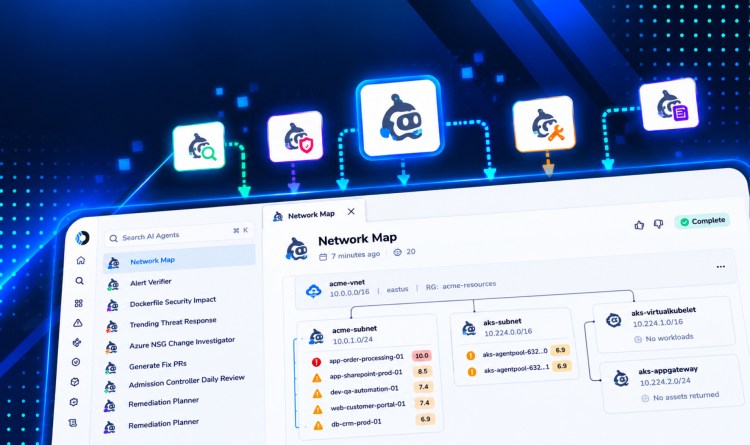
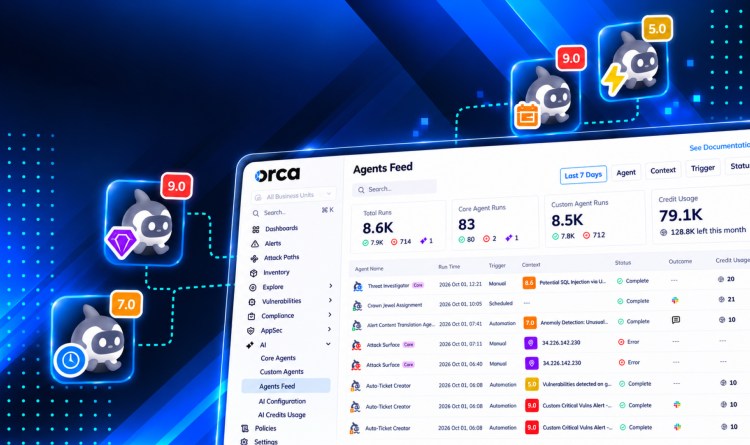
Orca Security uses agentless SideScanning™ to read the runtime block storage and cloud APIs of every workload without deploying a single agent, sensor, or sidecar into the cluster. Its Unified Data Model automatically maps findings against 180+ compliance frameworks, including CIS Kubernetes Benchmarks, NIST SP 800-53, PCI-DSS, HIPAA, and SOC 2, and correlates vulnerabilities, misconfigurations, identity risks, and network exposure into a single prioritized view. A vulnerable container image running with cluster-admin permissions and exposed to the internet surfaces as a critical attack path, not three separate alerts in three separate tools.
Explore Orca’s Container and Kubernetes Security capabilities to see how agentless compliance works in practice, or Get a Demo to see it applied to your environment.
Frequently Asked Questions about Kubernetes Compliance & Benchmarks
Kubernetes compliance and security tooling raise practical questions, especially when teams are evaluating whether to build a multi-tool stack or adopt a unified platform. The following questions address the most common decision points.
Kubernetes compliance measures whether your cluster configurations meet a defined standard, such as CIS Benchmarks or NIST SP 800-53. Security is broader and includes runtime threat detection, vulnerability management, and identity controls. Compliance is a subset of security, not a substitute for it.
Compliance as code encodes your benchmark requirements into machine-readable policies that run automatically at every stage of the CI/CD pipeline. When a configuration change violates a policy, the pipeline catches it before it reaches production. This removes the window between scheduled audits where drift would otherwise go undetected.
Level 2 controls are appropriate for clusters that process sensitive or regulated data, such as environments subject to PCI-DSS, HIPAA, or FedRAMP requirements. Organizations should establish a clean Level 1 baseline first, then apply Level 2 controls to namespaces and clusters where the data sensitivity justifies the additional operational overhead.
A dedicated posture scanner like Kubescape evaluates configurations and surfaces misconfigurations, but its findings exist in isolation from the rest of your cloud environment. A unified CNAPP correlates Kubernetes posture findings with vulnerability data, identity risks, and network exposure across your entire cloud footprint. That context is what converts a list of alerts into a prioritized set of attack paths.
Yes. Agentless SideScanning reads the runtime block storage and cloud APIs of running workloads without requiring a sensor or sidecar deployed inside the cluster. This approach provides continuous visibility into node and container configurations against CIS Benchmark controls without adding overhead to the workload itself.



 Chat with an Orca Expert