


Table of contents
- Key Takeaways
- What Is a Unified Security Platform?
- Why Organizations Are Consolidating Security Platforms
- Unified Security Platform vs Point Solutions
- Key Components of a Modern Security Platform
- AI-Native Security Platform Architecture
- Choosing the Right Unified Security Platform
- Unified Security Platform Best Practices
- How Orca Unifies Cloud Security on One Data Model
- Frequently Asked Questions about Unified Security Platforms
Key Takeaways
- A unified security platform holds endpoint, identity, cloud, data, and application security in one data model, so a finding in any domain arrives carrying the context of the others.
- Unification is an architectural property, and the test is whether your assets resolve to a single record across every domain the platform covers.
- Point solutions still win on depth inside a narrow domain, so the trade-off is real. Consolidate when your hardest questions sit at the seams between tools.
- “AI-native” describes where the AI sits in the architecture. An AI grounded in one shared model answers cross-domain questions, while a copilot attached to one product summarizes that product’s own findings.
- Orca applies the criterion to cloud security, reading the whole cloud estate agentlessly through SideScanning™ and holding workload, identity, configuration, and data findings in one graph.
A unified security platform holds endpoint, identity, cloud, data, and application security in a single data model. Instead of each tool seeing only one slice of the environment, every finding arrives with the context of the others already attached.
The difference becomes obvious when a scanner flags an exposed host while your identity tool reports a suspicious sign-in. Determining whether those events describe the same intrusion should not require analysts to correlate separate consoles that identify the same machine in different ways.
“Platform” is a marketing word, and the objection to it is fair. Many vendors use it to describe a bundle, an acquisition portfolio, or a shared login page. The word means something only when you test the architecture underneath, because unification is a property of the data model, not the packaging. This guide explains what the term means, the architectural properties that earn the name, where point solutions still make sense, and how to evaluate a vendor’s claim.
What Is a Unified Security Platform?
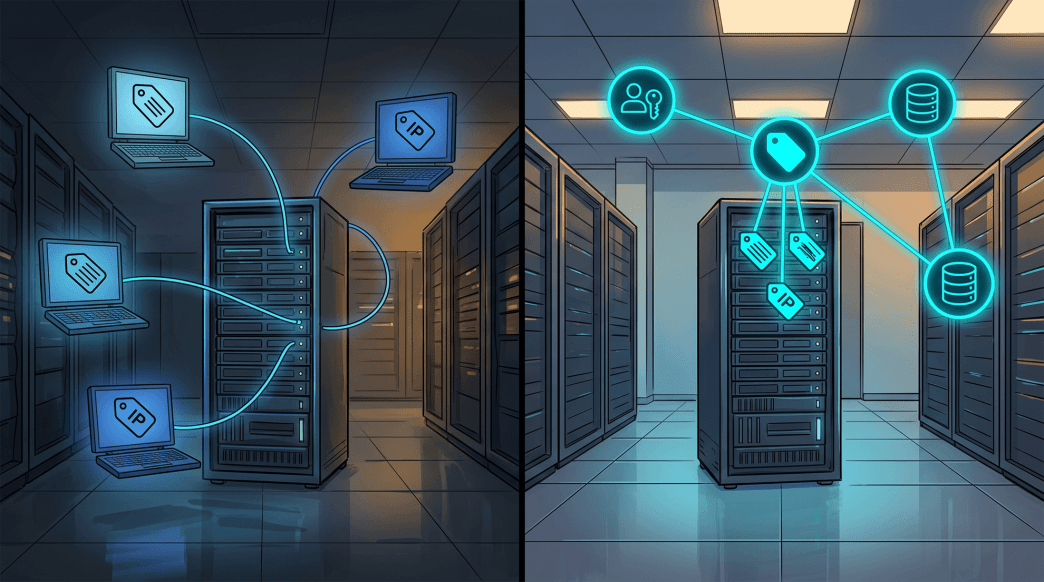
A unified security platform is a security architecture that holds endpoint, identity, cloud, data, and application security in a single data model. Every finding resolves to the same assets and identities under one schema, so a risk in one domain arrives already carrying the context of the others. The test is simple: does every tool resolve to the same asset? In a bundle, the endpoint agent knows a machine as web-prod-04, the cloud posture tool as i-0a1b2c3d4e5f67890, and the scanner by IP address. One machine becomes three records.
That distinction matters because products from the same vendor can still write to separate databases with separate asset keys. A single vendor is a procurement outcome. A shared data model is an engineering one, and only the second changes what your analysts can answer in the morning.
Why Organizations Are Consolidating Security Platforms
Leaders pursue platform consolidation to improve their risk posture, but consolidation alone is not the goal. The harder problem is reducing the gaps that appear when assets, identities, applications, and data are viewed through separate systems. A platform only delivers on that promise if it gives analysts the context they need to understand how those pieces relate to one another.
The case for reducing security tool sprawl is covered in depth elsewhere. The architectural argument is the one that decides whether consolidation works. A security operations center fed by a SIEM collects records from every domain, but aggregation is not correlation. A SIEM can store a host alert keyed to a hostname and a cloud alert keyed to a resource ID without knowing they describe the same machine. Analysts still have to make that connection.
Unified Security Platform vs Point Solutions
Point solutions win on depth. A dedicated tool in a narrow domain ships the features its category cares about, on its own release cycle, answering to buyers who use nothing else. A unified platform wins on the questions that cross domains. Both statements hold at once, which makes this a trade-off to weigh.
| Dimension | Unified Security Platform | Point Solutions |
|---|---|---|
| Coverage | Broad across domains | Deep in one domain each |
| Context across domains | Yes | No |
| Depth in a niche | Partial | Yes |
| Operational cost | Potentially lower after migration | Higher, grows per tool added |
| Lock-in risk | Higher | Lower |
The decision rule turns on where your unanswered questions live. If your hardest problems sit inside one domain, and a specialist answers them better than anything else, keeping that tool is defensible. If they sit at the seams between domains, no amount of depth closes them.
The missing information is often the relationship between two findings, and no single tool holds both sides of it. Consolidation also concentrates risk, and the honest version of this argument says so. One platform means one vendor’s roadmap, one outage surface, and a weaker hand at every renewal. That risk has an architectural mitigation, which the next section covers.
Key Components of a Modern Security Platform
A security platform architecture earns the name through four properties, and each one is checkable before you sign anything.
A Shared Data Model
One asset appears once. A workload, the container on it, the identity it assumes, and the customer database that identity can read are four records with real relationships. A shared model stores them together and queries them together.
If a new capability writes to its own store and reconciles on a schedule, the shared model is a reporting layer stretched over separate products. The sync interval gives it away: a model that reconciles nightly cannot answer a question about this morning.
Open Integration and Data Portability
An open security platform lets you move your data without a professional services engagement. That keeps consolidation from becoming a one-way door and is now testable against open standards.
The Open Cybersecurity Schema Framework is a vendor-agnostic schema for security events that gives tools a common language for naming and structuring data. Instead of translating between proprietary formats, analysts and detections can work from a shared model. Ask whether a platform both emits and ingests OCSF, and whether that support extends across the data model rather than a single export.
Three things matter for portability: bulk export of findings, an API that returns relationships, and documented retention on storage you control. Teams that skip this question meet the answer at renewal, when switching costs decide the negotiation.
Unified Policy and Control
Unified policy means one place to express intent and one engine to enforce it. A rule such as “no internet-facing resource may carry an identity that can read customer data” becomes one statement instead of three separate rules across different consoles. Separate policy engines create different syntax, schedules, and blind spots.
Exceptions expose the difference. A unified platform records an exemption once and applies it everywhere. Separate engines each need their own exception, and the forgotten one creates risk.
Correlation and Context Across Domains
Correlation is what the first three components exist to produce. An identity alert and a workload alert describing the same intrusion should arrive as one finding, not separate tickets in different queues. An EDR tool may see the process while a CDR tool sees the API call, but both only see part of the picture.
Attack path analysis connects those pieces. An internet-facing host with an unpatched service, a role with excessive permissions, and access to customer data form one chain of risk. In a fragmented estate, each hop sits in a different tool, which is why the types of cloud security tools and how these cloud categories fit together matter when evaluating coverage.
AI-Native Security Platform Architecture
An AI-native platform places the model inside the architecture, underneath the console. The distinction comes down to what data the AI can reach, and that one question resolves most “AI-powered” claims in about a minute.
| Question to ask | AI-native platform | AI added to a product |
|---|---|---|
| What data can the AI see? | The whole shared model | One module’s findings |
| Where does context come from? | Relationships already in the graph | Text in the console |
| What can it answer? | Cross-domain questions | Summaries of its own alerts |
| What arrives with a new domain? | The AI reaches it | Another copilot |
A copilot attached to a vulnerability scanner can summarize vulnerabilities, draft a ticket, and explain a CVE in plain language. That is useful work, and none of it needs a shared model. Ask the same copilot whether the vulnerability sits on an internet-reachable host carrying an identity with access to customer records. It goes quiet, because the scanner never held those facts.
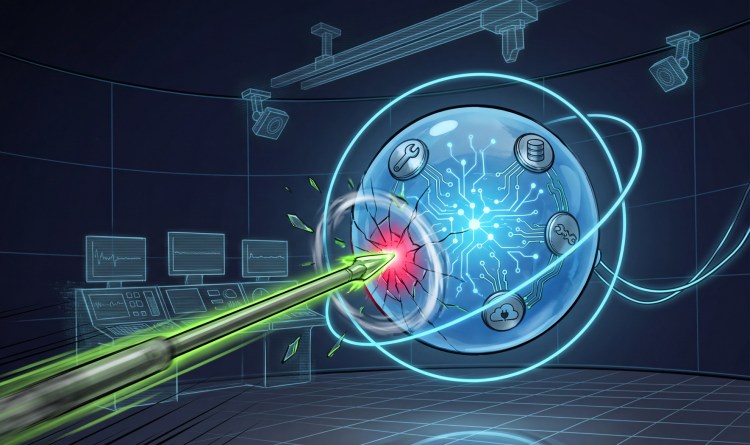
AI agents in security tooling inherit the reach of the data behind them. Point one at a fragmented estate and it re-creates the analyst’s console-hopping in software, with the same manual joins and the same guesses. Grounding changes the answer, which makes “AI-native” a claim about architecture. The AI your own engineers build becomes another domain to secure. The same security principles apply to model endpoints, training data, and agent identities as they do to workloads.
Choosing the Right Unified Security Platform
A security platform strategy starts with the questions your current tools cannot answer. Write them down before you take a single briefing. Those questions become your evaluation criteria, and they are harder for a vendor to reshape than a feature matrix. Five hold up across evaluations:
- Does the platform resolve my assets into one record? Bring three real names for one machine, taken from three of your own tools, and ask the vendor to show all three landing on a single object.
- Can I get my data back out? Bulk export, OCSF support, and an API that returns relationships.
- Which domains are native, and which arrived by acquisition? Ask when each deal closed and whether that module writes to the shared store yet.
- What breaks during migration? Detections, suppressions, exceptions, and integrations, in that order of pain.
- What does year three look like? Roadmap dependency and your negotiating position at renewal are part of the architecture decision.
Sequencing determines whether the strategy survives contact with the estate. Consolidating one domain at a time tests the shared model before anything depends on it, and sequencing a cloud security program follows the same logic one layer down.
Migration is where the cost lands: detections rewritten, exceptions re-entered, integrations rebuilt, and a stretch where both stacks run at once. Budget for the overlap rather than assuming consolidation delivers immediate savings. The evaluation criteria that matter most are the ones you can test in your own environment.
Unified Security Platform Best Practices
Five practices separate teams that consolidate well from teams that buy a bundle and rename it.
- Lead with the questions your team cannot answer today. A list of cross-domain questions beats any feature comparison, because it is written in your environment’s terms.
- Test the data model first. Every other property depends on it, and it is the one a demo can hide. Ask for one asset, shown from three angles.
- Build toward an open security architecture. An open security architecture keeps the schema, the export path, and the integration surface under your control. Published schemas such as OCSF make that testable.
- Consolidate one domain at a time. Pick the domain where the seams hurt most, prove the model, then move. Big-bang migrations fail on exceptions.
- Turn the platform into a program. Architecture decides what is possible, and the operating practice around it decides what happens. The real work begins after the contract is signed.
How Orca Unifies Cloud Security on One Data Model
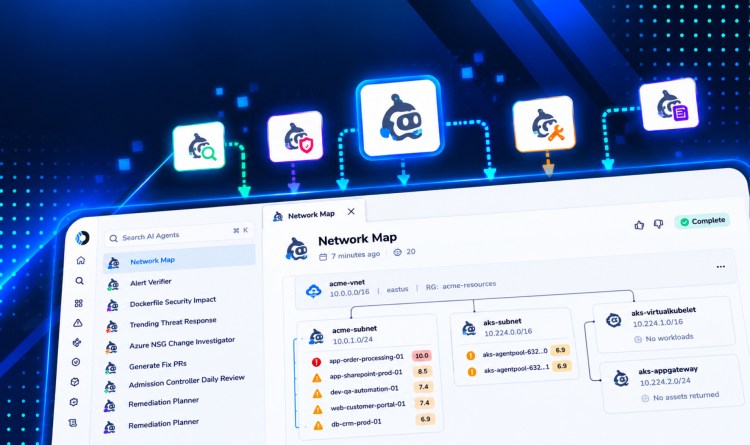
Orca applies the one-data-model criterion to the cloud and AI estate. Its Unified Data Model maps assets, configurations, identities, network paths, and data stores across AWS, Azure, Google Cloud, Oracle Cloud, and other cloud environments into one live model. It intentionally focuses on cloud infrastructure rather than replacing endpoint security, which is exactly the kind of architectural boundary this article argues vendors should make clear.
Orca collects that data agentlessly through SideScanning™, unifying workload, configuration, identity, and data findings in the same model. Risks are prioritized using exploitability, exposure, asset value, and blast radius, so analysts evaluate findings in context rather than severity alone. Get a demo to see it in your own environment.
Frequently Asked Questions about Unified Security Platforms
No. Buying every product from one vendor gives you one contract and one support line. It gives you a shared data model only if the vendor built one. Vendors that grew through acquisition often still run separate products under one brand. Ask when each module was acquired and whether it writes to the same shared data model.
A suite is a commercial package of products that keep their own consoles and data stores. A platform shares the architecture underneath, so every new capability adds to the same data model. The difference is whether adding another product creates another console or more context in the one you already use.
Sometimes, but cost is rarely the strongest reason to consolidate. Licensing may decrease, while migration brings its own costs as detections, exceptions, and integrations are rebuilt. Judge consolidation on whether it answers questions your current tools cannot, with cost savings as a secondary benefit.
The Open Cybersecurity Schema Framework (OCSF) is an open, vendor-agnostic schema for security events. It makes a platform’s openness testable by allowing data to move between tools without custom parsers. A common exchange format improves portability, while a shared data model lets findings relate to one another.
Usually longer than planned, with exceptions and customizations taking the most time. Importing findings is relatively straightforward, but rebuilding years of tuning, suppressions, and one-off exceptions is what extends the project. Inventory your exceptions before you migrate, they usually determine the real timeline.
Table of contents
- Key Takeaways
- What Is a Unified Security Platform?
- Why Organizations Are Consolidating Security Platforms
- Unified Security Platform vs Point Solutions
- Key Components of a Modern Security Platform
- AI-Native Security Platform Architecture
- Choosing the Right Unified Security Platform
- Unified Security Platform Best Practices
- How Orca Unifies Cloud Security on One Data Model
- Frequently Asked Questions about Unified Security Platforms



 Chat with an Orca Expert