





Open-source software (OSS) is the backbone of modern application development. It accelerates innovation, reduces costs, and enables teams to deliver new capabilities faster than ever before. But while OSS makes development easier, it also introduces significant legal and compliance risks.
According to OWASP, license compliance ranks among the top 10 risks of using open-source software. Each OSS component carries its own license, defining how the code can be used, modified, and distributed. If these requirements are overlooked or violated, organizations risk serious consequences, including the loss of intellectual property, legal penalties, and lasting reputational damage.
Yet maintaining compliance across thousands of dependencies is no small feat. Security teams often lack visibility into which OSS licenses exist across their repositories, how they’re being used, and whether they align with company policies. Manually reviewing license terms across every build simply isn’t scalable.
To address this challenge, Orca ensures organizations can automate their OSS license compliance as part of our Software Composition Analysis (SCA) capabilities. This feature enables organizations to automatically detect, monitor, and enforce OSS license compliance across their codebase before risky components are merged or deployed.
For example, if a developer adds a new library governed by a prohibited license type, Orca automatically flags and blocks the pull request according to policy. This ensures that license compliance is maintained at scale, reducing business risk while helping developers move faster with confidence.
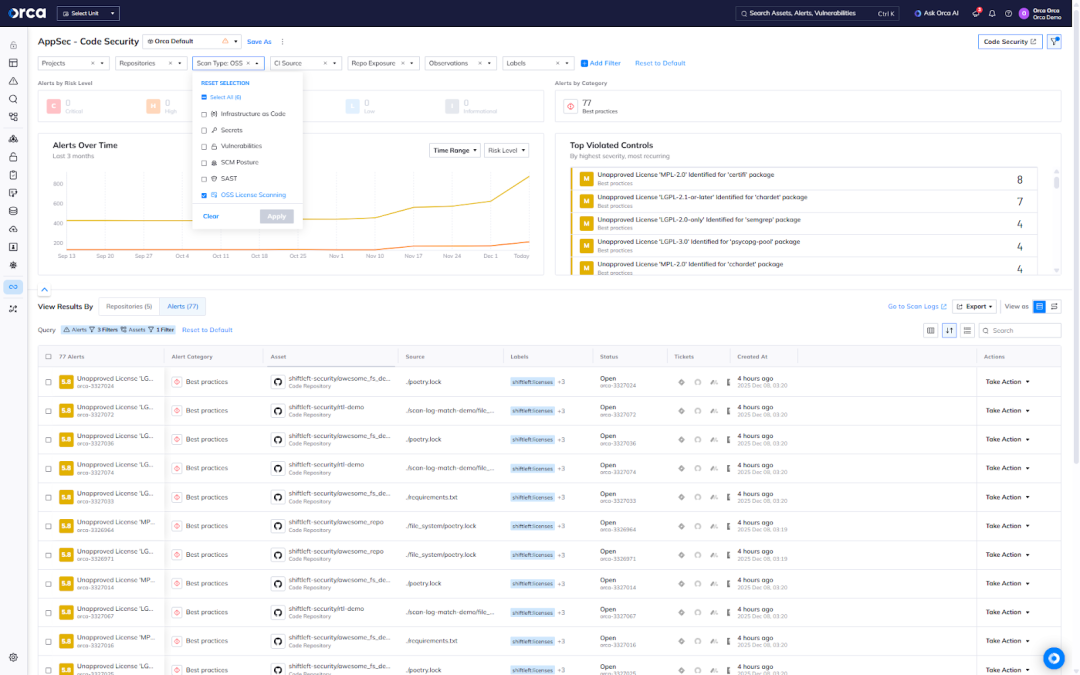
Customizable security policies
Every organization has its own standards and risk tolerance when it comes to OSS usage. Orca gives teams complete control with a comprehensive policy catalog for license detection and enforcement.
Security teams can easily enable predefined policies or customize them to fit their specific requirements. For each policy, users can choose the appropriate enforcement action, whether to block deployments containing certain licenses or simply notify developers so they can review and approve exceptions.
This flexibility allows teams to balance speed and control, ensuring compliance without creating unnecessary friction for developers. Whether enforcing strict license requirements for production environments or adopting a more permissive stance for your builds, Orca adapts to your organization’s development culture and compliance posture.
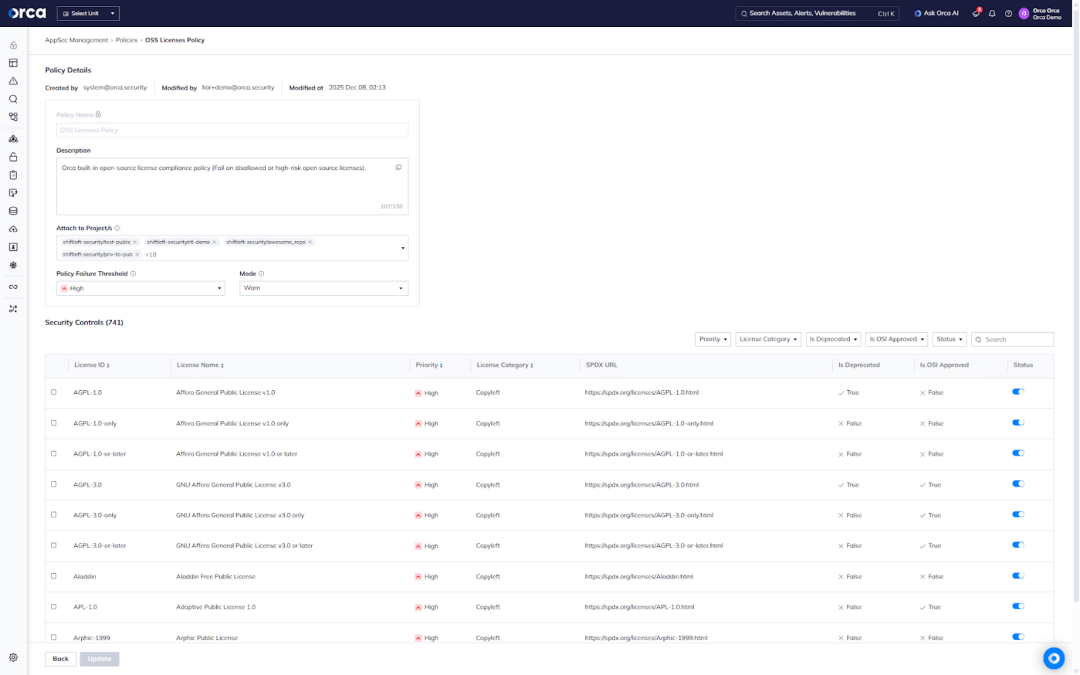
Native integrations for frictionless workflows
Compliance shouldn’t come at the expense of productivity. With Orca, OSS license enforcement happens natively within developer workflows, not as an afterthought.
Through deep integrations with GitHub, GitLab, Azure DevOps, and Bitbucket, Orca automatically surfaces license issues where developers are already working. Annotations appear directly inline on pull requests, providing instant visibility into detected license violations and clear guidance on remediation.
This approach eliminates the need to switch between consoles or manually review code dependencies. Developers can immediately see what went wrong, why it matters, and how to fix it, streamlining collaboration between security and engineering while embedding compliance earlier in the software development lifecycle.
Audit-ready reporting and visibility
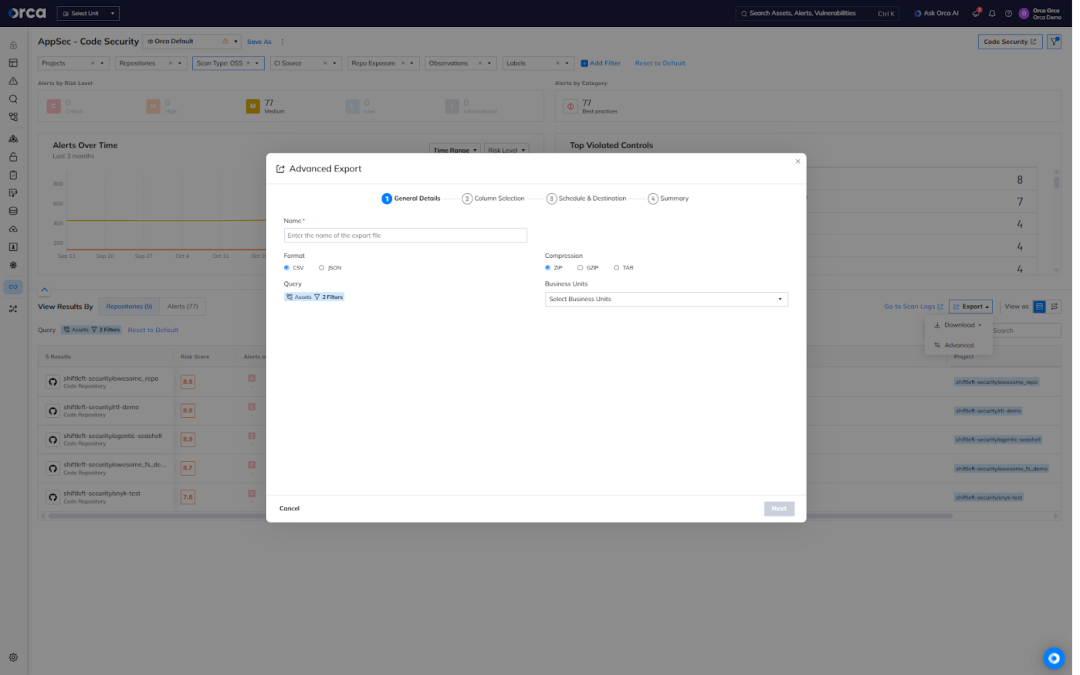
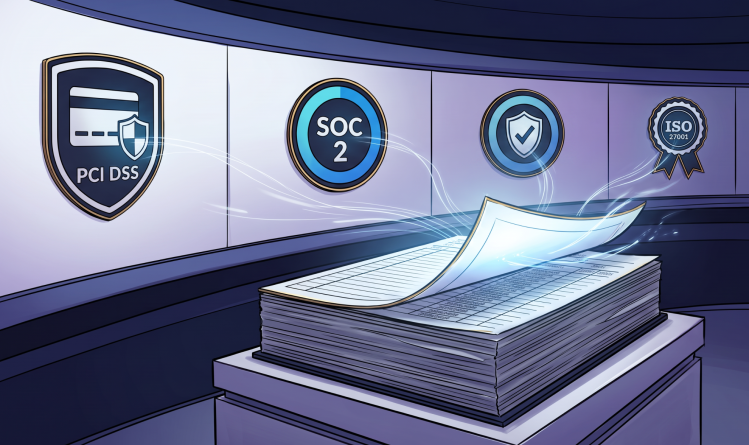
Maintaining compliance is about more than detection—it’s about visibility and accountability. Orca provides audit-ready reporting that gives security teams a centralized view of all license scans and scan logs across every repository and CI/CD pipeline. Additionally, Orca’s SBOM capabilities also provide clear, centralized visibility into the licenses of all third-party packages across code repositories. SBOM reports are exportable in popular formats like SPDX, CycloneDX, CSV, and JSON.
Teams can quickly pinpoint where and when non-compliant licenses were introduced, track their remediation status, and verify compliance before deployment. This transparency not only simplifies audits and regulatory reporting but also helps organizations proactively manage software supply chain risk.
By unifying visibility across development and security, Orca ensures that compliance is continuous—not just a box to check before release.
About the Orca Cloud Security Platform
Orca offers a unified and comprehensive cloud security platform that identifies, prioritizes, and remediates security risks and compliance issues across AWS, Azure, Google Cloud, Oracle Cloud, Alibaba Cloud, and Kubernetes. The Orca Cloud Security Platform leverages Orca’s patented SideScanning™ technology to provide complete coverage and comprehensive risk detection.
Learn more
To learn more about how Orca helps organizations automate and scale open-source license compliance, schedule a personalized demo.





 Chat with an Orca Expert