


Table of contents
- Key Takeaways
- Why Cloud Security Architecture Matters
- What Is Cloud Security Architecture?
- What Principles Guide Cloud Security Architecture?
- Why Is Cloud Security Architecture Important?
- What Are the Main Cloud Security Architecture Threats?
- What Are the 10 Key Elements of Effective Cloud Security Architecture?
- 1. Comprehensive Visibility
- 2. Identity and Access Management
- 3. Data Security and Encryption
- 4. Vulnerability Management
- 5. Threat Detection and Response
- 6. Compliance Assurance
- 7. Infrastructure-as-Code Security
- 8. Continuous Monitoring and Risk Prioritization
- 9. Container Security
- 10. Automation and Integration
- What Are the Layers of Cloud Security Architecture?
- How Do You Assess Your Cloud Security Architecture?
- How Does Cloud Security Architecture Adapt Across IaaS, PaaS, and SaaS?
- Building a Resilient Cloud Security Architecture for Modern Cloud Environments
- Frequently Asked Questions about Cloud Security Architecture
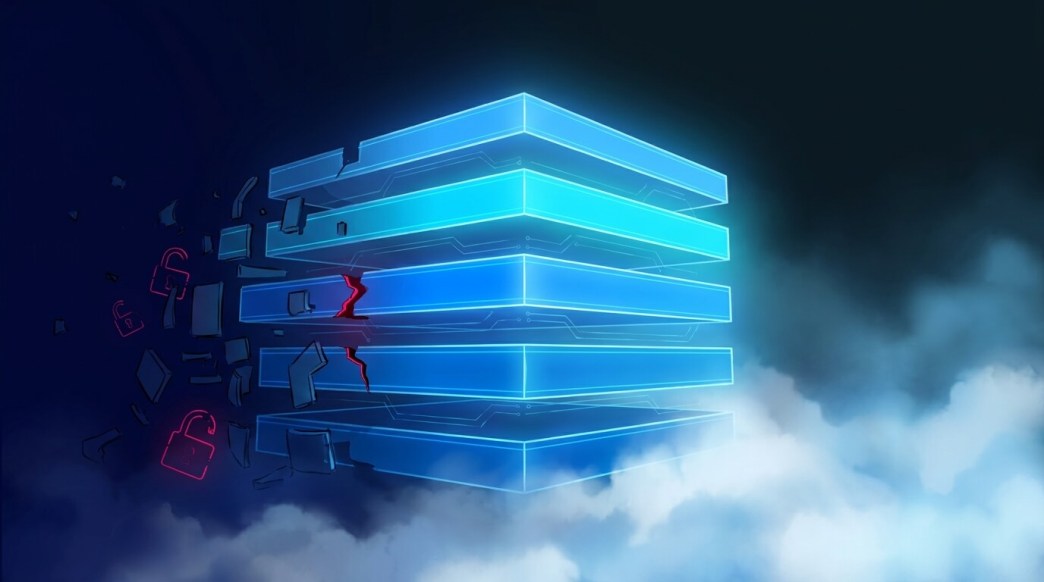
Most cloud security failures do not come from sophisticated attacks. They come from environments where security controls were never designed into the architecture in the first place. A public storage bucket, an over-permissioned IAM role, or a container deployed without runtime restrictions rarely exists in isolation. These failures usually reflect deeper architectural gaps in how cloud environments are designed, governed, and monitored.
Modern cloud environments introduce complexity that traditional security models were never built to handle: distributed identities, ephemeral workloads, infrastructure-as-code deployments, and multi-cloud attack surfaces. Securing these environments requires more than individual tools. It requires a cloud security architecture that defines how security controls operate together across every layer of the environment.
This article covers the principles, layers, threats, frameworks, and assessment approaches that define effective cloud security architecture.
Key Takeaways
- Cloud security architecture builds security controls into cloud environments from the start instead of adding them after deployment.
- Effective architectures combine IAM, encryption, workload security, network segmentation, compliance monitoring, and automated policy enforcement into a unified security model.
- Most cloud security incidents result from misconfigurations, excessive permissions, insecure APIs, or weak identity controls rather than sophisticated exploits.
- The shared responsibility model changes depending on whether the environment uses IaaS, PaaS, or SaaS services.
- Continuous monitoring, IaC security scanning, risk prioritization, and automated compliance checks are essential for securing modern cloud environments at scale.
Why Cloud Security Architecture Matters
Cloud environments are highly dynamic. Infrastructure changes continuously through automation, containers scale in seconds, and identities interact across cloud providers, APIs, and workloads. Traditional perimeter-based security models were not designed for this level of complexity.
Without a defined cloud security architecture, organizations often deploy security tools independently without a consistent enforcement model. The result is fragmented visibility, configuration drift, excessive permissions, and growing attack paths across the environment.
A strong cloud security architecture reduces these risks by embedding security controls directly into provisioning, deployment, networking, identity management, and runtime operations from the beginning.
What Is Cloud Security Architecture?
Cloud security architecture (CSA) is a structured set of principles, controls, and frameworks that guide how security is designed, implemented, and enforced across a cloud computing environment.
It covers the full stack: identity and access management, data encryption, network segmentation, workload security, compliance monitoring, and the division of security responsibilities between cloud providers and their customers. The goal is not a single tool or control, but a coherent design where each layer of the environment has defined security properties and each gap is accounted for before it becomes an exploitable condition.
The Cloud Security Alliance (CSA) Cloud Controls Matrix (CCM) v4.0 provides one of the most widely referenced frameworks for cloud security architecture, mapping 197 control objectives across 17 domains including infrastructure and virtualization security, identity and access management, and cryptography. For further reading on cloud security fundamentals and related topics, visit the Orca Security Cloud Security Learning Hub.
What Principles Guide Cloud Security Architecture?
Cloud security architecture is built on three foundational security principles, the CIA triad, plus a fourth principle specific to cloud environments: the shared responsibility model.
Confidentiality
Confidentiality means that data is accessible only to authorized identities and systems. In cloud environments, this translates to encryption at rest and in transit, strict IAM policies scoped to least privilege, and controls that prevent sensitive data from being exposed through misconfigured storage or overly permissive API endpoints.
NIST SP 800-53 Rev 5 Control SC-28 requires that organizations protect the confidentiality of information at rest. For cloud workloads, this means enforcing encryption for all data stored in S3, Azure Blob, or Google Cloud Storage, and auditing bucket policies to verify that no publicly accessible buckets contain sensitive data.
Integrity
Integrity means that data and systems are not modified without authorization. In cloud architecture, this requires controls like object versioning on storage, immutable audit logs, code signing for container images, and infrastructure-as-code drift detection to catch unauthorized changes to deployed resources.
NIST SP 800-53 Rev 5 Control SI-7 covers software, firmware, and information integrity. For cloud-native environments, integrity enforcement means verifying that container images are signed and unmodified before deployment using tools like Sigstore or Cosign, and that IaC configurations in production match their version-controlled definitions.
Availability
Availability means that authorized users can access systems and data when they need them. For cloud security architecture, this means designing environments to survive both technical failures and security events, including distributed denial-of-service attacks, ransomware, and accidental deletion.
The Verizon 2023 Data Breach Investigations Report found that availability attacks, primarily denial-of-service, accounted for 6% of all cloud incidents. Architecture-level controls for availability include multi-region deployments, automated failover, network-level rate limiting, and backup policies aligned to recovery time objectives defined in NIST SP 800-34.
Shared Responsibility Model
The shared responsibility model defines which security controls the cloud provider manages and which the customer is responsible for. The boundary shifts depending on the service model used.
In IaaS deployments, the provider secures the physical infrastructure, hypervisor, and network fabric. The customer owns the operating system, runtime, application, and data security. In PaaS, the provider extends its responsibility up through the runtime and middleware layers, leaving the customer responsible for application code and data. In SaaS, the provider manages most of the stack, but the customer remains responsible for identity and access management, data classification, and configuration of the application itself.
Misunderstanding this boundary is a documented source of cloud incidents. CISA Alert AA21-131A (May 2021) cited customer misconfiguration of cloud-managed services as the primary contributing factor in multiple breaches involving Microsoft 365 and Google Workspace environments.
Why Is Cloud Security Architecture Important?
Cloud security architecture without intentional design produces environments where security controls exist but do not connect. A team may have a CSPM tool, an IAM policy engine, and a vulnerability scanner, but if those controls are not integrated into a coherent architecture, each one produces findings that no one has the context to act on.
Three concrete outcomes depend on getting the architecture right.
Healthcare organizations subject to HIPAA and payment processors operating under PCI-DSS Requirement 3 have no flexibility on data confidentiality. An architecture that does not enforce encryption and access controls by design will produce compliance gaps that are expensive to remediate after the fact.
An unplanned outage in a cloud environment costs an average of $9,000 per minute, per the Uptime Institute’s 2023 Global Data Center Survey. Architecture-level resilience controls, including redundancy, automated recovery, and tested incident response playbooks, determine whether a security event becomes a recoverable incident or a prolonged outage.
Cloud environments grow faster than security teams. An architecture that requires manual security review for every new workload does not scale. A well-designed architecture enforces controls automatically at provisioning time, through IaC scanning, admission control policies, and automated compliance checks, so security keeps pace with deployment velocity.
What Are the Main Cloud Security Architecture Threats?
Cloud Platform Misconfiguration
Misconfiguration is the leading cause of cloud data exposure. NIST SP 800-144 identifies misconfiguration of cloud platform settings as a primary risk in multi-tenant cloud deployments. Common misconfiguration patterns include publicly accessible S3 buckets, security groups allowing unrestricted inbound traffic on port 22 or 3389, IAM roles with wildcard permissions attached to internet-facing compute, and default credentials left unchanged on managed database services.
Unauthorized Access
Unauthorized access in cloud environments typically does not come from breaking encryption. It comes from stolen or misused credentials, overly permissive IAM policies, and unrevoked access for former employees or decommissioned service accounts.
CISA Advisory AA23-061A (March 2023) documented SVR (APT29) obtaining persistent access to cloud environments by compromising service accounts with excessive permissions and then using those accounts to move laterally across Azure AD and Microsoft 365. The advisory recommends enforcing least privilege access per NIST SP 800-53 Rev 5 AC-6 and implementing conditional access policies that restrict authentication by device state and location.
Insecure Interfaces and APIs
APIs are the primary attack surface in cloud-native environments. The OWASP API Security Top 10 (2023 edition) identifies broken object-level authorization, broken authentication, and excessive data exposure as the three most critical API vulnerabilities in cloud deployments. Architecture-level controls for API security include mutual TLS between services, API gateway policies that enforce authentication and rate limiting, and continuous scanning of API endpoints for exposed secrets or unauthenticated access paths.
Privileged Account Hijacking
Privileged accounts, including cloud console administrators, service accounts with broad IAM permissions, and CI/CD pipeline credentials, are high-value targets because compromising one gives an attacker broad access across the environment.
MITRE ATT&CK for Cloud technique T1078.004 (Valid Accounts: Cloud Accounts) documents the specific patterns attackers use to abuse legitimate cloud credentials, including credential stuffing, phishing for OAuth tokens, and exploiting overly permissive instance metadata service endpoints. Architecture controls include enforcing MFA for all human accounts with console access, restricting instance metadata service access to IMDSv2 on AWS, and rotating service account credentials on a defined schedule.
Insider Threats
Insider threats in cloud environments are harder to detect than external attacks because the access is authorized. The 2023 Ponemon Institute Cost of Insider Risks Global Report found that insider threat incidents cost organizations an average of $16.2 million per year, with cloud data exfiltration accounting for the fastest-growing category.
Architecture controls for insider threats include data loss prevention policies on cloud storage, user and entity behavior analytics (UEBA) to detect anomalous access patterns, and separation of duties enforced through IAM policies that prevent any single user from both provisioning resources and modifying audit logs.
What Are the 10 Key Elements of Effective Cloud Security Architecture?
1. Comprehensive Visibility
You cannot secure what you cannot see. Comprehensive visibility means maintaining an accurate, real-time inventory of every cloud resource across all accounts, regions, and cloud providers, including shadow IT deployments provisioned outside standard processes. A visibility gap means a material portion of the attack surface is unmonitored.
2. Identity and Access Management
IAM controls who can do what across every cloud resource. Effective IAM architecture enforces the principle of least privilege, meaning each identity has only the permissions required for its specific function. CIS Benchmark for AWS Foundations v1.5.0 Control 1.16 requires that no IAM policies with administrative privileges are attached directly to users. All privileged access should go through roles with time-limited assumption and MFA requirements.
3. Data Security and Encryption
Data security architecture requires encrypting data at rest and in transit and managing encryption keys so that a compromise of the cloud provider does not automatically compromise the data. AWS Key Management Service, Azure Key Vault, and Google Cloud KMS each support customer-managed encryption keys (CMEK), which ensure the cloud provider cannot decrypt customer data without explicit authorization. NIST SP 800-111 provides the standard for encryption of stored data; NIST SP 800-52 Rev 2 covers TLS configuration standards for data in transit. For definitions of terms like CMEK, KMS, and encryption key hierarchy, see the Orca Security Glossary.
4. Vulnerability Management
Cloud vulnerability management requires continuous scanning of workloads, container images, and cloud service configurations for known vulnerabilities, not periodic point-in-time assessments. The average time from CVE publication to active exploitation in cloud environments was 12 days in 2023, per CISA’s Known Exploited Vulnerabilities catalog analysis. An architecture that runs monthly vulnerability scans leaves a 12-day or longer window where known vulnerabilities are present and unpatched. For a structured approach to this process, see A Guide to Vulnerability Management.
5. Threat Detection and Response
Threat detection in cloud environments requires collecting and correlating logs from CloudTrail, VPC Flow Logs, Azure Monitor, and workload-level sources, then applying detection rules that identify attacker behavior patterns from MITRE ATT&CK for Cloud.
Response playbooks need to be cloud-specific. Isolating a compromised EC2 instance is different from isolating a compromised on-premises server. The playbook needs to cover revoking instance IAM role credentials, modifying security group rules, capturing memory and disk snapshots for forensics, and preserving CloudTrail logs before they age out of the default 90-day retention window.
6. Compliance Assurance
Compliance assurance in cloud architecture means mapping every deployed control to a specific requirement in the applicable framework, whether SOC 2, PCI-DSS, HIPAA, or NIST 800-53, and continuously verifying that the mapping holds as the environment changes. A static compliance report produced at a point in time does not reflect whether controls are currently enforced. Continuous compliance monitoring requires automated policy evaluation, such as AWS Config Rules or Azure Policy, that flags drift from compliant configurations in real time.
7. Infrastructure-as-Code Security
IaC security means scanning Terraform, CloudFormation, Pulumi, and Kubernetes manifest files for security misconfigurations before they are deployed, as part of the CI/CD pipeline. Checkov, tfsec, and KICS are open-source tools that evaluate IaC against CIS Benchmark controls and custom policy rules. Running these scans at pull request time means a misconfigured security group or an unencrypted RDS instance is caught before it reaches production, not after.
8. Continuous Monitoring and Risk Prioritization
Continuous monitoring without risk prioritization produces alert fatigue. An environment with 10,000 findings and no context for which ones matter cannot be acted on effectively. Effective risk prioritization considers exploitability, exposure, and business impact together. A critical CVE on an internal-only workload with no path to sensitive data is lower priority than a medium CVE on an internet-facing workload with access to a PII database.
9. Container Security
Container security requires securing the image, the runtime, and the orchestration layer. A container image built from a vulnerable base image carries that vulnerability into every deployment. A container running as root with a host filesystem mount is a privilege escalation path, even if the image itself has no known CVEs.
CIS Kubernetes Benchmark v1.9 provides 90 controls covering API server configuration, etcd security, RBAC policies, and pod security standards. Control 5.2.6 requires that containers do not run as root. Control 5.2.9 requires that containers do not mount the host filesystem. Both are detectable at admission time using OPA Gatekeeper policies.
10. Automation and Integration
Manual security processes do not scale in cloud environments where hundreds of resources can be provisioned in a single deployment. Automation needs to be built into the architecture, not added afterward. This means security controls are enforced at provisioning time through IaC scanning and admission control, compliance is checked continuously through automated policy evaluation, and incident response actions like isolating a compromised instance or revoking a service account are scripted and tested before they are needed.
What Are the Layers of Cloud Security Architecture?
1. On-Premises Infrastructure
For organizations running hybrid environments, on-premises infrastructure connects to cloud resources through VPN or dedicated interconnects like AWS Direct Connect or Azure ExpressRoute. Security controls at this layer include firewall policies governing what traffic can traverse the boundary, certificate-based authentication for the connection itself, and monitoring for anomalous data transfer volumes that could indicate exfiltration.
2. Cloud Resources
Cloud resources include compute (EC2 instances, Azure VMs, GKE nodes), storage (S3, Azure Blob, Cloud Storage), databases (RDS, Azure SQL, Cloud Spanner), and managed services (Lambda, Azure Functions, Cloud Run). Each resource type has its own configuration attack surface, and each requires specific hardening controls documented in the relevant CIS Benchmark.
3. Network Perimeter
The network perimeter in cloud environments is defined by security groups, network ACLs, and cloud-native firewall products like AWS Network Firewall and Azure Firewall. Unlike traditional perimeter security, cloud perimeters are defined in code and can be changed by anyone with the right IAM permissions, which means perimeter configuration is both an infrastructure security problem and an IAM problem.
4. Operations Layer
The operations layer covers the processes and tooling used to manage the cloud environment: CI/CD pipelines, configuration management, change management, and monitoring. Security failures at the operations layer, such as secrets committed to a Git repository or a CI/CD pipeline with excessive cloud permissions, often have broader blast radius than failures at the resource layer because they affect every deployment.
5. Interface Layer
The interface layer covers the APIs, consoles, and SDKs that humans and systems use to interact with cloud resources. All interface access should require authentication and authorization, and all interface activity should be logged. AWS CloudTrail, Azure Activity Log, and Google Cloud Audit Logs capture API calls across the control plane and should be retained for a minimum of 12 months per CIS Benchmark for AWS Foundations v1.5.0 Control 3.1.
How Do You Assess Your Cloud Security Architecture?
1. Map Your Assets and Gain Visibility
Start with a complete inventory of every cloud account, region, and resource type in your environment. This includes resources provisioned through official channels and any shadow IT deployments created outside standard processes. Without an accurate asset map, assessment findings will miss portions of the actual attack surface.
2. Check for Compliance With Standards
Map your current controls against the applicable compliance frameworks: CIS Benchmarks for the specific cloud providers you use, NIST SP 800-53 for federal or regulated environments, PCI-DSS for payment card environments, and HIPAA for healthcare data. Identify which controls are implemented, which are partially implemented, and which are missing entirely.
3. Run Penetration Tests and Simulations
Penetration testing validates whether your architecture’s controls actually stop an attacker, not just whether the controls are configured. Red team exercises that simulate MITRE ATT&CK for Cloud techniques, specifically initial access via exposed credentials (T1078), lateral movement via IAM role assumption (T1548.005), and data exfiltration via cloud storage (T1537), produce findings that configuration reviews miss.
4. Automate Continuous Monitoring
Replace periodic manual reviews with automated continuous monitoring that evaluates your environment against your security policies in real time. AWS Config, Azure Policy, and Google Cloud Security Command Center each provide native continuous compliance monitoring. Third-party CSPM tools extend this coverage to multi-cloud environments and provide normalized findings across providers.
5. Review Findings and Refine Processes
Findings from assessments are only useful if they produce changes. Build a remediation process that assigns ownership for each finding category, defines SLAs for remediation based on severity, and tracks progress over time. A critical finding from a penetration test that is not remediated within a defined window is a documented risk acceptance decision, not an oversight.
How Does Cloud Security Architecture Adapt Across IaaS, PaaS, and SaaS?
IaaS Shared Responsibility
In IaaS deployments, the cloud provider secures the physical data center, network hardware, hypervisor, and storage infrastructure. The customer is responsible for the operating system and all layers above it: runtime configuration, application security, identity and access management, network controls within the virtual network, and data protection. The provider’s security does not extend to any of these layers.
PaaS Shared Responsibility
In PaaS deployments, the provider extends its security responsibility through the runtime and middleware layers. The customer is responsible for application code, application-level access controls, data classification, and the configuration of the platform services being consumed. The reduced operational burden can create a false sense of security. The provider managing the runtime does not mean the application is secure. A PaaS-hosted application with a SQL injection vulnerability or an insecure API endpoint is still the customer’s problem.
SaaS Shared Responsibility
In SaaS deployments, the provider manages most of the stack through the application layer. The customer retains responsibility for identity and access management within the application, data classification and handling, integration security for any connections to other systems, and configuration of the application’s security settings.
CISA Alert AA21-131A specifically cited misconfiguration of SaaS application security settings as a primary contributor to cloud breaches in Microsoft 365 environments, including disabled audit logging, excessive user permissions, and legacy authentication protocols that bypass MFA.
Building a Resilient Cloud Security Architecture for Modern Cloud Environments
Cloud security architecture determines whether security controls form a coherent defense or function as isolated tools with no shared context. The architecture choices made at design time, around IAM scoping, encryption key management, network segmentation, and IaC security, determine how hard it is for an attacker to move laterally, escalate privileges, and reach sensitive data after initial access.
Start with visibility. An accurate inventory of every resource across every account is the prerequisite for every other architectural control. Then enforce IAM least privilege, automate configuration compliance, and build response playbooks that are specific to your cloud environment before you need them.
Orca Security addresses cloud security architecture gaps through agentless coverage of the full cloud estate. SideScanning™ technology reads workload runtime data directly from block storage without requiring a deployed agent on each instance, container, or function. This means visibility extends to every resource in the environment, including workloads provisioned outside standard processes that agent-based tools miss.
Orca Security maps findings across all layers of cloud security architecture, with each finding linked to the specific CIS Benchmark control, NIST 800-53 control, or compliance framework requirement it violates. The risk prioritization engine calculates an Orca Score for each finding by considering CVE severity, workload internet exposure, the presence of lateral movement paths to sensitive data, and the specific cloud context, producing a prioritized list of findings most likely to be exploited in your environment rather than a list sorted by CVSS score alone. See the full platform at Orca Security or Get a Demo.
Frequently Asked Questions about Cloud Security Architecture
Cloud security architecture defines how security controls are designed and enforced across cloud environments. CSPM continuously monitors those environments for misconfigurations, compliance violations, and policy drift. Architecture defines the model; CSPM validates whether the model is being followed.
Most cloud attacks rely on compromised credentials or excessive permissions rather than malware exploitation. IAM controls determine who can access resources, how privileges are granted, and how attackers can move laterally after initial access.
Infrastructure-as-code improves cloud security by enforcing standardized configurations and enabling automated security scanning before resources are deployed. This reduces configuration drift and prevents insecure infrastructure from reaching production.
Zero Trust architecture assumes no workload, user, or device should be trusted by default. In cloud environments, this means continuously validating identities, restricting lateral movement, enforcing least privilege, and securing service-to-service communication.
Cloud environments change constantly through autoscaling, CI/CD pipelines, and infrastructure automation. Continuous monitoring helps detect misconfigurations, exposed assets, policy drift, and suspicious behavior before they become exploitable attack paths.
Table of contents
- Key Takeaways
- Why Cloud Security Architecture Matters
- What Is Cloud Security Architecture?
- What Principles Guide Cloud Security Architecture?
- Why Is Cloud Security Architecture Important?
- What Are the Main Cloud Security Architecture Threats?
- What Are the 10 Key Elements of Effective Cloud Security Architecture?
- 1. Comprehensive Visibility
- 2. Identity and Access Management
- 3. Data Security and Encryption
- 4. Vulnerability Management
- 5. Threat Detection and Response
- 6. Compliance Assurance
- 7. Infrastructure-as-Code Security
- 8. Continuous Monitoring and Risk Prioritization
- 9. Container Security
- 10. Automation and Integration
- What Are the Layers of Cloud Security Architecture?
- How Do You Assess Your Cloud Security Architecture?
- How Does Cloud Security Architecture Adapt Across IaaS, PaaS, and SaaS?
- Building a Resilient Cloud Security Architecture for Modern Cloud Environments
- Frequently Asked Questions about Cloud Security Architecture




 Chat with an Orca Expert