



Table of contents
- Key Takeaways
- What Is Security as a Business Enabler?
- Why Security Must Support Business Growth
- Security Leadership in High-Growth Organizations
- Enabling Innovation Without Slowing Development
- Building a Security-First Business Culture
- Measuring Security’s Business Impact
- Best Practices for Security as a Business Enabler
- How Orca Helps Security Teams Keep the Business Moving
- Frequently Asked Questions about Security as a Business Enabler
Key Takeaways
- Security acts as a business enabler when consulting it is cheaper than routing around it. Design decides that, and design is the only lever that moves it.
- The gate model funds its own bypass. Teams that wait days for a review learn to ship without one. The debt surfaces later, during an audit or an enterprise deal, priced as a delay.
- Guardrails, paved roads, and secure defaults move the decision earlier, into a template a developer inherits instead of a queue. Some decisions still deserve a hard stop, and naming them makes the rest credible.
- Measure in the units the business already reports: time to market, questionnaire turnaround, audit cycle time, and loss exposure in dollars. Activity counts are not business impact.
- Orca answers “is this safe to ship?” from context it already holds, in minutes rather than a multi-day correlation across four consoles.
Security as a business enabler is a claim most CISOs have already made in a board deck, and it usually dies in a queue. A payments team finishes a feature on a Tuesday. The launch slips two weeks, because the review queue is four deep and the one reviewer who knows the service is on call. Nobody did anything wrong. The next team draws the obvious lesson and ships without asking.
That is the failure mode this guide is about. Security enables the business by removing the choice between shipping and being safe. That removal is a design problem, not an attitude problem. The business does not route around security because it dislikes security. It routes around because consulting security is slow and unpredictable. No partnership language changes that arithmetic.
Changing the arithmetic is the work: guardrails instead of gates, paved roads instead of review queues, and secure defaults instead of policy documents nobody opens. This guide explains how those mechanisms work and which metrics belong in front of an executive team.
What Is Security as a Business Enabler?
Security as a business enabler is an operating property of how the security function is designed. The safe path to production is also the fastest path, so teams consult security because it saves them time. Business-aligned security is measured in business outcomes like time to market and deal velocity.
The test is arithmetic. Pick any change a developer might make this week: a new datastore, an exposed endpoint, a granted role. Ask how long the safe version takes compared to the unsafe one. If it means a ticket, a questionnaire, and a wait, you have a gate, and gates get avoided. If it means picking the module that already has encryption, scoped permissions, and logging wired in, it wins on merit. Nobody has to be persuaded.
Why Security Must Support Business Growth
Growth does not wait for a review queue. When the rate of change outruns review capacity, the business does not slow down to match. It absorbs the delay somewhere you cannot see, and the bill arrives later.
Three costs typically show up, and they tend to arrive in order:
- Shadow adoption comes first. A team needs a vector database this quarter, the review is booked three weeks out, and someone expenses a managed service on a corporate card. Within a month it holds customer records that nobody on your team has seen.
- Routed-around review follows. The exception path is faster than the standard path, so exceptions quietly become the standard. Your policy still says one thing. Your DevOps teams do another, and the gap stays invisible until something breaks.
- Audit-time debt lands last. Those shortcuts surface during a SOC 2 window or an enterprise diligence review. They arrive priced as a deal delay.
None of this argues against review, or against security innovation. It argues against review being the only control you own. Making a security program deliver means most decisions resolve in a default, and human judgment covers the small set that needs it.
Security Leadership in High-Growth Organizations
Security leadership in a fast-growing company is mostly a capacity problem. Engineering headcount compounds. Security headcount grows by a head or two a year, so the gap between what ships and what anyone reviews widens every quarter. If review capacity is a function of your headcount, coverage falls by construction, however good the team is.
High growth applies that pressure in specific ways:
Headcount lag means security hiring trails engineering hiring by a year or more. Any control that consumes a reviewer gets more expensive per change, every quarter.
Acquisition sprawl hands you an estate you did not design, with its own identity model and its own definition of production. Its integration timeline was committed to before you saw it.
New surface area arrives faster than policy does. That is why AI security strategy for CISOs became its own body of work. The budget conversation that follows belongs in the CISO and CFO partnership.
One decision rule falls out, and it is worth your next planning cycle. Any control whose cost scales with the number of changes is one you will eventually lose. Prefer controls you pay for once, at design time.
Enabling Innovation Without Slowing Development
Enabling innovation securely comes down to when the decision gets made. A gate makes it at the end, in a queue, by someone who was not in the room when the design happened. A guardrail makes it earlier, in a default the developer inherits without asking. Same standard, different cost, and the difference shows up on the calendar.
Integrating security into DevOps becomes a set of engineering decisions here. Shifting security left in the SDLC is one, though it only pays off if the earlier check is automatic. Moving a manual review from Thursday to Monday helps nobody.
Guardrails, Not Gates
A guardrail constrains what a change can do, then lets anything within that constraint proceed automatically. A gate holds the change until someone approves it. Both enforce a standard. The difference is whether the decision is made once or repeated every time.
Take egress to the public internet from a production subnet. As a gate, it requires a firewall-change ticket and manual approval. As a guardrail, the platform team routes all egress through a centralized inspection VPC and uses a service control policy to block attempts to bypass it.
The difference is cumulative. A gate produces one decision per request. A guardrail makes the decision once, then enforces it thousands of times at no extra cost. Most innovation security work is converting repeated reviews into guardrails.
| Property | Guardrail | Gate |
|---|---|---|
| What it is | A constraint enforced automatically in the platform, pipeline, or cloud control plane | A checkpoint that holds a change until a person approves it |
| Developer experience | Feedback in seconds, inside the tool they already have open | A ticket, a queue, and a wait measured in days |
| When it fits | Decisions that repeat, have a known-good answer, and can be written as policy | Decisions that are rare, hard to reverse, or need judgment about business risk |
| Failure mode | Silent drift when nobody maintains the policy, plus false confidence in coverage it never had | Bypass. Teams route around it, or the exception path becomes the real path |
Paved Roads and Secure Defaults
A paved road is the version of a task that is both the safest and the easiest. In practice, it is a service template with encryption at rest, private-by-default networking, a scoped role, centralized logging, and a pre-wired pipeline. Developers who use it get a compliant service without filing tickets. Those who need to deviate explain why in a pull request instead.
Defaults do the enforcing, and policy as code keeps them consistent. Open Policy Agent evaluates the same rules in the pipeline and at admission, so violations fail the build instead of surfacing weeks later. That is what makes CI/CD security valuable: the pipeline is the one place every change already passes through. Start by paving the three tasks teams perform most often. Last quarter’s exception requests usually tell you which ones they are.
Where a Hard Gate Is Still the Right Call
Some decisions should stop the line. Pretending otherwise is how this argument loses the room. A hard gate earns its cost when the decision is difficult to reverse and rare enough that a queue never forms.
That set is small and knowable. Moving regulated data to a new jurisdiction or processor. Making a system that touches money or safety internet-reachable for the first time. Granting a standing production credential to a third party. Deploying a new class of system, such as a model that acts on a customer’s behalf. Those are worth a person and a week.
The list should shrink. Every quarter or two, a guardrail gets good enough to demote an entry to a default. If your gate list looks the same as it did two years ago, the guardrails are not improving. The risks did not hold still.
Building a Security-First Business Culture
Culture follows incentives. If a security champion’s contribution never shows up in a performance review, and never buys their team anything concrete, you get volunteers for two quarters. Then an abandoned spreadsheet. Pay the role in time, the currency engineers actually value. Champions get same-day answers instead of a queue slot, early access to new platform modules, and credit on a clean release.
The same logic applies to what you publish. Teams optimize whatever you report on them, so reporting “vulnerabilities found” produces findings, and reporting how long teams wait produces unblocking. Secure innovation is a byproduct of teams choosing the safe path because it is genuinely better. Building security into how teams work and adopting security practices developers will actually use beat any awareness campaign, because they change what is easy.
Building security into how teams work and picking security practices developers will adopt beat any awareness campaign, because they change what is easy.
Measuring Security’s Business Impact
Business impact gets measured in the units the business already reports. If a number would not change a decision at an executive staff meeting, it belongs on your team’s dashboard rather than in the board deck.
The board’s interest is not optional anymore. The SEC adopted Item 106 of Regulation S-K in July 2023. Public companies must describe, in their annual Form 10-K, how they assess, identify, and manage material risks from cybersecurity threats. They must also describe the board’s oversight of those risks and management’s role. The requirement applies to fiscal years ending on or after December 15, 2023. A board carrying a documented oversight duty needs material it can act on.
Four numbers do that work:
- Time to market for changes that touch security. Measure lead time from code complete to production for changes needing security involvement, then compare it to changes that do not. The gap is the tax, in days, and it tells you whether your guardrails work.
- Security’s drag on the sales cycle. Track median days to clear a customer security questionnaire, and the pipeline value sitting behind it. A maintained evidence set turns a two-week stall into a two-day one, and finance can price that difference.
- Audit cycle time. Count engineer-days spent gathering evidence per audit and calendar days to close it. When cloud compliance artifacts fall out of the platform continuously, both numbers drop and engineers go back to shipping.
- Loss exposure in dollars. FAIR, or Factor Analysis of Information Risk, expresses risk exposure as probable loss in financial terms instead of a red-amber-green rating. The Open Group publishes it as the Open FAIR standard, covering risk taxonomy and risk analysis. A board that sees a range like “$4M to $18M annualized for the payments estate, driven mostly by recovery time” can decide something. A board that sees “high” cannot.
Report the change, not the count. Three scenarios ranked by exposure, what moved since last quarter, and the decision you are asking for is a board conversation. “We closed 14,000 findings” is not, because nobody in the room can act on it. Expressing cloud risk management outcomes in financial terms also makes your asks legible.
Best Practices for Security as a Business Enabler
These practices assume a functioning program and a business relationship you want to change.
- Instrument the wait before you fix it. For one month, timestamp every security touchpoint: when the team asked, when you answered, and when they shipped. The distribution names the review worth automating first, and it is rarely the one you assumed.
- Convert your most-requested exception into a paved road. Exceptions are a backlog of product requirements written by your own users, already sorted by demand.
- Publish the gate list and shrink it on a schedule. Name the decisions that stop the line, in public, with the reason each one is there. Review it quarterly and demote one.
- Keep the evidence set living. Maintain what an enterprise buyer or auditor asks for as a continuous output of the platform. Deal velocity is the payoff, and it compounds.
- Give the platform team a prioritized backlog. Whoever owns the platform builds the paved road. Requirements arriving as a PDF, with no owner and no ranking, do not get built. As the priorities facing security leaders continue to evolve, that backlog will keep growing.
How Orca Helps Security Teams Keep the Business Moving
Most gates exist because the answer takes too long to produce. Determining whether something is safe to ship often means correlating vulnerability, configuration, identity, and data context across multiple tools before anyone can judge the real risk.
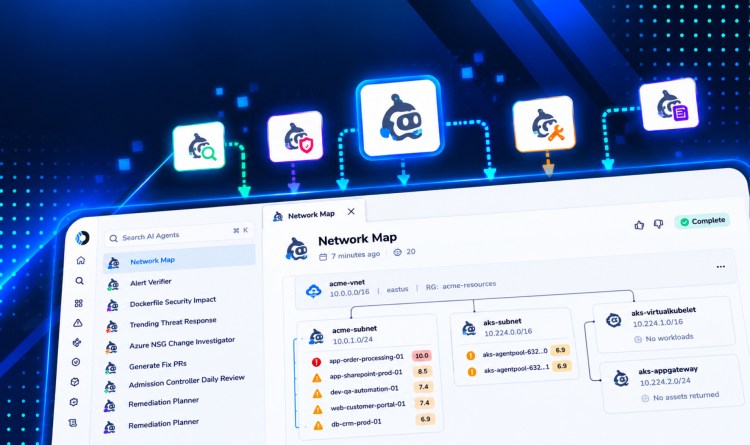
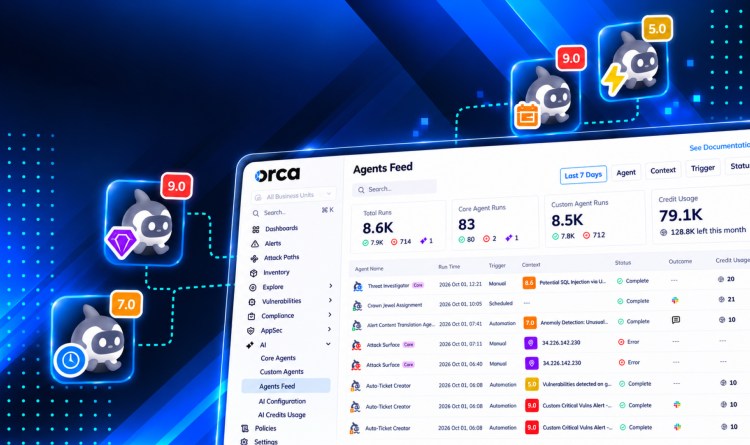
The Orca Cloud Security Platform already holds that context. SideScanning™ collects runtime, configuration, identity, and data context without deploying agents. Risks are prioritized by reachability, asset value, and exposure rather than CVSS alone, so teams can answer “can this wait until Thursday?” in minutes instead of days. Reporting segmented by business unit gives each team a prioritized view of the risks it owns. Get a demo to see how it works in your environment.
Frequently Asked Questions about Security as a Business Enabler
Reporting to the CIO shortens the distance between a security requirement and the platform that implements it. Reporting to the CEO buys independence, at the cost of distance from engineering. Neither structure fixes a design problem. If the safe path is slow, it stays slow under either box on the chart.
Say no less often by making most refusals unnecessary before anyone asks. The requests that force one are usually ones the design should have prevented. When you do refuse, refuse with a date and an alternative. A rising number of refusals usually points to a problem with your defaults.
Frame both sides, because only one is a cost story. Quantify avoided loss, but also show the revenue enabled by shorter cycle times and faster security reviews. Boards discount hypothetical losses more than measurable improvements in business outcomes.
Longer than the pitch suggests. New services adopt paved roads quickly, while existing ones migrate more gradually. Expect the metrics to move over a couple of quarters, especially if you remove a wait teams already complain about.
Yes, and often better than it works elsewhere. Regulators care whether a control operates consistently, which automated guardrails do well. Some regulated decisions still require documented human judgment, so those remain gates by design.
Table of contents
- Key Takeaways
- What Is Security as a Business Enabler?
- Why Security Must Support Business Growth
- Security Leadership in High-Growth Organizations
- Enabling Innovation Without Slowing Development
- Building a Security-First Business Culture
- Measuring Security's Business Impact
- Best Practices for Security as a Business Enabler
- How Orca Helps Security Teams Keep the Business Moving
- Frequently Asked Questions about Security as a Business Enabler




 Chat with an Orca Expert