



Table of contents
- 1) Executive trust is a security control you should build before you need it
- 2) Stop reporting “incidents” and “vuln counts”, report business outcomes and prevented impact
- 3) AI will accelerate attackers and defenders, so your security operating model must become automation-first
- 4) Adopt an “autonomy ladder” for remediation instead of debating full hands-off security
- 5) Third-party risk is now inside your perimeter. Treat suppliers, SaaS, and dependencies like production
- 6) Move from point-in-time vendor reviews to continuous verification, and design to limit impact
- 7) In an agentic era, identity becomes the control plane, especially for non-human identities
- 8) Security must be a paved road, not a ticket queue. Make the safe path the fastest path
- 9) “Zero impact” is a clearer North Star than “zero breach”. Optimize for containment and continuity
- 10) Visibility is the foundation of zero impact: coverage + retention + correlation across cloud and SaaS
- What CISOs Should Do This Quarter (Quick Action Plan)
- How Orca Security Can Help
Earlier this year Cloud Security LIVE 2026 brought together CISOs, security operators, and industry leaders to tackle the same pressure we’re all feeling: security expectations are rising while cloud + AI velocity keeps accelerating.
Across the keynote, panels, and practitioner sessions, one message came through clearly: the winners won’t be the teams who say “no” the loudest, they’ll be the teams who make speed sustainable without losing control.
Here are the top 10 takeaways CISOs can operationalize immediately.
1) Executive trust is a security control you should build before you need it
Trust is what turns security recommendations into business decisions. CISOs with credibility get alignment, budget, and faster action, especially during incidents.
What to do next: Set a predictable exec cadence (monthly narrative update + quarterly risk posture) so you’re not building trust mid-crisis.
2) Stop reporting “incidents” and “vuln counts”, report business outcomes and prevented impact
Boards don’t fund CVEs; they fund reduced exposure. Move from activity metrics to impact metrics: what you prevented, what you reduced, and what you’re accepting.
What to do next: Rewrite reporting into: top risks, top breach paths closed, time-to-contain targets, and “material impact avoided.”
3) AI will accelerate attackers and defenders, so your security operating model must become automation-first
Adversaries will use AI to scale reconnaissance, social engineering, and exploitation. If defense depends on manual triage and heroics, you’ll lose on speed and volume.
What to do next: Prioritize AI-assisted triage and investigation (alert clustering, context gathering, first-draft incident summaries) to remove human bottlenecks.
4) Adopt an “autonomy ladder” for remediation instead of debating full hands-off security
The practical path isn’t “fully autonomous or nothing.” It’s progressive automation with guardrails: explain → recommend → human-gated execution → auto-remediation.
What to do next: Define which actions are safe to automate now (ticket creation, key rotation, isolate non-prod) vs. which require approval (prod access changes, privilege revocation).
5) Third-party risk is now inside your perimeter. Treat suppliers, SaaS, and dependencies like production
Your true attack surface includes vendors, integrations, open-source packages, CI/CD actions, and outsourced services. “Outside the org” doesn’t mean “outside the blast radius.”
What to do next: Expand your risk register to include critical vendors and dependency chains and pipeline components, not just a list of suppliers.
6) Move from point-in-time vendor reviews to continuous verification, and design to limit impact
Questionnaires and annual assessments can’t match attacker speed. The win is continuous signals plus architectural controls that reduce damage when a third party fails.
What to do next: Focus on least-privilege integrations, segmented connectivity, scoped API tokens, and continuous monitoring for vendor/system access.
7) In an agentic era, identity becomes the control plane, especially for non-human identities
AI agents and service accounts behave like high-speed insiders. If they’re over-permissioned or under-logged, they become silent, scalable risk.
What to do next: Make non-human identity a program: ownership, lifecycle, least privilege, short-lived credentials, and auditable access paths.
8) Security must be a paved road, not a ticket queue. Make the safe path the fastest path
Security loses when it’s perceived as friction. The strongest teams build secure defaults and self-serve guardrails so delivery teams can ship without negotiating every control.
What to do next: Invest in “golden paths” (secure templates, policy-as-code, preapproved patterns) and measure adoption like a product.
9) “Zero impact” is a clearer North Star than “zero breach”. Optimize for containment and continuity
With credential theft and malware-free techniques, some compromises are inevitable. Differentiation comes from minimizing business damage through preparedness and fast containment.
What to do next: Define “impact” in business terms (downtime, data exposure, fraud) and align IR to preventing those outcomes.
10) Visibility is the foundation of zero impact: coverage + retention + correlation across cloud and SaaS
You can’t contain what you can’t see. Most organizations still struggle with incomplete logging, short retention, and siloed telemetry that slows investigations.
What to do next: Set a logging standard (what’s required, where it’s stored, how long it’s retained) and ensure you can correlate identity + data + control-plane activity quickly.
What CISOs Should Do This Quarter (Quick Action Plan)
If you want a pragmatic starting point based on the full set of sessions, here’s a tight 90-day plan:
- Rewrite board reporting into business-impact language + a one-page risk narrative
- Inventory AI usage (models, tools, pipelines, data paths) and assign ownership
- Harden non-human identity (least privilege + short-lived creds + logging)
- Reduce lateral movement with Zero Trust principles for workloads
- Secure CI/CD + repos as production (dependencies, actions, secrets, agent tooling)
- Invest in visibility (coverage + retention + normalization) to enable “zero impact”
How Orca Security Can Help
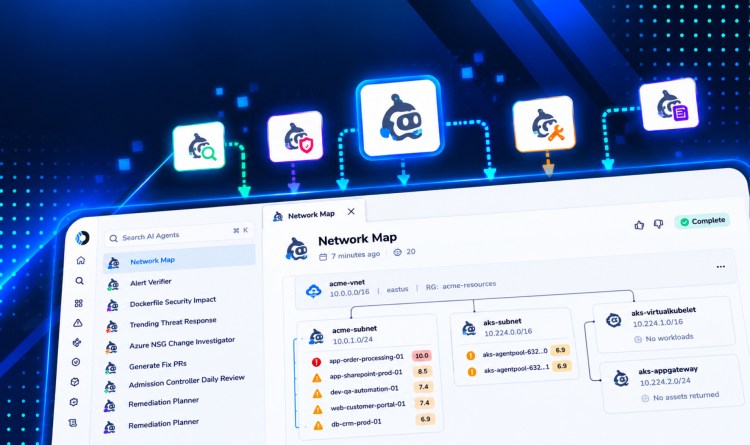
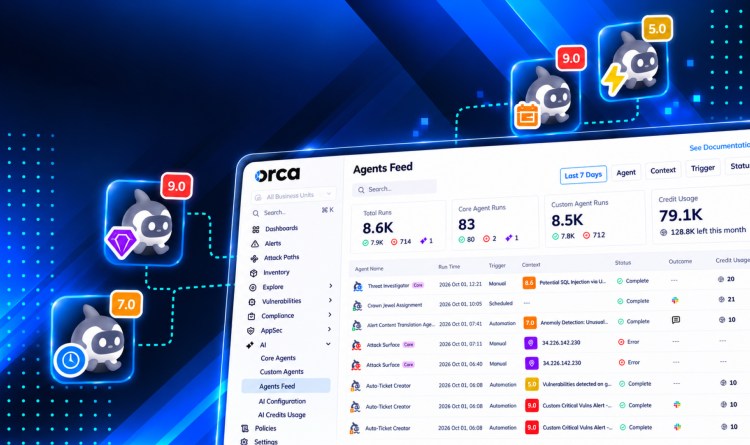
Orca Security helps organizations operationalize the principles discussed by providing unified visibility, prioritization, and remediation across cloud, applications, and AI.
Using its patented agentless SideScanning™ technology, Orca Security inventories assets and continuously detects risks across AWS, Azure, Google Cloud, Kubernetes, SaaS, and AI environments without the complexity of deploying agents. Orca correlates vulnerabilities, misconfigurations, exposed data, excessive permissions, and identity relationships into prioritized attack paths, helping security teams focus on the issues most likely to lead to material business impact.
Want the full context, examples, and the nuanced discussion behind these takeaways?
Watch Cloud Security Live on-demand to hear the complete keynote, AI leadership panels, and practitioner sessions—and bring the playbook back to your team.
Table of contents
- 1) Executive trust is a security control you should build before you need it
- 2) Stop reporting “incidents” and “vuln counts”, report business outcomes and prevented impact
- 3) AI will accelerate attackers and defenders, so your security operating model must become automation-first
- 4) Adopt an “autonomy ladder” for remediation instead of debating full hands-off security
- 5) Third-party risk is now inside your perimeter. Treat suppliers, SaaS, and dependencies like production
- 6) Move from point-in-time vendor reviews to continuous verification, and design to limit impact
- 7) In an agentic era, identity becomes the control plane, especially for non-human identities
- 8) Security must be a paved road, not a ticket queue. Make the safe path the fastest path
- 9) “Zero impact” is a clearer North Star than “zero breach”. Optimize for containment and continuity
- 10) Visibility is the foundation of zero impact: coverage + retention + correlation across cloud and SaaS
- What CISOs Should Do This Quarter (Quick Action Plan)
- How Orca Security Can Help



 Chat with an Orca Expert