

Table of contents
Managed Detection and Response (MDR) is a cybersecurity service that combines advanced threat detection technologies with expert human analysis to identify, investigate, and respond to cyber threats. Unlike traditional security solutions that primarily generate alerts, MDR services offer 24/7 monitoring, threat hunting, and incident response support, enabling organizations to rapidly detect and mitigate complex attacks across their IT and cloud environments.
MDR represents a critical shift in cybersecurity strategy by providing organizations—especially those without large internal security teams—with access to the expertise and tools needed to stay ahead of evolving threats. Through continuous monitoring, behavioral analysis, and active response capabilities, MDR helps reduce dwell time, improve visibility, and minimize the business impact of security incidents.
Why is it important?
The growing complexity of cyber threats and the persistent cybersecurity skills shortage have made MDR services increasingly vital. According to CISA, organizations across industries struggle to find and retain qualified cybersecurity professionals. MDR fills this gap by offering:
- Around-the-clock monitoring and response
- Access to experienced threat analysts and incident responders
- Faster detection and containment of sophisticated threats
Cloud environments amplify these challenges. The shared responsibility model requires businesses to secure applications, data, and configurations—an often-overlooked responsibility. Rapid scaling, ephemeral workloads, and distributed architectures mean traditional tools and internal teams often lack the visibility or context needed to detect and respond to threats effectively. MDR provides the specialized expertise and continuous coverage required to secure cloud-native and hybrid environments.
How does it work?
MDR services typically operate through a combination of technology and human analysis, delivered from a remote Security Operations Center (SOC). Key components of MDR include:
- Data collection: Sensors, APIs, or log integrations gather telemetry from endpoints, cloud workloads, identity providers, and network infrastructure.
- Threat detection: Machine learning, threat intelligence, and correlation engines identify suspicious behaviors, anomalies, or known attack indicators.
- Threat hunting: Human analysts proactively search for hidden threats that evade automated detection.
- Alert triage: Security experts investigate and validate alerts to eliminate false positives.
- Incident response: The MDR provider delivers tailored response guidance, assists with containment, and supports recovery efforts.
This model allows organizations to benefit from advanced detection and investigation capabilities without the cost or complexity of building their own SOC. Many MDR providers also offer reporting, compliance support, and integrations with existing tools like SIEMs, SOAR platforms, and ticketing systems.
Security risks and challenges
Organizations that lack MDR capabilities face numerous challenges, including:
- Alert fatigue: Security teams often receive thousands of alerts per day, many of which are false positives or lack sufficient context.
- Sophisticated threats: Modern attacks—such as APTs, ransomware campaigns, and supply chain attacks—require expert analysis and swift response.
- Cloud visibility gaps: Ephemeral cloud resources, misconfigurations, and identity sprawl make it difficult to maintain consistent monitoring across all environments.
- Disjointed tooling: Many organizations rely on siloed tools that don’t provide a unified threat picture or context for prioritizing incidents.
Without a well-integrated detection and response capability, organizations risk delayed responses, increased breach impact, and compliance failures.
Best practices and mitigation strategies
To get the most from MDR, organizations should follow these best practices:
- Define clear goals: Understand what you want from MDR (e.g., reduced MTTD/MTTR, improved cloud coverage) and select a provider that aligns with those needs.
- Ensure integration with existing tools: MDR providers should be able to ingest data from your cloud platforms, SIEM, and EDR tools.
- Establish communication protocols: Clarify escalation paths, response SLAs, and incident communication processes.
- Enable data access securely: Provide appropriate access to logs, cloud APIs, and relevant telemetry while maintaining compliance.
- Review and tune regularly: MDR should evolve with your environment—periodic reviews, tuning of detection rules, and retesting response procedures are essential.
How Orca Security helps
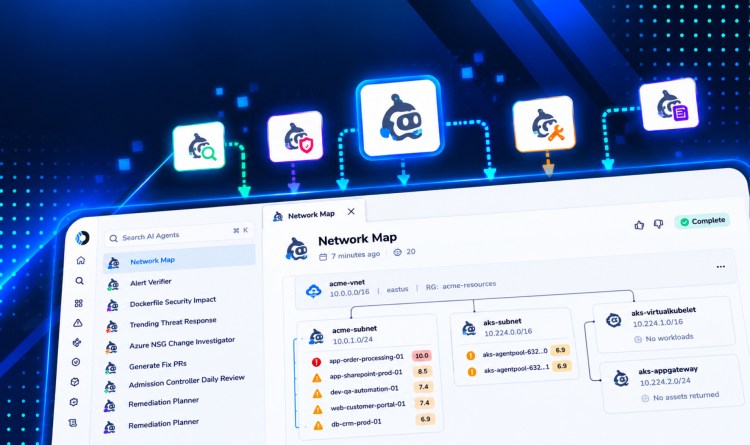
The Orca Cloud Security Platform enhances managed detection and response by delivering deep visibility, context, and risk prioritization across multi-cloud environments. The platform empowers both in-house and third-party MDR providers with:
- Comprehensive coverage: Automatically inventories and analyzes all cloud assets across your single- or multi-cloud estate
- Comprehensive risk detection and prioritization: Detects all types of cloud risks, analyzes them holistically, and prioritizes them effectively according to severity and business impact
- Continuous monitoring: Offers continual and agentless scanning of your cloud estate as well as real-time visibility, monitoring, and protection for your sensitive cloud workloads
- Integration with MDR workflows: Enables seamless ingestion of findings into MDR tools such as SIEM and SOAR platforms.
- Support for incident response: Provides deep and comprehensive intelligence that aids rapid investigation and response to security incidents.
With Orca, organizations and MDR providers can confidently monitor and secure cloud environments while improving response times and reducing alert fatigue.






 Chat with an Orca Expert