


Table of contents
- A New Chapter for Enterprise AI Security
- Theme 1: AI Security Lacks Clear, Trusted Guidance
- Theme 2: From Experimentation to Operational AI Security
- Theme 3: AI Security Must Extend Existing Policies, Not Replace Them
- Theme 4: Not All AI Risk Is Equal
- Theme 5: Identity Becomes Central to AI Security
- Theme 6: The AI Security Vendor Landscape Is Rapidly Evolving
- Theme 7: AI Security Is Being Shaped by Investment and Market Forces
- Theme 8: AI Security Is a Moving Target
- How Orca Can Help
A New Chapter for Enterprise AI Security
AI has quickly moved beyond experimentation. It is now embedded in how organizations build software, operate infrastructure, and drive business outcomes. But as adoption accelerates, so does uncertainty around how to secure it effectively.
Many organizations find themselves rushing to deploy AI capabilities while still trying to understand the risks they introduce, how those risks map to real business impact, and what it actually means to secure AI in production.
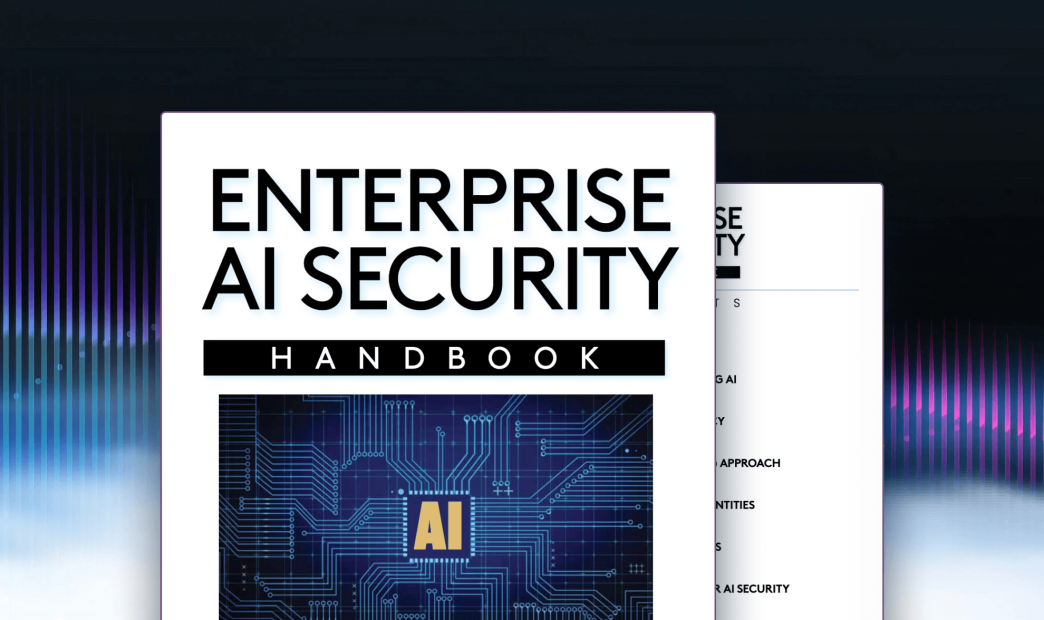
That’s exactly why the TAG Enterprise AI Security Handbook 2026 was created.
Developed by leading analysts and informed by real-world enterprise use cases, the handbook provides a clear view into how organizations are approaching AI security today and where they are still falling short. Its goal is to cut through the noise and deliver practical, unbiased guidance for securing AI systems at scale.
We’re proud to share that Orca Security has been included in this year’s report, recognized for its ability to connect cloud, application, and AI risk into a unified, contextualized security model.
More importantly, the report offers a valuable framework for understanding how AI security is evolving. Across its eight chapters, a consistent set of themes emerges, each reflecting a different dimension of how organizations must adapt their security strategies for an AI-driven world.
Theme 1: AI Security Lacks Clear, Trusted Guidance
The report opens with a candid observation that despite the explosion of AI adoption, there is still a lack of clear, unbiased guidance on how to secure it. Many organizations are navigating a mix of vendor claims, investor narratives, and incomplete frameworks, making it difficult to determine what “good” actually looks like.
At the same time, security teams are under increasing pressure from leadership to “do something” about AI risk without a clear definition of what that entails.
The result is a growing gap between expectation and execution.
Theme 2: From Experimentation to Operational AI Security
One of the most important shifts highlighted in the report is the move from proof-of-concept initiatives to production-scale security programs.
Over the past two years, many organizations invested in pilots and demos to explore AI security. But as AI becomes embedded in real business processes, those approaches are no longer sufficient.
Security teams must now operationalize AI security as an ongoing capability that continuously discovers AI usage across the environment, enforces controls, validates system behavior through testing, and integrates governance into existing security programs. Rather than treating AI security as a series of isolated initiatives, organizations must run these efforts in parallel and evolve them over time.
This marks a transition from demonstrating progress to delivering measurable risk reduction.
Theme 3: AI Security Must Extend Existing Policies, Not Replace Them
As organizations begin operationalizing AI security, the next challenge becomes how to govern it effectively. Rather than introducing entirely new security frameworks, the report emphasizes that AI should be treated as an extension of existing security practices, while adapting those policies to address AI-specific risks and requirements.
This includes applying familiar controls, such as access management, data protection, and application security to AI systems and workflows.
The challenge is not starting from scratch, but adapting what already works to a new and more dynamic set of technologies.
Theme 4: Not All AI Risk Is Equal
Once policies are established, organizations must determine how to apply them across different AI use cases. A key concept introduced in the handbook is the need for a structured, repeatable approach to risk tiering.
AI systems vary widely in their impact and exposure. An internal productivity assistant does not carry the same risk profile as a customer-facing AI application handling sensitive data.
Organizations must develop a structured way to classify AI systems based on:
- Data sensitivity
- Business impact
- Exposure to external users
Without this, security efforts become either over-engineered or dangerously incomplete.
Theme 5: Identity Becomes Central to AI Security
As AI systems become more integrated into enterprise environments, identity emerges as a critical control point. AI systems interact with users, services, and other systems, identity becomes a critical control point.
The report highlights how AI introduces new identity challenges, including non-human identities like AI agents, automated processes, expanded access pathways to sensitive data, and Increased complexity in authentication and authorization.
Securing AI means understanding not just who is accessing systems, but how AI itself is acting within those systems, along with clear ownership and accountability for those actions.
Theme 6: The AI Security Vendor Landscape Is Rapidly Evolving
As organizations work to address these challenges, they must also navigate a rapidly evolving vendor landscape. The handbook provides a detailed look at the growing ecosystem of AI security vendors, noting both innovation and fragmentation.
With hundreds of vendors entering the space, organizations face the difficult challenge of distinguishing between meaningful capabilities and solutions that are still evolving, or in some cases, still searching for clearly defined problems. Many vendors are early-stage, with solutions that are still maturing alongside the market.
The report emphasizes the importance of prioritizing learning over lock-in, ensuring integration with existing security tools, and maintaining flexibility as the market evolves.
This reflects a broader reality that AI security is still taking shape, and vendor strategies must adapt accordingly.
Theme 7: AI Security Is Being Shaped by Investment and Market Forces
Beyond vendor capabilities alone, the report also explores how investment and market dynamics are shaping the direction of AI security. Significant funding has accelerated innovation, but it has also contributed to noise and overlapping solutions.
This makes it more important for security teams to focus on practical outcomes rather than market hype, as investment trends increasingly influence which categories, capabilities, and vendors gain traction.
In many ways, the evolution of AI security is being shaped as much by economics as by technology.
Theme 8: AI Security Is a Moving Target
The final chapter reinforces a theme that runs throughout the entire report: AI security is not static.
Threats are evolving, use cases are expanding, and the underlying technology is changing at a pace that traditional security models were never designed to accommodate. What is considered a best practice today may quickly become outdated as new attack vectors, architectures, and dependencies emerge.
As a result, organizations cannot treat AI security as a one-time implementation or a fixed set of controls. It must become a continuous, adaptive process that evolves alongside both the technology and the threat landscape.
Success in this environment depends on an organization’s ability to continuously reassess risk, refine controls, and adapt its approach as AI becomes more deeply embedded across the business.
How Orca Can Help
Taken together, these themes point to a clear reality that AI security is not a standalone initiative. It is an operational challenge that spans cloud environments, applications, identities, and data, and must be addressed as part of the broader security program. For many organizations, the challenge is not understanding the problem, but acting on it with fragmented visibility, risk prioritization challenges, and disjointed security efforts across tools and teams.
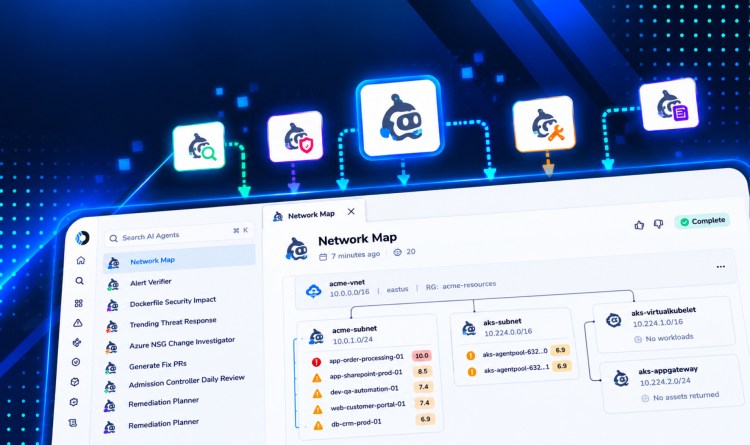
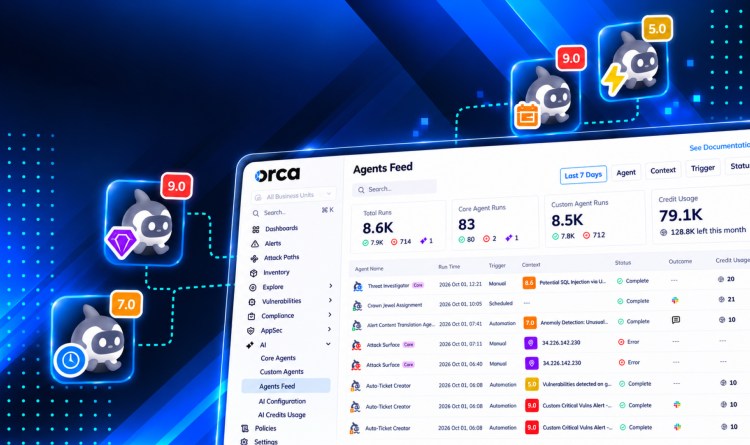
Orca Security helps organizations operationalize AI security by extending visibility and context across cloud, applications, identities, and data. By connecting these layers, teams can understand how AI-related risks tie to real assets and business impact. This enables continuous discovery of AI usage, identification of sensitive data exposure, and prioritization of risk based on real-world exploitability.
As AI continues to evolve, the organizations that succeed will be those that can operationalize security alongside it.
Table of contents
- A New Chapter for Enterprise AI Security
- Theme 1: AI Security Lacks Clear, Trusted Guidance
- Theme 2: From Experimentation to Operational AI Security
- Theme 3: AI Security Must Extend Existing Policies, Not Replace Them
- Theme 4: Not All AI Risk Is Equal
- Theme 5: Identity Becomes Central to AI Security
- Theme 6: The AI Security Vendor Landscape Is Rapidly Evolving
- Theme 7: AI Security Is Being Shaped by Investment and Market Forces
- Theme 8: AI Security Is a Moving Target
- How Orca Can Help




 Chat with an Orca Expert