


Table of contents
- Key Takeaways
- Core Components of Cloud Data Security
- What Are the Challenges of Securing Data in the Cloud?
- What Are the Benefits of Cloud Data Security?
- Protecting Sensitive Data From Breaches and Unauthorized Access
- Ensuring Compliance With Industry Regulations
- Maintaining Customer Trust and Business Reputation
- Supporting Business Continuity With Disaster Recovery
- Reducing the Risk of Costly Breaches and Downtime
- Enhancing Visibility and Control Over Data Assets
- Preventing Data Loss With DLP
- Who Is Responsible for Securing Data in the Cloud?
- What Are the 12 Best Practices for Cloud Data Security?
- 1. Identify All Sensitive Data
- 2. Classify Data Using Context
- 3. Encrypt Data in Transit and at Rest
- 4. Limit Access to Resources
- 5. Implement Data Anonymization and Masking
- 6. Educate and Train End Users
- 7. Implement Business Continuity and Disaster Recovery
- 8. Monitor Cloud Environments Continuously
- 9. Automate Compliance Assessments
- 10. Develop an Incident Response Plan
- 11. Implement Comprehensive Cloud Security Solutions
- 12. Integrate SIEM for Threat Detection and Response
- How Orca Security Protects Sensitive Data in Cloud Environments
- Frequently Asked Questions About Cloud Data Security
Key Takeaways
- Cloud data security protects data at rest, in transit, and in use across cloud storage and compute services through encryption with customer-managed keys, least-privilege Identity and Access Management (IAM) policies, and continuous monitoring.
- Misconfigurations on cloud storage resources, including public Amazon Simple Storage Service (S3) buckets and shared Relational Database Service (RDS) snapshots, cause most data exposure incidents; Cloud Security Posture Management (CSPM) tools that continuously evaluate configuration state catch these before exploitation.
- Data Security Posture Management (DSPM) tools discover sensitive data, including Personally Identifiable Information (PII) and Protected Health Information (PHI), across all cloud storage services continuously, addressing the shadow data problem where 68% of cloud breaches Public Cloud Data Breaches involved data the organization did not know was stored in the breached location.
- Automated compliance assessment maps every cloud resource configuration against HIPAA, PCI DSS v4.0, GDPR, and SOC 2 controls continuously, eliminating configuration drift before it creates regulatory exposure.
- Most cloud data breaches do not start with a sophisticated attack. They start with a storage bucket that has public access enabled, a database snapshot shared with the wrong account, or a service account with read permissions on every S3 bucket in the organization. The data was there but, the access control was absent. The attacker found it before the security team did.
Cloud data security is the discipline that closes this gap. It is not only a technical challenge but also a governance and human risk problem, where identity misuse and data movement are as critical as infrastructure misconfiguration. It covers every control, process, and tool that protects data stored, processed, or transmitted in cloud environments from unauthorized access, exfiltration, and accidental exposure. The challenge is that the data surface in a cloud environment is far larger and far less predictable than in an on-premises environment. Data gets created in unexpected places, copied between services without audit trails, and accessed by identities that were provisioned for a temporary purpose and never deprovisioned.
This article breaks down exactly what cloud data security is, it covers the specific risks and challenges practitioners encounter in production environments, maps the shared responsibility boundaries that determine who owns which controls, and provides twelve specific best practices with the framework controls and configuration parameters that make each one operational.
Core Components of Cloud Data Security
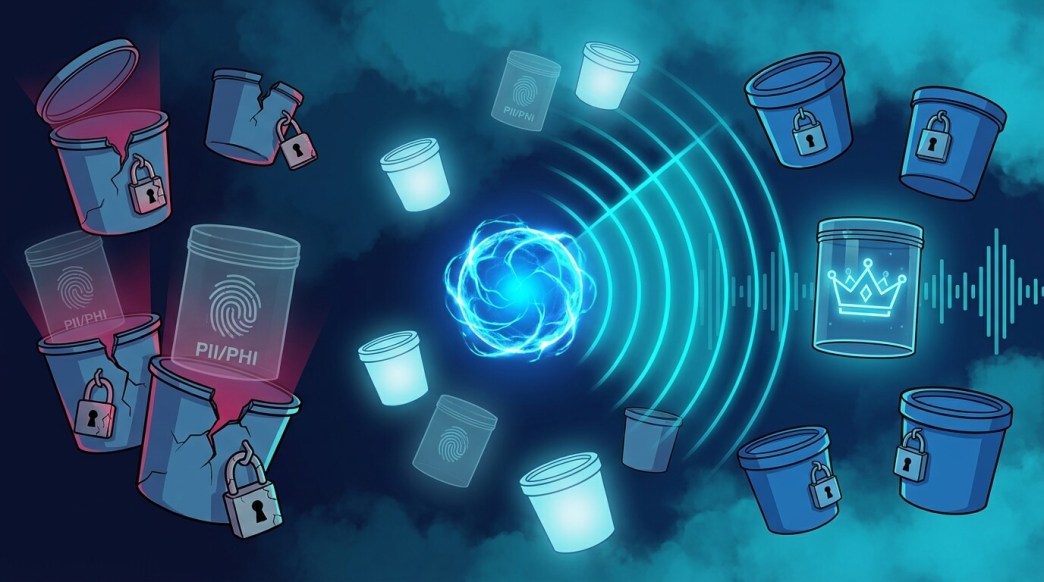
Cloud data security is a discipline, a market category, and a class of solutions, including Data Security Posture Management (DSPM), that encompasses the policies, controls, and technologies used to protect data stored in or transmitted through cloud environments from unauthorized access, data breaches, exfiltration, and accidental exposure.
This definition has three operational components.
First, it covers data at rest in cloud storage services, including Amazon Simple Storage Service (S3) buckets, Azure Blob Storage containers, Google Cloud Platform (GCP) Cloud Storage buckets, Relational Database Service (RDS) databases, and data warehouses.
Second, it covers data in transit between cloud services, between cloud and on-premises systems, and between cloud services and end users.
Third, it covers data in use within cloud compute resources, including Elastic Compute Cloud (EC2) instances, containers, serverless functions, and managed machine learning (ML) services.
These operational layers are supported by data-centric security technologies. Data Security Posture Management (DSPM) tools provide continuous discovery, classification, and risk assessment of sensitive data, such as Personally Identifiable Information (PII) and Protected Health Information (PHI), across cloud environments, establishing visibility into where sensitive data resides and who has access to it. Data Loss Prevention (DLP) solutions complement this by enforcing policies that monitor and prevent unauthorized access, movement, or exfiltration of sensitive data. Together, DSPM and DLP are core components of cloud data security: DSPM answers “what data exists and where,” while DLP enforces “how that data is protected and controlled in use.”
Cloud data security differs from traditional data security in four key ways:
- Dynamic data surface: Data continuously grows and contracts as cloud workloads scale.
- Distributed storage model: Data is stored across regions and availability zones without a fixed network perimeter.
- Expanded identity landscape: Access to data is driven not only by human users but also by non-human service accounts and machine identities, which often outnumber human users.
- Shared responsibility model: Data security responsibilities are divided between the cloud provider and the customer, with obligations varying by service type.
Cloud Data Security and the CIA Triad
Cloud data security is built on three foundational principles known as the CIA Triad:
- Confidentiality: Ensuring only authorized users and systems can access data through encryption and access controls
- Integrity: Protecting data from unauthorized modification using hashing, logging, and versioning
- Availability: Ensuring data remains accessible through redundancy, backups, and disaster recovery
Every cloud data security control, from IAM policies to encryption and monitoring, maps back to one or more of these principles.
What Are the Challenges of Securing Data in the Cloud?
Misconfigurations
Cloud misconfigurations are the most common cause of cloud data exposure. The 2024 Verizon DBIR identified misconfiguration as a contributing factor in 15% of all cloud breach incidents analyzed. Cloud security posture management (CSPM) tools that evaluate configuration state continuously and alert on deviation from the security baseline catch these misconfigurations before they are exploited.
Human-Centric Threats
While misconfigurations are a leading cause of cloud data exposure, human-driven risks remain a primary attack vector. These include:
- Insider threats: Employees or contractors misusing legitimate access to sensitive data
- Phishing and credential theft: Attackers compromising IAM credentials to access cloud storage and databases
- Social engineering: Manipulating users to gain access to systems or bypass security controls
These threats often bypass technical safeguards by exploiting trust and access, making identity security, access monitoring, and user awareness critical components of cloud data protection.
Lack of Visibility
Limited visibility into cloud data access, storage, and movement creates conditions where breaches go undetected for months. The three visibility gaps most commonly identified in post-breach analysis are: no inventory of where sensitive data is stored across cloud services, no alerting on access to sensitive data outside business hours or from unexpected geographies, and no tracking of data movement between cloud services or to external destinations.
AWS CloudTrail data events capture every S3 object-level read and write operation. Azure Monitor captures Blob Storage access logs. GCP Cloud Audit Logs capture Cloud Storage data access events. None of these are enabled by default. All three require explicit configuration with log retention settings that satisfy compliance requirements (HIPAA requires a minimum six-year audit log retention for covered entities).
Expanded Attack Surface
Cloud environments expand the attack surface relative to on-premises infrastructure in three specific ways. Dynamic scaling creates and destroys compute and storage resources faster than manual security review can track. Complex integrations between cloud services, third-party SaaS applications, and remote devices introduce trust relationships that create lateral movement paths from a compromised third-party credential to cloud data. And the number of non-human identities (e.g., service accounts, instance profiles, and Lambda execution roles) in a typical cloud environment exceeds the number of human users by a factor of five to ten.
MITRE ATT&CK for Cloud technique T1530 (Data from Cloud Storage Object) documents the specific access pattern attackers use to exfiltrate data from misconfigured cloud storage: authenticated API calls using compromised credentials or misconfigured bucket policies, which are indistinguishable from legitimate access without behavioral baseline monitoring.
Complex Multi-Cloud Environments
Multi-cloud deployments running workloads across AWS, Azure, and GCP create data security complexity because each provider has different native security controls, different IAM models, and different encryption configuration requirements. A security policy that satisfies PCI DSS v4.0 requirement 3.5.1 on AWS RDS does not automatically satisfy the same requirement on Azure SQL Database or GCP Cloud SQL. Each service requires explicit configuration against its own control set.
Security teams managing multi-cloud environments without a unified security posture management tool operate with fragmented visibility. A CSPM tool that covers only AWS leaves Azure and GCP data assets unmonitored. A compliance report covering only one cloud provider does not satisfy auditors reviewing data security controls for a multi-cloud architecture.
Multi-Tenant Risks
Cloud infrastructure is shared between customers at the hypervisor and physical hardware layer. While cloud providers implement strong isolation between tenants at the virtualization layer, side-channel attacks against shared hardware remain a documented risk class. CVE-2018-3615 (Spectre, affecting Intel processors in shared cloud infrastructure) demonstrated that hypervisor-level isolation does not eliminate all cross-tenant information disclosure risks.
The practical multi-tenant risk for most organizations is not hypervisor exploitation. It is misconfigured resource sharing: RDS snapshots shared with incorrect AWS account IDs, S3 bucket policies that grant access to external principals broader than intended, and cross-account IAM roles with trust policies that include account IDs from decommissioned projects.
Compliance Requirements
Cloud data security compliance requires demonstrating continuous adherence to multiple overlapping frameworks simultaneously. A healthcare SaaS company storing PHI may be subject to HIPAA, SOC 2 Type II, HITRUST, and state-level data privacy laws simultaneously. Each framework has specific technical control requirements that partially overlap but are not identical.
The compliance challenge specific to cloud environments is that configuration drift can occur without any deliberate action by the security team. Auto-scaling events can create EC2 instances with default security group rules. Developers can modify S3 bucket policies through the console without triggering a change management process. Automated compliance assessment that runs continuously and alerts on configuration drift is the only operationally sustainable approach at cloud scale.
Distributed Storage Complexity
Data in cloud environments does not stay in one place. A single application may store data in S3 for object storage, RDS for relational data, ElastiCache for session data, DynamoDB for application state, and SQS for message queuing simultaneously. Each storage service has different encryption configurations, access control models, and audit logging capabilities, often varying further by region.
The security implication is that a single application-level data classification does not automatically propagate to all storage services that application uses. Each service requires an independent security configuration review against applicable compliance framework controls, including data residency requirements that may restrict where specific categories of data can be stored or processed.
Shadow IT
Shadow IT in cloud environments means AI services, storage buckets, and compute resources deployed by development teams outside the security team’s awareness. The 2024 Gartner AI TRiSM market survey found that 40% of enterprise cloud environments contained at least one AI service not tracked in the official asset inventory. Each untracked resource is an unmonitored data store that may contain sensitive data with no security controls applied.
Agentless cloud asset discovery that enumerates all resources through cloud provider APIs is the only method that reliably discovers shadow IT. Network scanning misses resources with no public IP. Manual inventory processes miss resources created and destroyed within a single sprint.
What Are the Benefits of Cloud Data Security?
Protecting Sensitive Data From Breaches and Unauthorized Access
Encryption at rest and in transit, combined with least-privilege access controls, reduces the probability that a misconfigured storage resource or a compromised identity results in a data breach. The IBM Cost of a Data Breach Report 2025 found that the average cost of a cloud-related data breach reached $4.88 million in 2024, up from $4.45 million in 2023. Organizations with fully deployed security AI and automation reduced breach costs by an average of $2.22 million compared to organizations with no automation.
The specific control that most directly reduces unauthorized access is encryption combined with key management. Data encrypted with customer-managed keys (CMKs), in AWS Key Management Service (KMS) and Azure Key Vault, or customer-managed encryption keys (CMEKs) in Google Cloud Platform (GCP) Cloud Key Management Service (Cloud KMS) remains protected even if the storage resource is publicly exposed, because the attacker cannot decrypt the data without access to the key management service.
Ensuring Compliance With Industry Regulations
Cloud data security must operate within a complex, mandatory, and highly regulated compliance environment. Organizations are required to meet overlapping and evolving requirements across frameworks such as HIPAA, PCI DSS v4.0, GDPR, SOC 2 Type II, and FedRAMP, each with specific technical controls, audit expectations, and enforcement mechanisms. Manually interpreting these requirements, mapping them to cloud configurations, and producing audit-ready evidence is resource-intensive and error-prone, particularly in dynamic cloud environments where configurations change continuously.
Cloud data security controls address this challenge by directly mapping to the specific requirements of these frameworks. For example, HIPAA Security Rule section 164.312(a)(2)(iv) requires encryption of Protected Health Information (PHI) in transit and at rest; PCI DSS v4.0 requirement 3.5.1 requires that stored primary account numbers be rendered unreadable; and GDPR Article 32 requires appropriate technical measures for personal data, including pseudonymization and encryption.
Automated compliance assessment tools operationalize this mapping by continuously evaluating cloud resource configurations against these control requirements and generating dated evidence reports. This eliminates much of the manual audit preparation process, which consumed an average of 1,200 engineer-hours per compliance cycle in organizations relying on manual controls, according to the 2024 Cloud Security Alliance compliance automation survey.
Maintaining Customer Trust and Business Reputation
Cloud data security programs, implemented through specialized tools and platforms, produce documented, auditable evidence of compliance controls and provide the transparency that enterprise customers require during vendor security assessments. SOC 2 Type II reports, produced through continuous control monitoring over a defined audit period, are the primary evidence artifact that enterprise buyers request.
Organizations without a SOC 2 Type II report are disqualified from procurement processes at 67% of Fortune 500 companies, per the 2024 Gartner vendor risk management survey.
Supporting Business Continuity With Disaster Recovery
Cloud-native disaster recovery requires continuous data replication to a secondary region, automated failover testing, and documented recovery time objectives (RTO) and recovery point objectives (RPO) tested against actual backup restore procedures. AWS RDS automated backups with cross-region replication achieve RPO of minutes. Azure Backup geo-redundant storage achieves RPO of hours for VM-level backups.
NIST SP 800-34 Revision 1 (Contingency Planning Guide for Federal Information Systems) requires that contingency plans be tested annually and updated within 30 days of a significant change to the covered information system. Cloud environments change continuously; Disaster Recovery testing cadences must account for infrastructure changes that invalidate previously tested recovery procedures.
Reducing the Risk of Costly Breaches and Downtime
The 2024 IBM Cost of a Data Breach Report found that the mean time to identify a cloud breach was 168 days and the mean time to contain it was 73 days, for a combined lifecycle of 241 days. Organizations with deployed security AI and automation identified breaches 98 days faster on average. The cost differential between a breach identified in under 200 days versus over 200 days was $1.02 million per incident.
Continuous monitoring of cloud storage access logs, IAM activity logs, and network flow logs reduces time to identification. CISA’s cloud security technical reference architecture (September 2023) recommends enabling S3 server access logging, CloudTrail data events for S3, and VPC Flow Logs as the minimum telemetry baseline for cloud data security monitoring.
Enhancing Visibility and Control Over Data Assets
Shadow data sensitive information stored in cloud locations outside the security team’s awareness is a major driver of unexpected exposure. The 2024 Verizon DBIR highlights that many breaches stem from lack of visibility into where sensitive data resides.
DSPM (Data Security Posture Management) tools address this by scanning cloud storage services continuously for sensitive data patterns and surfacing the combination of what sensitive data exists and whether the current access configuration creates exposure risk. A PII dataset in an S3 bucket with no public access and encryption enabled is a monitored asset. The same dataset in a bucket created during a testing sprint with public access enabled and no encryption is an uncontrolled exposure.
Preventing Data Loss With DLP
Data Loss Prevention (DLP) solutions help organizations monitor and control the movement of sensitive data across cloud environments. While DSPM focuses on discovering where sensitive data resides, DLP ensures that this data is not improperly shared, transferred, or exposed.
In cloud environments, DLP enforces policies such as:
- Blocking public sharing of sensitive files
- Preventing unauthorized downloads or transfers
- Ensuring encryption before data leaves controlled environments
DLP is particularly important in SaaS integrations and multi-cloud environments where data frequently moves between services.
Who Is Responsible for Securing Data in the Cloud?
Cloud data security responsibility divides between the cloud provider and the customer under the shared responsibility model. For a broader view of how cloud provider and customer responsibilities map across service types, see What Is Cloud Security? The boundary depends on the service type, as shown below.
| Service Model | Provider Responsible For | Customer Responsible For |
|---|---|---|
| IaaS (EC2, Azure VMs) | Physical hardware, hypervisor, network infrastructure | OS, applications, data, network and IAM controls above hypervisor |
| PaaS (RDS, Azure SQL) | Infrastructure, database engine patching | Access controls, encryption, backup configuration, data |
| SaaS | Full stack including application | User access controls, data classification, integration security |
The shared responsibility model creates a specific data security gap: customers frequently assume that cloud provider managed services are secure by default, when in fact encryption settings, access policies, and audit logging require explicit customer action. An RDS database with encryption disabled is a customer configuration failure, not a provider failure.
What Are the 12 Best Practices for Cloud Data Security?
1. Identify All Sensitive Data
Run a complete data discovery scan across all cloud storage services before implementing any other data security control. You cannot classify, encrypt, or restrict access to data you do not know exists. DSPM tools scan S3, Azure Blob Storage, GCP Cloud Storage, RDS, Redshift, BigQuery, and Snowflake environments for sensitive data patterns including PII, PHI, payment card data, and credentials.
Discovery must include transient data stores such as SQS queues, Kinesis streams, and ElastiCache clusters that may temporarily hold sensitive data during processing. These are frequently excluded from data discovery scans because they are not persistent storage, but they contain sensitive data during their operational window.
2. Classify Data Using Context
Data classification assigns a sensitivity level to each data asset based on the type of data it contains and the regulatory framework governing its protection. The classification drives encryption requirements, access control policies, and audit logging configurations.
A four-tier classification model maps to most regulatory frameworks: public (no access controls required), internal (access limited to authenticated employees), confidential (access limited to role-based need-to-know, encryption required), and restricted (PHI, PAN, or credentials; encryption required, access logged, least-privilege access enforced). Classification must account for context, not just content patterns. A database containing names and email addresses is confidential. The same database combined with medical diagnoses is restricted under HIPAA.
3. Encrypt Data in Transit and at Rest
Encrypt all data at rest using AES-256 with customer-managed keys in the cloud provider’s key management service. Encrypt all data in transit using TLS 1.2 minimum; TLS 1.3 where supported. Disable SSLv3, TLS 1.0, and TLS 1.1 on all endpoints. For definitions of encryption terms including CMK, KMS, AES-256, and TLS cipher suite requirements referenced in this section, see the Orca Security Glossary.
AWS KMS, Azure Key Vault, and GCP Cloud KMS all support customer-managed key (CMK) configuration for their native storage and database services. CMK configuration means the customer controls key rotation, key access policies, and key deletion. Data encrypted with a CMK cannot be decrypted by the cloud provider or by an attacker who accesses the storage resource directly without also accessing the key management service.
4. Limit Access to Resources
Apply least-privilege IAM policies to every identity that accesses cloud data resources. CIS AWS Foundations Benchmark v3.0 control 1.16 requires that IAM policies follow least privilege. In practice this means replacing wildcard resource ARNs (arn:aws:s3:::*) with specific resource ARNs (arn:aws:s3:::production-pii-bucket) and replacing wildcard actions (s3:*) with the specific actions required (s3:GetObject, s3:PutObject).
Implement resource-based policies on S3 buckets, KMS keys, and RDS instances that explicitly deny access from principals outside the owning account. Remove access keys older than 90 days (CIS AWS Foundations Benchmark v3.0 control 1.14). Deactivate and delete IAM users and service accounts that have not authenticated in 90 days (control 1.12).
5. Implement Data Anonymization and Masking
Anonymize or mask sensitive data in non-production environments. Development and testing environments that use production data clones are a common source of data exposure because they receive less security scrutiny than production systems. An RDS snapshot of a production PHI database restored to a developer’s personal AWS account creates HIPAA exposure regardless of the security controls on the production database.
Tokenization replaces sensitive values with non-sensitive tokens that can be mapped back to the original value through a separate token vault. Format-preserving encryption (FPE) replaces sensitive values with encrypted values in the same format, allowing non-production systems to test with realistic-looking data without containing real sensitive values. NIST SP 800-188 provides the technical framework for evaluating whether a de-identification method provides adequate privacy protection.
6. Educate and Train End Users
Phishing attacks targeting cloud console credentials and API keys are the most common initial access technique for cloud data breaches. The 2024 Verizon DBIR found that 68% of breaches involved a human element, with phishing and credential theft accounting for the majority of cloud-specific initial access events.
Security awareness training that includes cloud-specific scenarios reduces the probability of successful phishing-based initial access. Training must be updated quarterly to reflect current phishing techniques; annual training does not keep pace with phishing evolution.
7. Implement Business Continuity and Disaster Recovery
Define RTO and RPO for each data tier based on business impact analysis. Implement automated backup configurations that achieve those objectives and test recovery procedures at least annually or within 30 days of any significant infrastructure change per NIST SP 800-34.
For cloud data specifically: enable S3 Versioning on buckets containing critical data to allow recovery from accidental deletion or ransomware overwrites. Enable RDS automated backups with a retention period matching the compliance requirement for the data type (HIPAA requires six years for PHI). Configure cross-region replication for data with RPO requirements under one hour.
8. Monitor Cloud Environments Continuously
Enable the full telemetry stack required for cloud data security monitoring: CloudTrail management events and data events, S3 server access logging, VPC Flow Logs, RDS audit logging, and Lambda execution logs. None of these are enabled by default. All require explicit configuration.
Set alerts on the specific access patterns that indicate data exfiltration: large S3 GetObject request volumes from unexpected principals, S3 bucket policy changes that reduce access restrictions, KMS key deletion or disable events, and RDS snapshot sharing with external account IDs. CISA’s Known Exploited Vulnerabilities (KEV) catalog should be integrated into the vulnerability monitoring process so that CVEs affecting cloud storage services are flagged immediately upon KEV listing. For a structured approach to managing CVE remediation timelines, see A Guide to Vulnerability Management.
9. Automate Compliance Assessments
Manual compliance assessment at cloud scale is not operationally sustainable. A cloud environment with 500 resources across three cloud providers changes faster than a human reviewer can track. Automated compliance assessment tools evaluate every resource against the applicable framework controls continuously and alert on drift within minutes of a non-compliant configuration being introduced.
Map compliance framework controls to specific cloud resource configuration parameters before implementing automated assessment. PCI DSS v4.0 requirement 10.3.1 maps to S3 Object Lock with governance mode enabled on log buckets. HIPAA Security Rule section 164.312(b) maps to CloudTrail enabled with multi-region logging and log file integrity validation enabled. Each compliance requirement has a specific cloud configuration expression that automated tools can check.
10. Develop an Incident Response Plan
A cloud data security incident response plan must specify four things that generic IR plans do not: which cloud-native isolation actions to take first (remove the affected IAM principal’s permissions, restrict the S3 bucket policy, disable the compromised access key), which cloud provider support channels to engage and at what severity threshold, how to preserve forensic evidence in a cloud environment (CloudTrail logs, VPC Flow Logs, EBS volume snapshots before instance termination), and how the shared responsibility model affects what the organization can access independently versus what requires cloud provider assistance.
NIST SP 800-61 Revision 2 (Computer Security Incident Handling Guide) provides the baseline IR framework. Cloud-specific additions required by the IR plan include cloud provider incident notification procedures, evidence preservation steps specific to ephemeral cloud resources, and RTO targets for IAM access restoration after an identity-based incident.
11. Implement Comprehensive Cloud Security Solutions
A recommended approach is to start every cloud data security implementation with data discovery before touching encryption or access control configurations. Teams that begin with encryption frequently discover, after encryption is deployed, that the key configuration does not cover a storage service they did not know contained sensitive data.
12. Integrate SIEM for Threat Detection and Response
Security Information and Event Management (SIEM) platforms aggregate and analyze logs from cloud services to detect threats in real time. While CSPM and DSPM identify misconfigurations and data exposure risks, SIEM provides visibility into active threats and suspicious behavior.
SIEM systems correlate data from sources such as AWS CloudTrail, Azure Monitor, and GCP Audit Logs to detect:
- Unusual access to sensitive data
- Data exfiltration patterns
- Privilege escalation attempts
Integrating SIEM ensures that cloud data security includes not only prevention and visibility, but also detection and response capabilities.
How Orca Security Protects Sensitive Data in Cloud Environments
Orca Security addresses cloud data security by combining agentless DSPM with CSPM, CIEM, and attack path analysis in a unified data model. Using agentless SideScanning™, Orca Security reads storage resource contents, IAM policy documents, and workload configurations directly from EBS snapshots, Azure Managed Disk snapshots, and GCP persistent disk snapshots without requiring an agent on each workload.
For data security specifically, Orca Security’s DSPM classifies sensitive data across S3, Azure Blob Storage, GCP Cloud Storage, RDS, and Redshift environments and correlates each sensitive data finding with the access configuration of the storage resource containing it. A PII dataset in a publicly accessible S3 bucket with encryption disabled generates a combined finding showing the data type, the misconfiguration class, and the attack path from public internet to the sensitive data in a single prioritized alert rather than as separate CSPM and DSPM findings with no shared context.
Orca Security maps each finding to the specific HIPAA, PCI DSS v4.0, GDPR, and SOC 2 control numbers that the misconfiguration violates, producing the compliance documentation that audit teams require alongside the remediation step the cloud engineer needs to execute. Shadow data discovery covers storage resources created outside the security team’s awareness across AWS, Azure, and GCP simultaneously. For further reading on cloud security practices and data security frameworks, visit the Orca Security Cloud Security Learning Hub.
Frequently Asked Questions About Cloud Data Security
Cloud data security is monitored in real time by enabling cloud-native logging and integrating continuous monitoring tools that analyze access patterns and configuration changes. This includes services such as AWS CloudTrail, Azure Monitor, and GCP Audit Logs, combined with alerting systems that detect unusual activity like unauthorized access, data exfiltration attempts, or sudden permission changes. Effective monitoring correlates identity activity, storage access, and network behavior to identify risks early.
Cloud data security posture is improved using tools such as CSPM (Cloud Security Posture Management) for configuration monitoring, DSPM (Data Security Posture Management) for sensitive data discovery, and CIEM (Cloud Infrastructure Entitlement Management) for managing identity permissions. These tools work together to identify misconfigurations, overprivileged access, and exposed data across cloud environments.
Encryption reduces cloud data exposure risk by ensuring that even if storage resources are misconfigured or accessed by unauthorized users, the data remains unreadable without the appropriate decryption keys. Using customer-managed keys adds an additional layer of control, allowing organizations to manage access, rotation, and usage policies independently of the cloud provider.
Identity and Access Management (IAM) controls who can access cloud data and what actions they can perform. Misconfigured IAM roles are one of the most common causes of data breaches. Applying least-privilege access, regularly auditing permissions, and removing unused credentials significantly reduce the risk of unauthorized data access.
Organizations detect shadow data by continuously scanning cloud storage services for sensitive data patterns and mapping them to access configurations. DSPM tools identify untracked data stores and highlight whether they are exposed, encrypted, or accessible by unintended users, allowing security teams to bring unknown assets under control.
Table of contents
- Key Takeaways
- Core Components of Cloud Data Security
- What Are the Challenges of Securing Data in the Cloud?
- What Are the Benefits of Cloud Data Security?
- Protecting Sensitive Data From Breaches and Unauthorized Access
- Ensuring Compliance With Industry Regulations
- Maintaining Customer Trust and Business Reputation
- Supporting Business Continuity With Disaster Recovery
- Reducing the Risk of Costly Breaches and Downtime
- Enhancing Visibility and Control Over Data Assets
- Preventing Data Loss With DLP
- Who Is Responsible for Securing Data in the Cloud?
- What Are the 12 Best Practices for Cloud Data Security?
- 1. Identify All Sensitive Data
- 2. Classify Data Using Context
- 3. Encrypt Data in Transit and at Rest
- 4. Limit Access to Resources
- 5. Implement Data Anonymization and Masking
- 6. Educate and Train End Users
- 7. Implement Business Continuity and Disaster Recovery
- 8. Monitor Cloud Environments Continuously
- 9. Automate Compliance Assessments
- 10. Develop an Incident Response Plan
- 11. Implement Comprehensive Cloud Security Solutions
- 12. Integrate SIEM for Threat Detection and Response
- How Orca Security Protects Sensitive Data in Cloud Environments
- Frequently Asked Questions About Cloud Data Security



 Chat with an Orca Expert