



Table of contents
- 1) Triage by “breach paths,” not alert volume
- 2) Make “owner + fix” part of every finding (or it won’t close)
- 3) Assume AI will increase alert volume, and design for throughput
- 4) Use an “autonomy ladder” so automation doesn’t break production
- 5) Treat third-party integrations like privileged access (because they are)
- 6) Move from annual vendor review to continuous checks you can actually act on
- 7) Non-human identity hygiene is now core ops work
- 8) Assume “vibe coding” will ship over-permissioning, so put guardrails in CI
- 9) Optimize incident response for containment speed (“zero impact”), not perfect attribution
- 10) Logging isn’t a checkbox. Make it investigation-ready (coverage, retention, correlation)
- What Practitioners Should Do This Quarter (Quick Action Plan)
- How Orca Security Can Help
Cloud Security LIVE 2026 took place earlier this year and was a strong reminder that day-to-day cloud security work is changing fast: more environments, more identities, more third parties, and now AI increasing both attack speed and operational noise.
The most useful guidance across sessions boiled down to this: cut toil, prioritize what’s exploitable, and pre-stage containment. Here are 10 takeaways for cloud sec engineers, SOC/IR, detection engineers, AppSec/DevSecOps, and platform security.
1) Triage by “breach paths,” not alert volume
Vuln counts and individual misconfigs don’t tell you what’s truly dangerous. Prioritize findings that form a realistic path to sensitive data or high privilege (public exposure + weak IAM + reachable asset).
What to do next: Re-rank your queue around: internet exposure, privilege level, asset criticality, and known exploitability, then burn down the top paths.
2) Make “owner + fix” part of every finding (or it won’t close)
The fastest way to reduce MTTR is to ship issues with enough context that engineering can act without a back-and-forth.
What to do next: Standardize enrichment on tickets/alerts: asset owner, repo/IaC source, environment, last change, exact permission/policy snippet, and a copy/paste-safe fix recommendation.
3) Assume AI will increase alert volume, and design for throughput
AI-assisted attackers mean more attempts, more variation, and faster iteration. Manual, one-alert-at-a-time workflows won’t hold.
What to do next: Automate the first 60–80%: dedupe, cluster similar alerts, attach context (identity, asset, recent changes), and escalate only when confidence/impact crosses a threshold.
4) Use an “autonomy ladder” so automation doesn’t break production
Auto-remediation is powerful, but risky without guardrails. Progressively automate from low-risk to high-risk actions.
What to do next: Start with safe automation:
- open tickets with enrichment
- quarantine suspicious artifacts in non-prod
- rotate keys/tokens when compromise is suspected
Then add approval gates for disruptive actions (policy changes, prod isolation, privilege revocation).
5) Treat third-party integrations like privileged access (because they are)
OAuth apps, API tokens, SaaS connectors, GitHub apps/actions, and managed service access are common entry points and often over-permissioned.
What to do next: Build an integrations inventory with: permissions granted, data touched, token location/rotation, last-used timestamp, and kill-switch procedure.
6) Move from annual vendor review to continuous checks you can actually act on
Point-in-time assessments don’t help during an active compromise. You need continuous signals + fast containment options.
What to do next: Alert on:
- new OAuth grants / scopes
- privilege increases for vendor accounts
- unusual vendor access patterns (geo/time/API)
And pre-stage response: revoke token, disable app, block egress, rotate secrets.
7) Non-human identity hygiene is now core ops work
Service accounts, workload identities, roles, access keys, and agents often have more access than humans, but with less visibility.
What to do next: Knock out high-ROI identity hardening:
- remove wildcard permissions
- prefer short-lived creds (OIDC, workload identity)
- rotate long-lived keys aggressively
- alert on anomalous API usage and privilege escalation attempts
8) Assume “vibe coding” will ship over-permissioning, so put guardrails in CI
AI-generated code frequently defaults to broad roles, permissive policies, and insecure patterns to “make it work.”
What to do next: Add CI/CD checks for:
- overly broad IAM (e.g., *:*, admin-like roles)
- public exposure (storage buckets, security groups)
- secrets in code
- risky dependency changes
…and provide approved templates/modules to make the fix quick.
9) Optimize incident response for containment speed (“zero impact”), not perfect attribution
In real incidents, especially credential-based, your job is to stop material damage fast: cut access, stop exfil, isolate workloads, protect recovery paths.
What to do next: Create “time-to-contain” runbooks for common scenarios:
- stolen cloud access keys
- suspicious IdP behavior
- token abuse via OAuth app
- anomalous cloud control-plane activity
Practice them with game days.
10) Logging isn’t a checkbox. Make it investigation-ready (coverage, retention, correlation)
Missing logs = slow containment. Short retention = blind spots. Disconnected telemetry = wasted hours.
What to do next: Validate three basics:
- Coverage: identity + cloud control plane + data access + SaaS admin events
- Retention: long enough to detect stealthy activity
- Correlation: ability to link identity → action → asset → data quickly
What Practitioners Should Do This Quarter (Quick Action Plan)
- Reduce cloud + AI attack surface (close top breach paths, fix exposed assets, right-size IAM)
- Automate response with AI-assisted triage (dedupe + enrich alerts, prioritize by impact)
- Add guardrailed remediations (autonomy ladder: recommend → approve → auto-fix low risk)
- Harden incident response for “zero impact” (runbooks + game days + pre-staged containment)
- Treat third-party risk as perimeter risk (inventory integrations, scope access, add kill switches)
- Improve visibility (logging coverage, longer retention, and correlation across cloud + SaaS)
How Orca Security Can Help
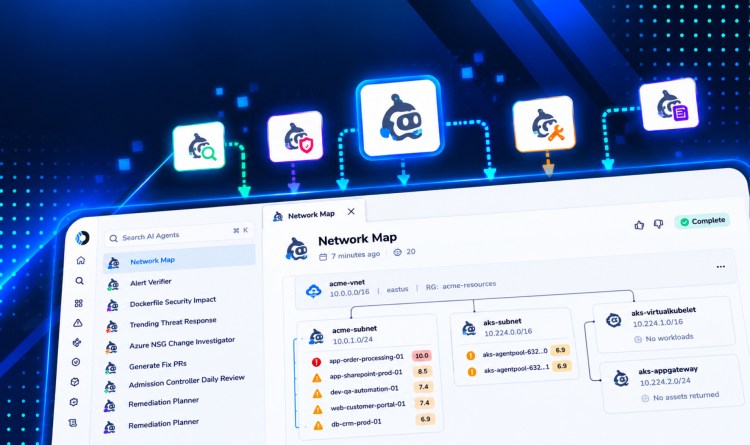
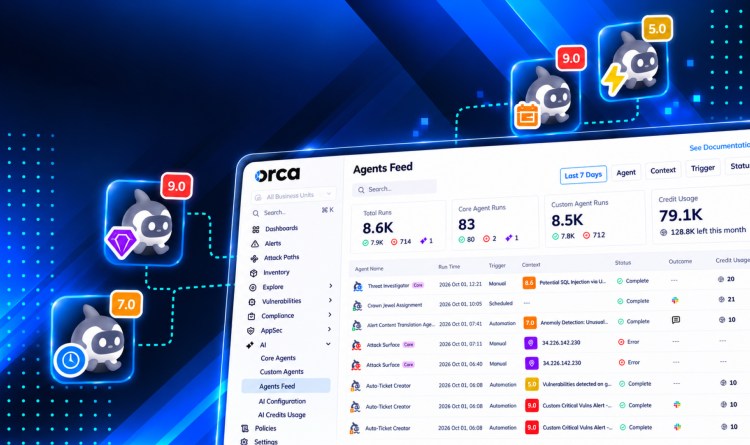
Orca Security helps practitioners turn the guidance mentioned here into actionable workflows by unifying cloud, application, and AI security in a single platform.
Using patented agentless SideScanning™, Orca Security continuously inventories assets and detects vulnerabilities, misconfigurations, exposed data, excessive permissions, secrets, and software supply chain risks across AWS, Azure, Google Cloud, Kubernetes, and modern development pipelines. Orca correlates these findings into prioritized attack paths, allowing practitioners to focus on the breach paths that are truly exploitable rather than sorting through thousands of disconnected alerts.
Whether you are hardening non-human identities, securing CI/CD pipelines, governing third-party integrations, or improving investigation-ready visibility, Orca Security helps security teams reduce operational toil and achieve faster containment with less business impact.
Want the full technical context and real-world workflows behind these takeaways?
Watch Cloud Security Live on-demand and turn the best ideas into backlog items, guardrails, and runbooks your team can implement immediately.
Table of contents
- 1) Triage by “breach paths,” not alert volume
- 2) Make “owner + fix” part of every finding (or it won’t close)
- 3) Assume AI will increase alert volume, and design for throughput
- 4) Use an “autonomy ladder” so automation doesn’t break production
- 5) Treat third-party integrations like privileged access (because they are)
- 6) Move from annual vendor review to continuous checks you can actually act on
- 7) Non-human identity hygiene is now core ops work
- 8) Assume “vibe coding” will ship over-permissioning, so put guardrails in CI
- 9) Optimize incident response for containment speed (“zero impact”), not perfect attribution
- 10) Logging isn’t a checkbox. Make it investigation-ready (coverage, retention, correlation)
- What Practitioners Should Do This Quarter (Quick Action Plan)
- How Orca Security Can Help



 Chat with an Orca Expert