


Table of contents
Key Takeaways
- Gartner projects that by the end of 2026, 80% of enterprises will consolidate cloud-native security tooling to three or fewer vendors, down from an average of ten in 2022.
- Cloud-Native Application Protection Platforms (CNAPPs) provide a purpose-built solution for building and protecting cloud native applications from pre-production to runtime.
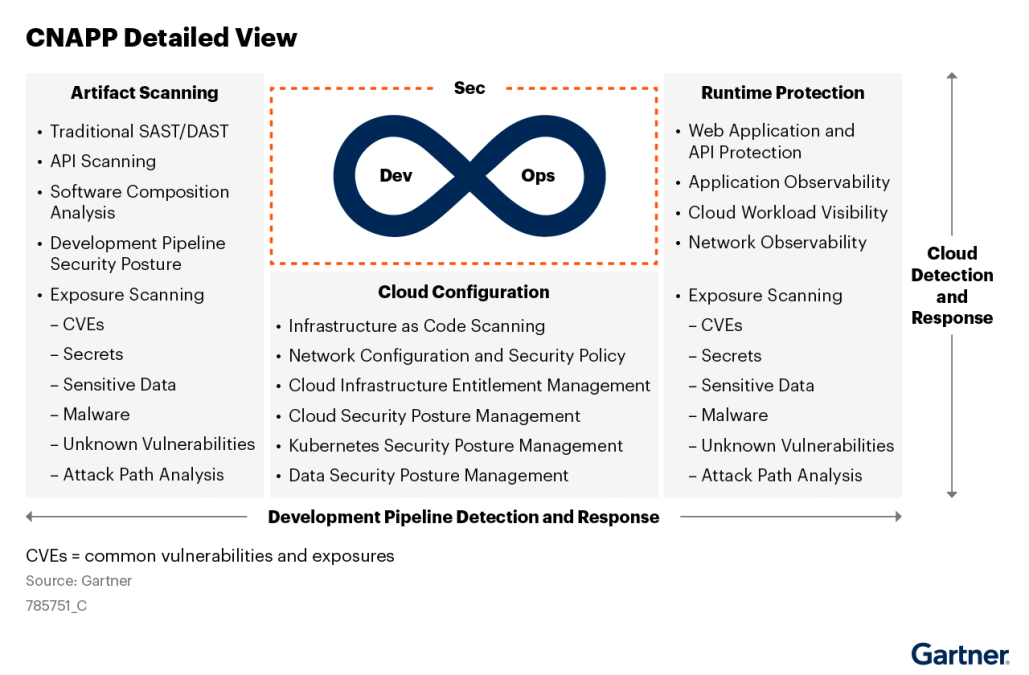
- CNAPP has expanded well past its original scope. A modern CNAPP now unifies cloud security posture management (CSPM), cloud workload protection (CWPP), vulnerability management, container and Kubernetes security (KSPM), cloud infrastructure entitlement management (CIEM), API security, application security (SAST, SCA, secrets, IaC, etc.), data security posture management (DSPM), cloud detection and response (CDR), AI Security (AI-SPM) and AI AppGen Security in a single platform.
- Agentless-first CNAPP solutions like Orca deliver full visibility across cloud, code, and AI environments in minutes, without slowing down the builders creating that environment in the first place.
Introduction
Businesses have spent the last decade moving fast. Cloud-native development, containers, microservices, and now AI agents and AI-built applications have let builders (developers, marketing, finance, and others throughout the organization) ship faster than ever. That speed is the whole point of the cloud. It is also the whole problem for security teams trying to keep up with what is actually being built.
With the increased speed and agility of cloud native development, security controls need to apply much earlier in the software development lifecycle, not just in production. Security teams are increasingly reliant on developers and DevOps teams to fix issues in the underlying code that deploys infrastructure as code and containers. And increasingly, builders are using AI itself, AI coding assistants, AI app generators, and autonomous agents, to build faster still. Traditional security tools, built for a slower and more static world, fall short across all of this.
Enter the cloud-native application protection platform (CNAPP). A CNAPP is a modern security solution designed to safeguard cloud-native applications and deliver integrated security across the full stack, from infrastructure to applications, data, and now AI. It combines cloud security posture management, workload protection, entitlement management, application security, and AI security, all delivered from a single platform. Read on to learn what makes CNAPP essential for securing what your organization builds today.
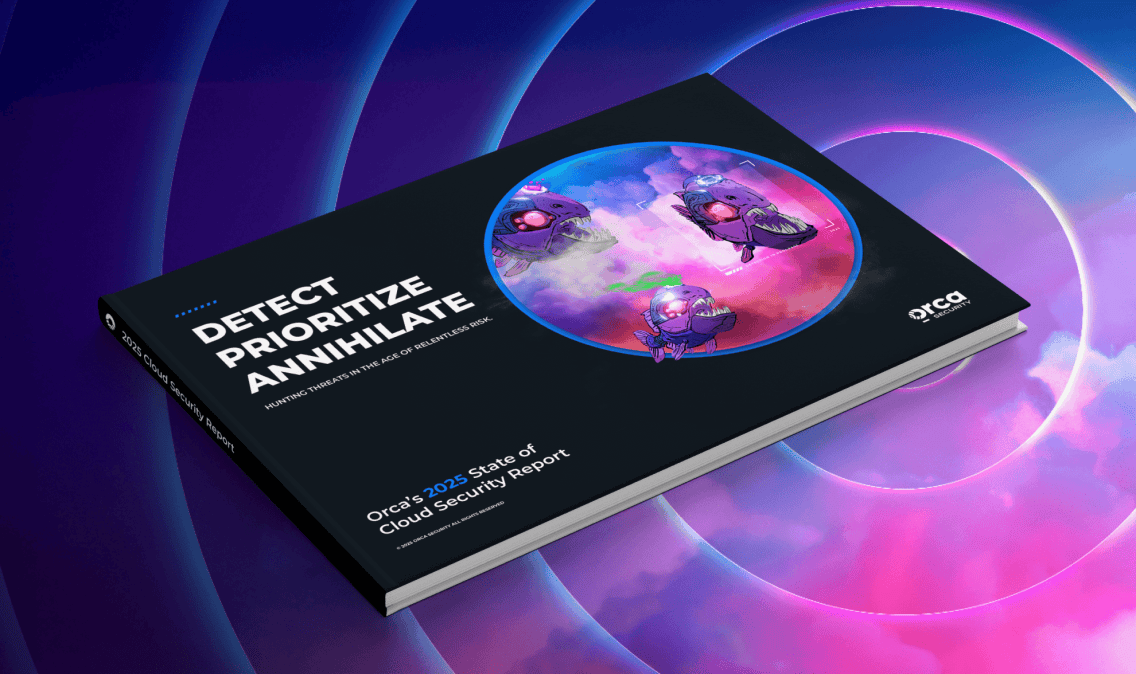
state of cloud security
See what puts clouds at risk
What is CNAPP? (CNAPP Defined)
Gartner defines a Cloud-Native Application Protection Platform (CNAPP) as a “unified and tightly integrated set of security and compliance capabilities designed to secure and protect cloud-native applications across development and production.”
This definition highlights two key aspects of CNAPP.
It uses a unified platform. CNAPP consolidates previously siloed security functions into a single platform, including:
- Container and Kubernetes Scanning to identify vulnerabilities within containerized applications
- Cloud Security Posture Management (CSPM) to provide an overall view of cloud security posture and identify misconfigurations
- Application Security to detect insecure code, dependencies, secrets, and IaC risk before it ships
- Cloud Infrastructure Entitlement Management (CIEM) to monitor and manage user access and permissions in the cloud
- Cloud Workload Protection (CWPP) to protect workloads running in the cloud from threats and malware at runtime
- Vulnerability Management to continuously scan for known vulnerabilities and prioritize them by real-world exploitability
- API Security to discover every API in your environment and monitor them for posture issues, drift, and abuse
- DSPM to discover and classify sensitive data and monitor who and what can access it
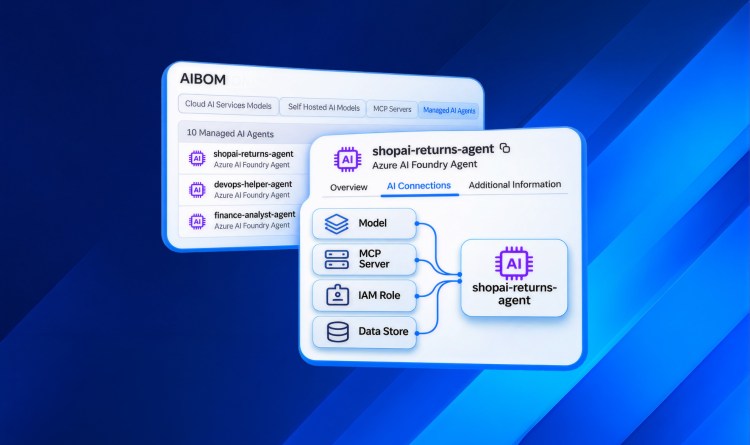
- AI Security (AI-SPM) to govern AI models, training data, and inference endpoints
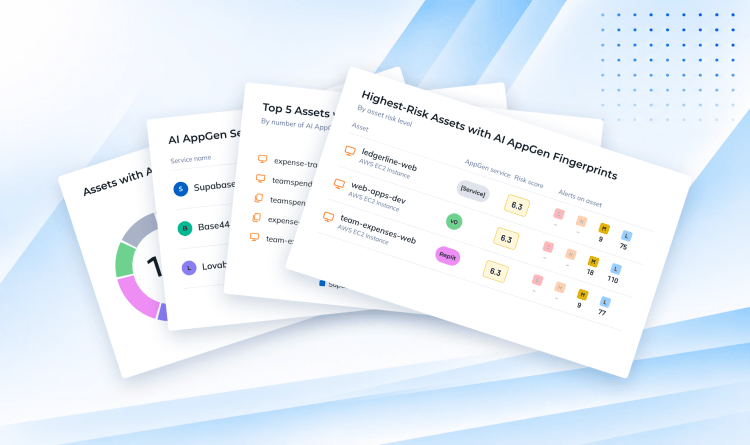
- AI AppGen Security to discover and secure applications built by AI app generation tools, including shadow AI apps built outside traditional pipelines
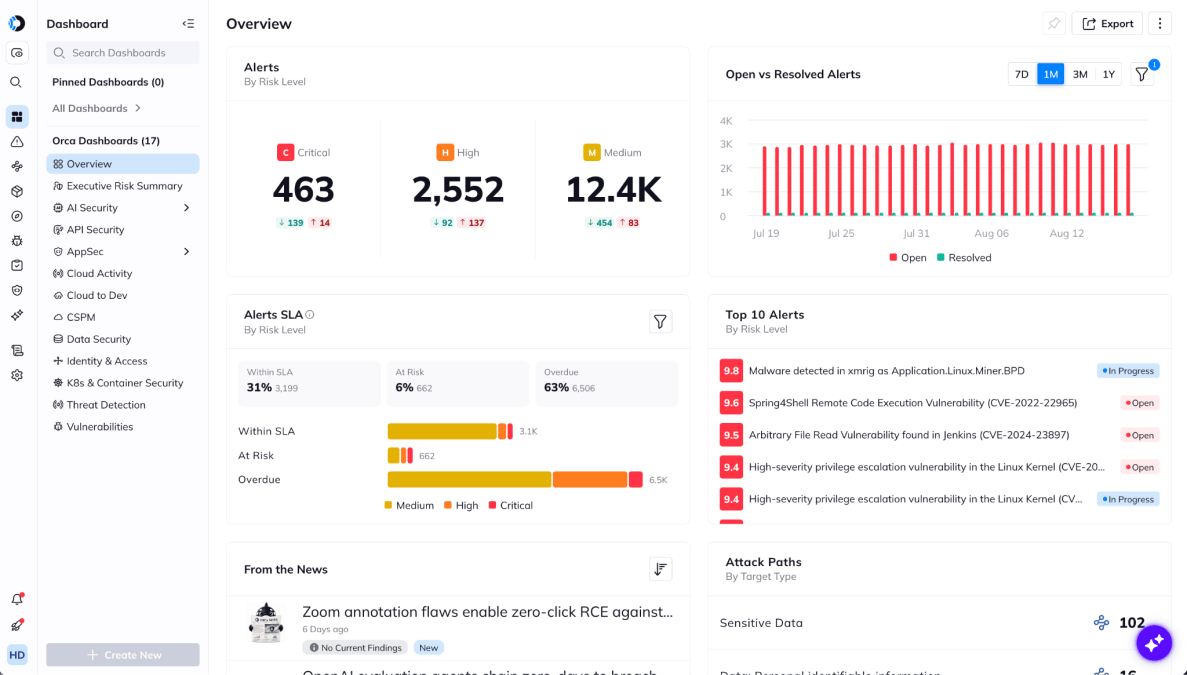
It is built for modern, AI-era applications. CNAPP is purpose built for cloud environments and the applications running in them, which today means microservices, containers, orchestration, and increasingly, AI agents and AI-generated code. This gives organizations a holistic approach to security across the entire application lifecycle, from the first commit to what an autonomous agent does at runtime.
Understanding Cloud-Native Applications
Cloud-native applications are designed specifically to run on the cloud, leveraging its scalability and flexibility. Characteristics include:
- Modular design. Cloud-native apps are built using microservices architecture, breaking functionality into smaller, independent services for faster development, deployment, and scaling.
- Containerized deployment. Cloud-native apps are packaged using containerization technologies like Docker and orchestration platforms like Kubernetes for consistent execution across environments.
- Dynamic scaling. Components scale up and down automatically, optimizing resource utilization.
- API-driven integration. Cloud-native apps rely on APIs for communication between other apps, cloud services, and data storage.
- Decentralized data storage. Data is often stored across distributed cloud resources for greater flexibility and scale.
- AI-assisted and AI-generated components. A growing share of code, infrastructure, and even entire applications are now built with AI coding assistants and AI app generation tools, often outside a security team’s direct line of sight.
Traditional tools struggle to keep up with these highly dynamic, increasingly AI-assisted applications. That is where Cloud Native Application Protection Platforms (CNAPPs) come in.
The Emergence and Consolidation of CNAPP
As more companies adopted the cloud, the need for cloud-native security became evident. Early attempts to “lift and shift” agent-based security tools into the cloud could only cover 50 to 70% of cloud resources, leaving dangerous blind spots. Separate point solutions for each layer of the stack (CWPP, CSPM, CIEM) added poor visibility, high overhead, and tedious manual correlation on top of that.
CNAPP emerged as the answer, and the market has moved from “emerging category” to standard practice. Gartner projects that by the end of 2026, 80% of enterprises will consolidate their cloud-native security tooling down to three or fewer vendors, a sharp drop from the ten discrete tools the average enterprise ran in 2022. That consolidation is happening because point solutions leave seams, and attackers exploit those seams. A misconfiguration here, an exposed secret there, and an over-permissioned identity somewhere else rarely show up as a single critical finding in any one tool. Correlated, they become an attack path.
The architecture debate has also settled. Agentless scanning handles posture at scale without deployment friction, and lightweight runtime sensors add real-time depth for live detection and response. The two are not competing approaches. The strongest CNAPPs, including Orca, run agentless-first and layer in runtime sensors where deeper telemetry is needed, rather than forcing a choice between coverage and depth.
CNAPP solutions differ from traditional security platforms in that they are purpose built for dynamic cloud environments, consolidating capabilities into one platform to deliver automated, API-driven security that keeps pace with the speed of modern development.
Key Components of a CNAPP
An effective CNAPP combines several components that work together to give security and development teams a shared, correlated view of risk, from cloud infrastructure to the code and AI systems running on top of it.
1. Cloud Security Posture Management (CSPM)
CSPM manages the overall security posture and compliance status of your cloud environment, continuously monitoring for misconfigurations, security weaknesses, and compliance issues. For example, a CSPM may detect a cloud storage bucket left publicly accessible and help security teams secure it before it is exploited.
2. Cloud Workload Protection Platform (CWPP)
Cloud Workload Protection (CWPP) offers deep visibility and risk mitigation for cloud-based resources like VMs, containers, and serverless functions, including a detailed inventory of OS, installed apps, and data. CWPPs continuously monitor these assets for vulnerabilities, malware, and sensitive data at risk.
3. Vulnerability Management
Vulnerability Management continuously scans cloud workloads, containers, and code for known vulnerabilities and prioritizes them based on real-world exploitability rather than raw CVE severity alone. It is a key CNAPP component because a CVSS score by itself does not tell a team whether a vulnerability is internet-facing, sitting on a path to a crown jewel asset, or already fixed elsewhere in a similar workload. Correlating vulnerability data with the rest of the cloud environment is what turns a long CVE list into a short, ranked remediation plan.
4. Cloud Infrastructure Entitlement Management (CIEM)
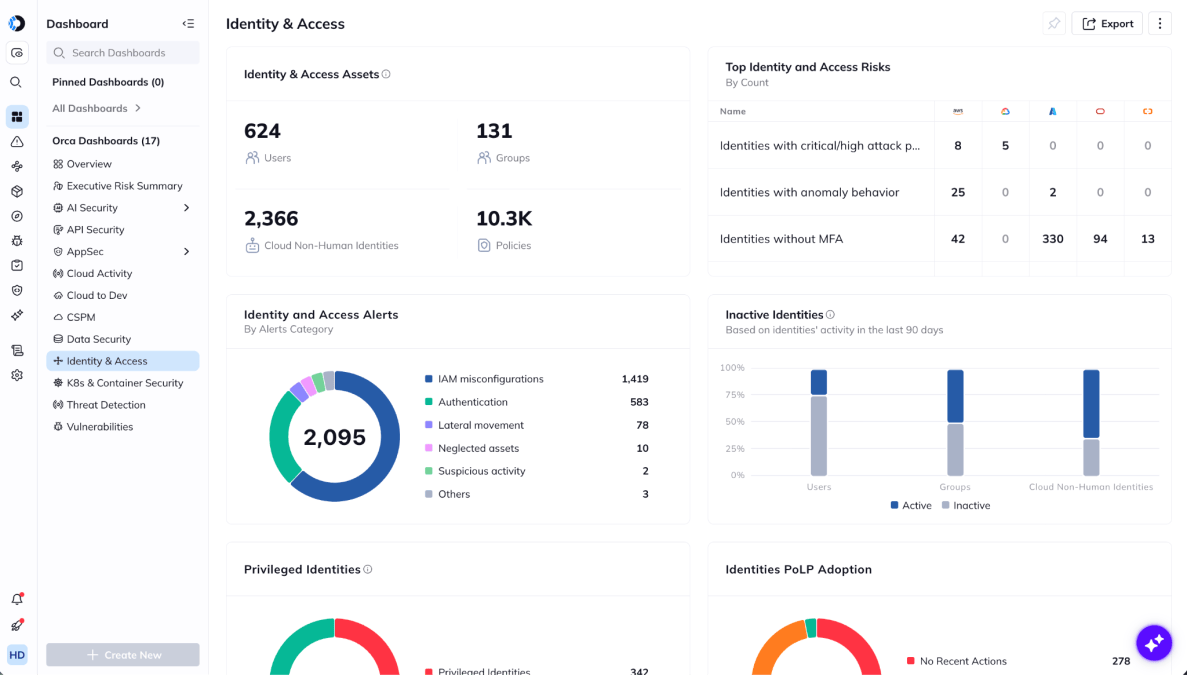
CIEM helps manage user access and permissions with precision, enforcing the principle of least privilege (PoLP) so users only have the access they need. CIEM is essential for overseeing entitlements across cloud-native environments, which can become complicated quickly, and for detecting exposed secrets or credentials that attackers could use to gain access.
5. Cloud Detection and Response (CDR)
CDR continuously monitors for suspicious activity, using log analysis, threat intelligence, and SIEM data to detect, investigate, and respond to incidents. CDR can automatically correlate threats from real-time signals, cloud activity, and audit logs, for example flagging an unusual login attempt from an unfamiliar location before it becomes a breach.
6. API Security
APIs are how cloud-native applications actually talk to each other, and they have become a primary attack surface in their own right. API security discovers every API in your environment, including undocumented or “shadow” APIs that predate current inventories, and continuously monitors them for posture issues, drift, and abuse. It is a key CNAPP component because an API risk rarely stays contained to the API layer. An exposed endpoint often leads directly to the cloud data or workload sitting behind it, so API findings need the same cloud context as everything else to be prioritized correctly.
7. Application Security
Application security connects code to cloud, tracing risk from the moment a developer commits code through to what is actually running in production, rather than treating code scanning as a one-time checkbox before deployment. A comprehensive application security capability within a CNAPP typically includes static analysis (SAST) to catch insecure code patterns, software composition analysis (SCA) to identify vulnerable open source dependencies, secrets detection with active verification of what is actually exploitable, infrastructure as code (IaC) scanning before templates ever reach the cloud, container image scanning that traces vulnerable layers back to their source Dockerfile, and source code management (SCM) posture across platforms like GitHub, GitLab, Azure DevOps, and Bitbucket.
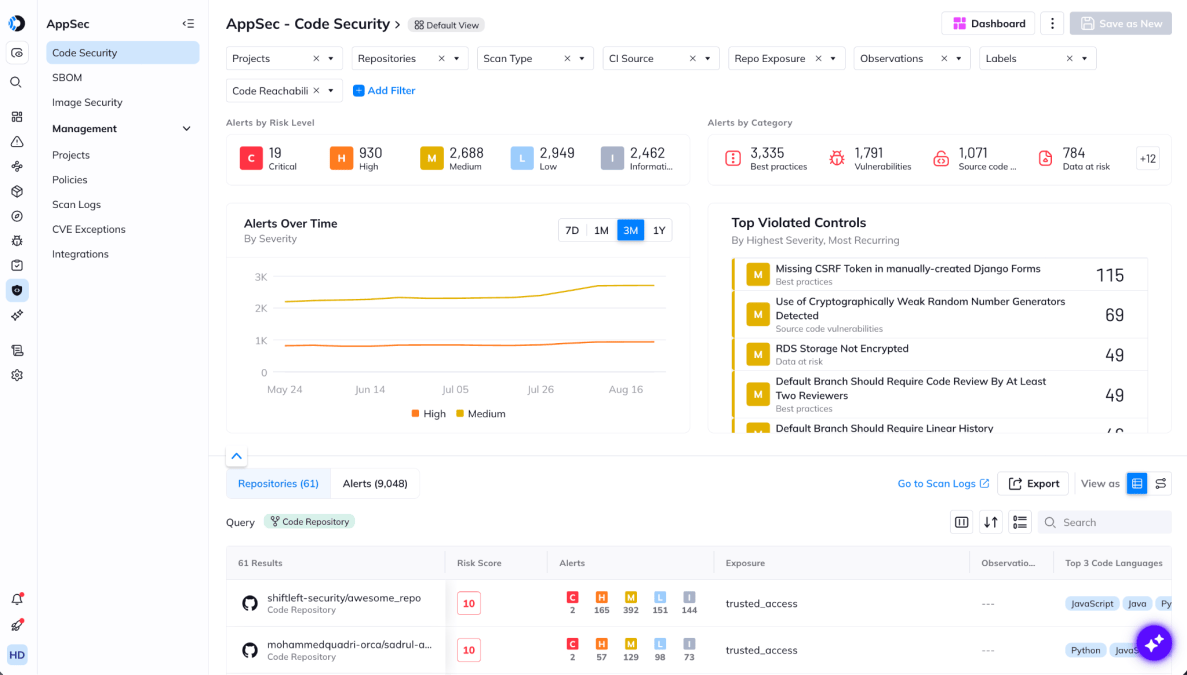
Application security is a key CNAPP component because it closes the gap between “here is a vulnerability in this file” and “here is whether that vulnerability can actually be reached and exploited in production.” A scanner might flag a vulnerable open source package, but if the vulnerable function is never called by the application, the risk is largely theoretical and can result in increased noise or inaccurate prioritization. Reachability analysis filters this noise out so teams spend remediation time on exploitable risk instead of chasing every line item in an SBOM. This is also where generative fixes are changing daily work, surfacing directly in pull requests so developers can review and merge a fix instead of researching one from scratch.
8. Container and Kubernetes Security
Container and Kubernetes Security protects containerized applications and Kubernetes orchestration once workloads are deployed, identifying vulnerabilities in container images and enforcing security policies within clusters. For example, this component might detect a vulnerability within a container image that could allow attackers to escalate privileges, and let teams isolate the workload before it is exploited.
9. Data Security Posture Management (DSPM)
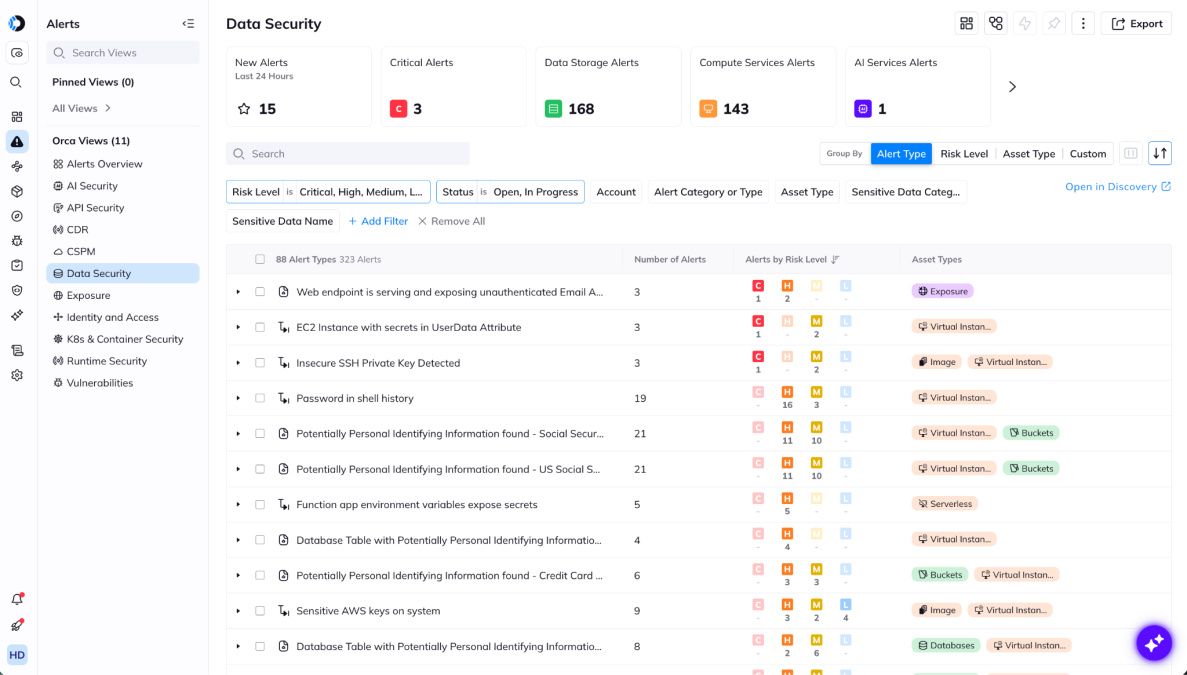
DSPM discovers and classifies sensitive data across cloud environments, wherever it lives, and continuously monitors who and what can access it. It is a key CNAPP component because data is usually the actual target behind a cloud or AI attack, not the endpoint itself. A misconfigured storage bucket or an over-permissioned identity only matters as much as the sensitive data sitting behind it, so DSPM findings need to be correlated with posture, identity, and now AI risk to show the true blast radius of an exposure.
10. AI Security Posture Management (AI-SPM)
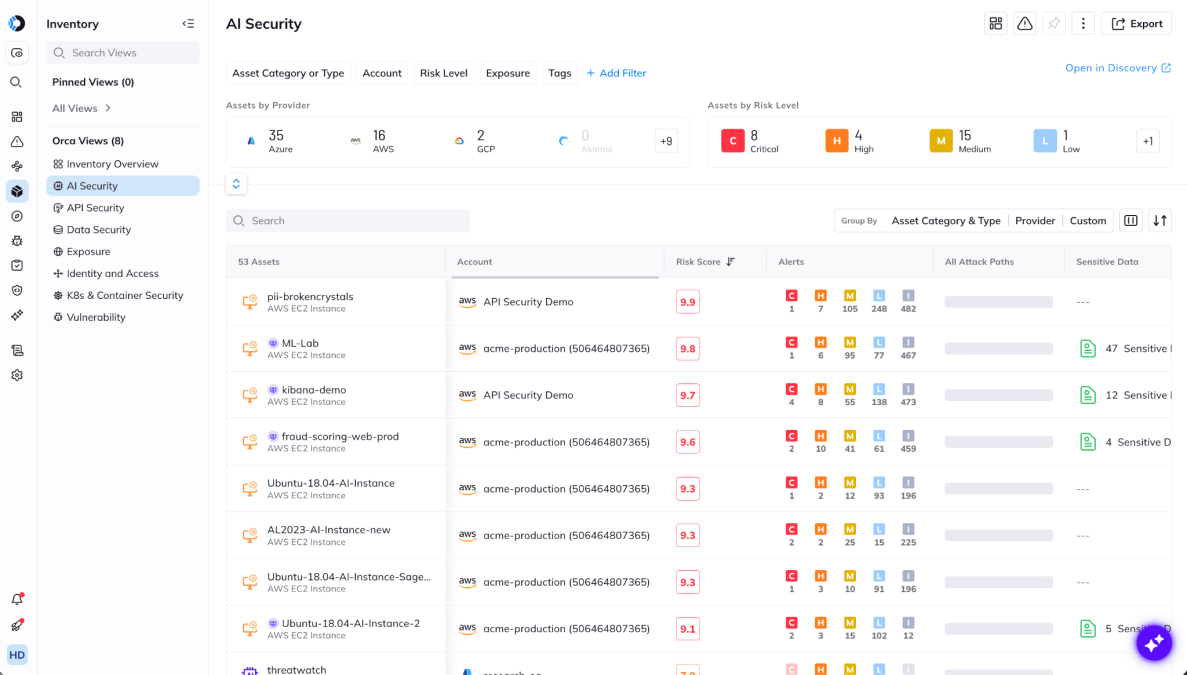
AI-SPM governs the AI models, training data, and inference endpoints that now run inside cloud environments. As organizations deploy more AI models and agents, AI-SPM continuously monitors for risks like exposed model endpoints, misconfigured permissions on AI infrastructure, and sensitive data flowing into training pipelines. It is a key CNAPP component because AI risk cannot be assessed in isolation. An exposed AI model sitting on an over-permissioned cloud identity is a cloud risk and an AI risk at the same time, and only a platform that correlates both in a single graph can show the full picture.
11. AI AppGen Security
A newer and fast-growing category, AI AppGen Security addresses the applications being built by AI app generation tools, often by builders outside of traditional engineering workflows. These “shadow AI apps” can introduce real risk (exposed data stores, unreviewed logic, unmanaged access) without ever appearing on a security team’s radar. AI AppGen Security discovers these applications as they are built and brings them under the same visibility and policy enforcement as everything else in the environment, so builders can keep building without becoming an unmonitored blind spot.An effective CNAPP solution offers robust security for cloud-native applications and environments by combining several critical components. These components work together seamlessly, addressing the unique security challenges posed by dynamic and distributed applications. This integrated approach is what makes a CNAPP so powerful, offering seamless and comprehensive security coverage across application, data, and network security within cloud-native environments.
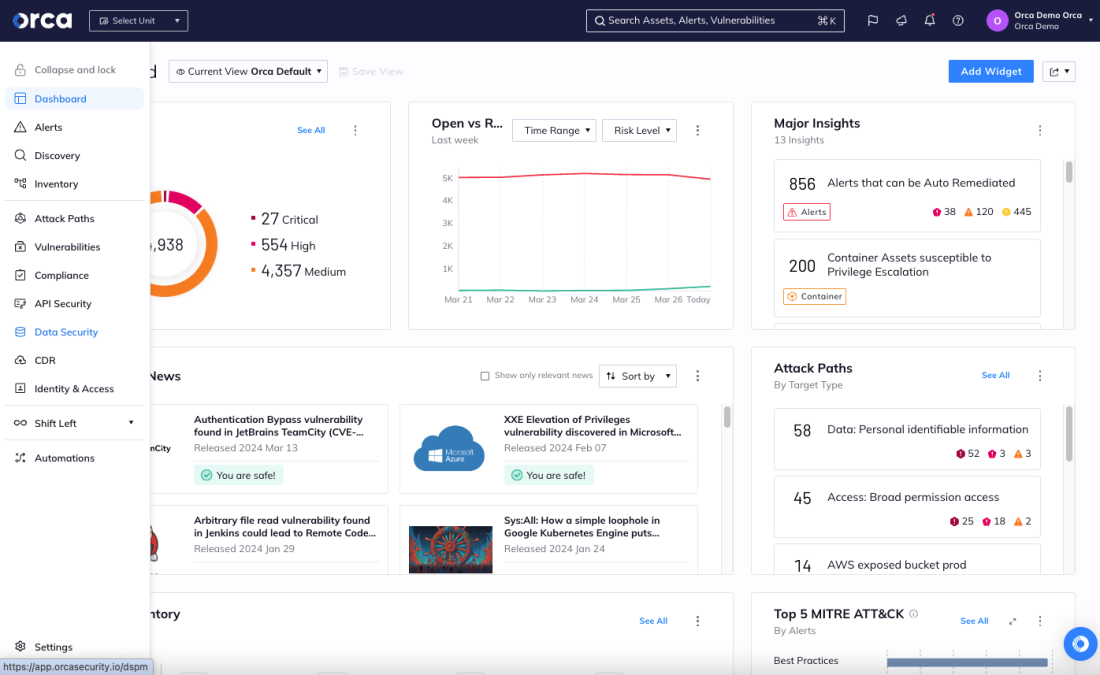
Now, let’s explore the key components that make CNAPP your go-to effective cloud-native security solution:
1. Cloud Security Posture Management (CSPM)
CSPM manages the overall security posture and compliance status of your cloud environment. CSPM works by continuously monitoring the cloud environment for misconfigurations, security weaknesses, and potential compliance issues. It analyzes cloud resource configurations, identifies deviations from best practices, and helps ensure your cloud environment adheres to security and compliance standards.
CSPM serves as a key CNAPP component as it helps you to proactively identify and remediate security risks before they can be exploited. For example, a CSPM may detect a misconfiguration involving a cloud storage bucket that might have been left publicly accessible and allow security teams to secure the bucket and prevent unauthorized access to the data.
2. Cloud Workload Protection Platform (CWPP)
Cloud Workload Protection (CWPP) offers deep visibility and risk mitigation for cloud-based resources like VMs, containers, and serverless functions. It provides a detailed inventory of all cloud assets, what OS they are running, which apps are installed, what data they contain – all with detailed version information. CWPPs then continuously monitor these assets for risks such as vulnerabilities, malware, and sensitive data at risk, and enforce security policies to protect your applications and data in the cloud.
3. Cloud Identity and Entitlement Management (CIEM)
CIEM empowers you to manage user access and permissions within your cloud environment with precision. This granular control helps mitigate the risk of unauthorized access and data breaches. CIEM enforces the principle of least privilege (PoLP), ensuring users only have the access they absolutely need to perform their jobs.
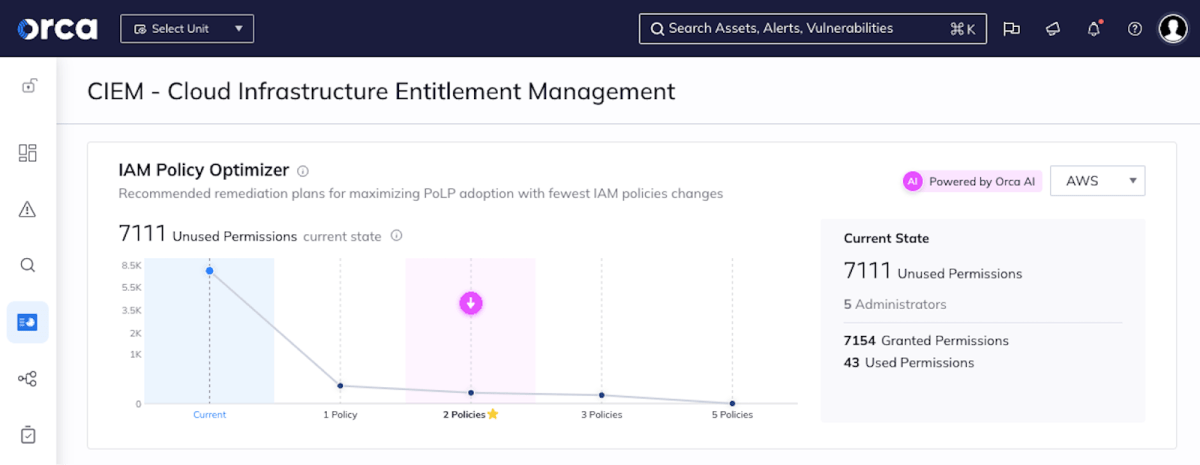
CIEM is a key CNAPP component as it plays a vital role in overseeing entitlements across your cloud-native environments, which can become very complicated, pretty quickly. It can detect potential leaks of sensitive information like secrets or credentials, which could be exploited by attackers to gain access to critical assets.
4. Cloud Detection and Response (CDR)
CDR empowers you to safeguard your cloud environment by continuously monitoring for suspicious activity. This proactive approach enables you to detect, investigate, and respond swiftly to potential security incidents. CDR utilizes a combination of powerful tools and techniques, including log analysis, threat intelligence, and Security Information and Event Management (SIEM). By analyzing data from various sources, CDR can identify potential threats and enable rapid response.
CDR is a key CNAPP component because it offers comprehensive visibility across your cloud environment. It can automatically correlate threats from real-time signals, cloud activity, and audit logs. This allows you to track potential attacker movements and take swift action to minimize the impact of incidents. For example, CDR may detect an unusual login attempt from a foreign country targeting a particular user account and flag it as an anomaly, alerting security teams to investigate and prevent a potential breach.
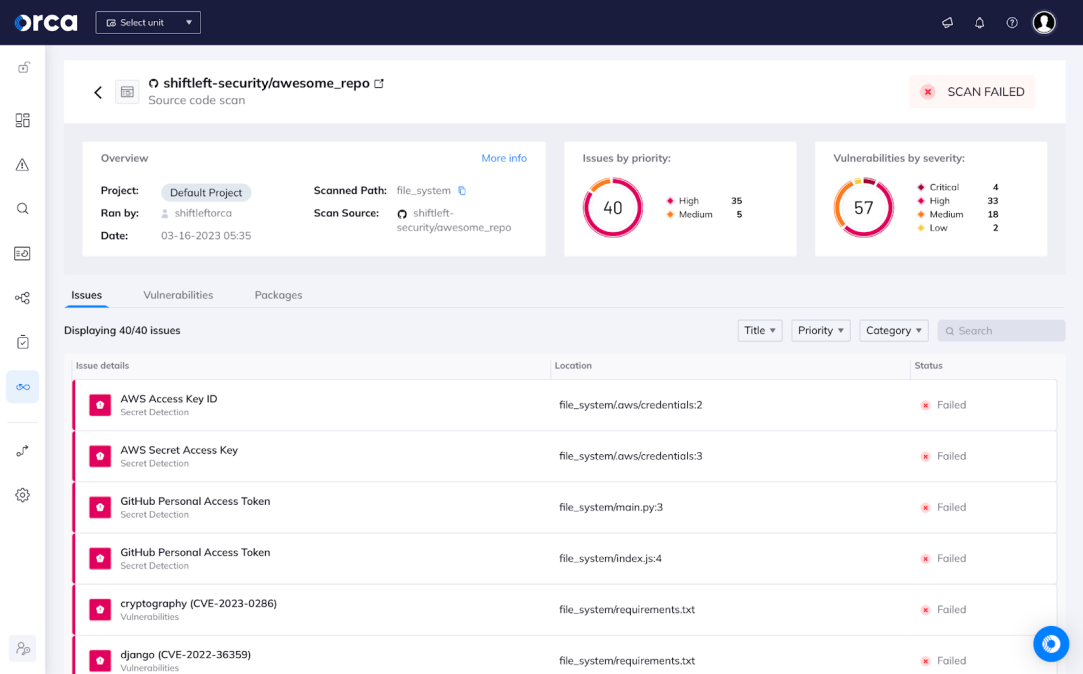
5. Continuous integration and continuous deployment (CI/CD) security
CI/CD Security seamlessly integrates automated security checks within the development pipeline, ensuring vulnerabilities are identified and addressed early in the development process. This significantly reduces the risk of inadvertently deploying insecure applications to production.
CI/CD security is a key component of CNAPP because, by definition, CNAPP is concerned about security both in development and production environments. This empowers developers to build secure software from the ground up, fixing any issues earlier in the process when they are far less costly to fix, and significantly reducing the risk of deploying vulnerable applications. This is effectively known as “shifting security left.” For example, a developer may commit code that introduces a known SQL injection vulnerability. Luckily, the CI/CD security scans the code and identifies the vulnerability before it is deployed, allowing the developer to fix the issue before it can be exploited by attackers.
6. Container and Kubernetes security
Container and Kubernetes Security becomes crucial once applications are deployed in cloud-native environments, and protects containerized applications and Kubernetes orchestration platforms by identifying vulnerabilities in container images and enforcing security policies within Kubernetes clusters.
As containerized applications become increasingly popular in cloud-native environments, container and Kubernetes security must serve as a key component of CNAPP to deliver protection for containerized applications and the underlying Kubernetes infrastructure. For example, a CNAPP’s container and Kubernetes security may detect a vulnerability within a container image that could allow attackers to escalate privileges. The CNAPP would then allow teams to isolate the containerized application, preventing attackers from exploiting the vulnerability to gain access to the system.
CNAPP in the AI Era
CNAPP began as an answer to fragmented cloud tooling. Today, the same consolidation logic applies to AI. Cloud risk, code risk, and AI risk are no longer separate conversations, they are different layers of the same environment, built by the same teams, and often the same people. A platform that treats AI security as a bolted-on module, correlated separately from cloud and code findings, reintroduces the exact fragmentation CNAPP was built to eliminate.
This is where a unified data model matters most. Correlating signals across cloud, identity, code, and AI in one graph means a security team can see not just that a model endpoint is exposed, but whether it is reachable, what data it touches, and what it connects to. That context is what turns a long list of findings into a short list of what actually matters.
CNAPP Benefits
Implementing a CNAPP provides organizations with substantial benefits:
- Improved cloud security posture and risk management: A CNAPP gives you greater visibility into risks across your distributed, dynamic cloud infrastructure. This helps you to prioritize vulnerabilities and close security gaps.
- Enhanced visibility across cloud environments and applications: The unified nature of CNAPPs provides visibility across multiple cloud platforms and applications. Using an agentless-first CNAPP ensures full coverage and eliminates blind spots in your security infrastructure.
- Automation of security tasks and compliance checks: CNAPP automation simplifies audits and streamlines compliance checks for regulations such as PCI-DSS, ISO 27001, SOC 2, HIPAA, and GDPR.
- The ability to adapt to the dynamic and scalable nature of cloud-native applications: CNAPPs are designed and built to handle the scalability and constant changes inherent in cloud-native environments and integrate into the CI/CD process.
- Reduce the number of point security tools needed: A single CNAPP platform replaces the need for multiple disparate security tools. This reduces complexity by providing an integrated solution for end-to-end protection of cloud-native applications. Additionally, organizations can significantly reduce costs by consolidating security tools into a single CNAPP solution because fewer tools mean lower licensing fees, less maintenance, and less operational overhead.
Choosing the right CNAPP for your business
Selecting a CNAPP solution is an important decision that requires careful evaluation of your organization’s needs and priorities. When choosing a CNAPP solution, there are a few key factors to keep in mind:
1. Compatibility
Ensure the CNAPP integrates well with your existing cloud environment and applications, whether you run AWS, Azure, GCP, others, or a combination. Look for the right technical integrations so the security process fits into existing workflows, including repository tools (DockerHub, JFrog Artifactory), CI/CD tools (Jenkins, GitLab CI, GitHub), ticketing systems (Jira, Azure DevOps, ServiceNow), SIEMs (Splunk, SumoLogic, Azure Sentinel, Datadog), SOARs (Cortex XSOAR), and notification tools (Slack, PagerDuty).
2. Scalability, reliability, and performance
Your CNAPP must handle the scale and performance demands of your cloud-native applications, scaling automatically as your environment grows without impacting functionality or speed. High availability and redundancy should always be a priority.
3. Compliance and Regulatory Requirements
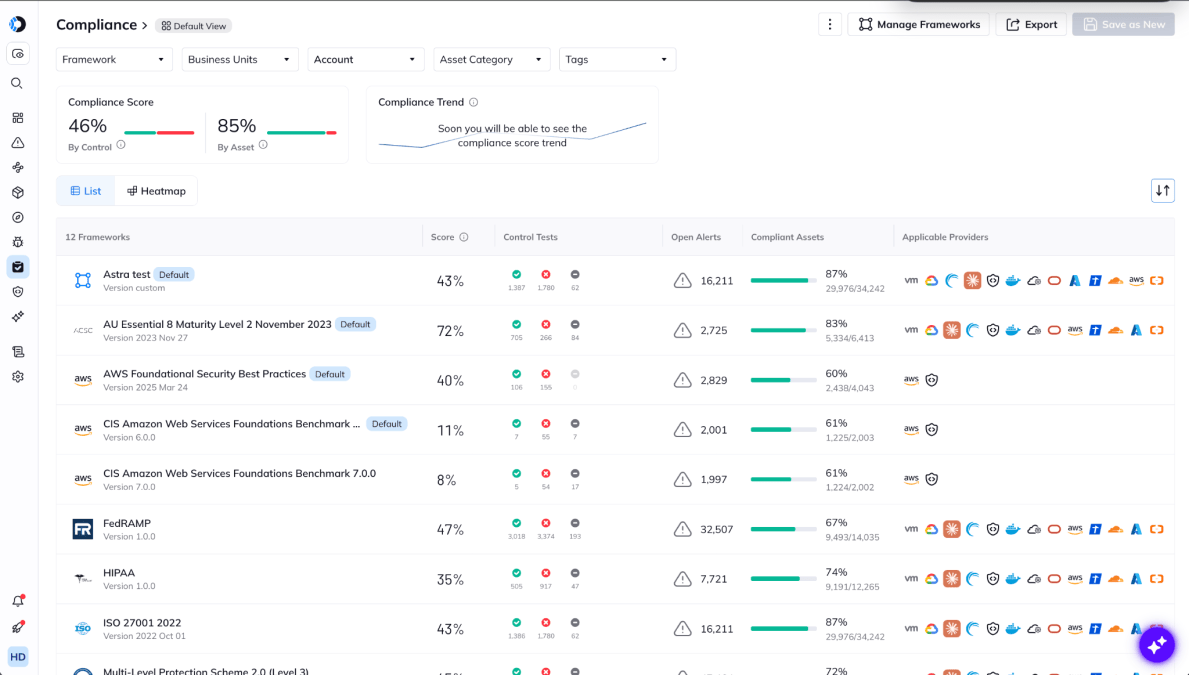
Ensure the CNAPP you select simplifies adherence to standards like GDPR, HIPAA, PCI-DSS, and SOC 2, with automated compliance checks, policy enforcement, and reporting.
4. Truly built as a single platform
One of the most important factors in choosing a CNAPP is whether it is actually a unified platform. Some vendors offer an “integrated” platform that is really separate products under one name, without shared telemetry or even a shared console. As AI security and application security get pulled into the CNAPP conversation, this test gets more important, not less. Ask whether AI risk is correlated with cloud risk in the same graph, or reported in a separate module with its own dashboard.
“All services should be fully integrated, not loosely coupled independent modules (typically resulting from a vendor’s internal silos, poorly integrated OEM components or those added from an acquisition). Integration should include the front-end console, unified policy across multiple points of inspection and a unified back-end data model.”
Gartner Market Guide for Cloud-Native Application Protection Platforms (CNAPPs)
How to Implement a CNAPP in Your Organization
1. Involve Key Stakeholders Early On
Foster open communication between DevOps, security, compliance, and cloud infrastructure teams throughout the process. Their buy-in is essential for aligning with existing workflows and policies.
2. Address Implementation Challenges
Common hurdles include resistance to change, low awareness of what a CNAPP does, and integration complexity, though this is largely non-existent for agentless-first CNAPPs like Orca. Comprehensive training for both technical and non-technical teams builds in-house expertise for day-to-day operations.
Conclusion
Cloud Native Application Protection Platforms are the foundation of cloud and AI-era security. As builders keep shipping faster, across cloud infrastructure, application code, and now AI systems, a CNAPP is what keeps security in step with that pace instead of trailing behind it. The right CNAPP delivers this through three things working together.
Complete visibility across cloud, application, and AI environments. Orca sees everything your team builds, across every environment, before risk becomes a breach.
Context that powers decisions. Orca correlates signals across your entire environment so your team acts on what actually matters, not a list of disconnected findings.
Security that fits the way you work. Orca adapts to how your team operates, your models, your agents, your workflows, rather than asking your builders to adapt to it.
Learn More About the Orca CNAPP
The Orca Cloud Security Platform is a consolidated CNAPP built for developers, DevOps, AI teams, and security practitioners alike, integrating seamlessly into existing workflows without slowing builders down.
After a quick setup (usually less than 15 minutes), Orca provides deep visibility into cloud, code, and AI risk in three steps:
- Prioritize risks. Using the full context of risk across cloud, code, and AI, Orca shows which findings are critical and need attention right away, something siloed or poorly integrated tools cannot do.
- Detect risks. Orca continuously monitors for cloud, application, and AI risks, including misconfigurations, vulnerabilities, malware, API risks, compliance risks, exposed sensitive data, and over-privileged identities, from development to production and back.
- Remediate risks. Orca enables fast remediation with automated and guided options, including remediation code generated with AI.
In a recent POC, Orca surfaced 88K raw findings at onboarding and narrowed that down to 27 critical, exploitable, and reachable findings that actually needed attention.
FAQs
Q: What metrics and KPIs are important for evaluating CNAPP effectiveness?
Track reduced incidents, faster response time, fewer vulnerabilities and misconfigurations across the cloud estate, and overall improvement in security posture measured against industry standards. Also track gains that are harder to quantify but just as real, like visibility into assets that previously went undetected, and deeper context connecting findings across cloud, code, and AI that helps teams understand not just what is wrong, but why it matters.
Q: What is the difference between CNAPP and CSPM/CWPP?
CNAPP is a comprehensive cloud security solution that integrates multiple security functions into a single platform. CSPM focuses on assessing and managing cloud configurations, while CWPP focuses on protecting what runs on workloads. CNAPP combines CSPM and CWPP along with application security, AI security, and other capabilities to provide end-to-end protection.
Q: How does CNAPP support multi-cloud environments?
CNAPPs provide comprehensive security coverage across multiple cloud platforms through a unified view and management console, allowing consistent monitoring of applications and resources even across different providers.
Q: Can CNAPP integrate with existing DevOps processes?
Yes. Involving both development and operations teams during implementation ensures the CNAPP aligns with each team’s workflows and requirements.
Q: How does CNAPP support compliance and regulatory requirements?
CNAPPs automate security tasks and compliance checks, assessing and managing cloud security posture to help organizations meet relevant regulations, while streamlining compliance reporting, a persistent pain point for many organizations.
Q: How do CNAPP solutions address the security of third-party APIs and services?
Some CNAPP solutions identify and mitigate risks associated with third-party APIs and services, continuously monitoring API behavior and alerting on API risks so teams can address issues quickly.
Q: How is AI-SPM different from AI AppGen Security?
AI-SPM governs the security posture of AI models, training data, and inference infrastructure your organization deploys and operates. AI AppGen Security discovers and secures the applications your builders create using AI app generation tools, often outside traditional development pipelines. Both fall under a modern CNAPP’s AI security scope, and both benefit from being correlated with cloud and application risk in a single platform rather than tracked separately.



 Chat with an Orca Expert