


Table of contents
- 1. Closing the Patch Gap with Context-Aware Vulnerability Prioritization
- 2. Scale Vulnerability Prioritization to Outpace AI-Driven Alert Noise
- 3. Find Bugs Before Shipping: Closing Security Gaps with Shift Left Security” work?
- 4. Find Risks in Existing Workloads, Agentlessly
- 5. Design for Breach: Map Attack Paths to Prevent Catastrophic Loss
- 6. Reduce the Exposed Attack Surface to Close Invisible Cloud Security Gaps
- 7. Achieving Machine-Speed Incident Response to Counter AI-Driven Attacks
- The Underlying Architecture: Why Completeness is the Only Defense Against AI
- About Orca Security: The Leader in Agentless Cloud Security and CNAPP
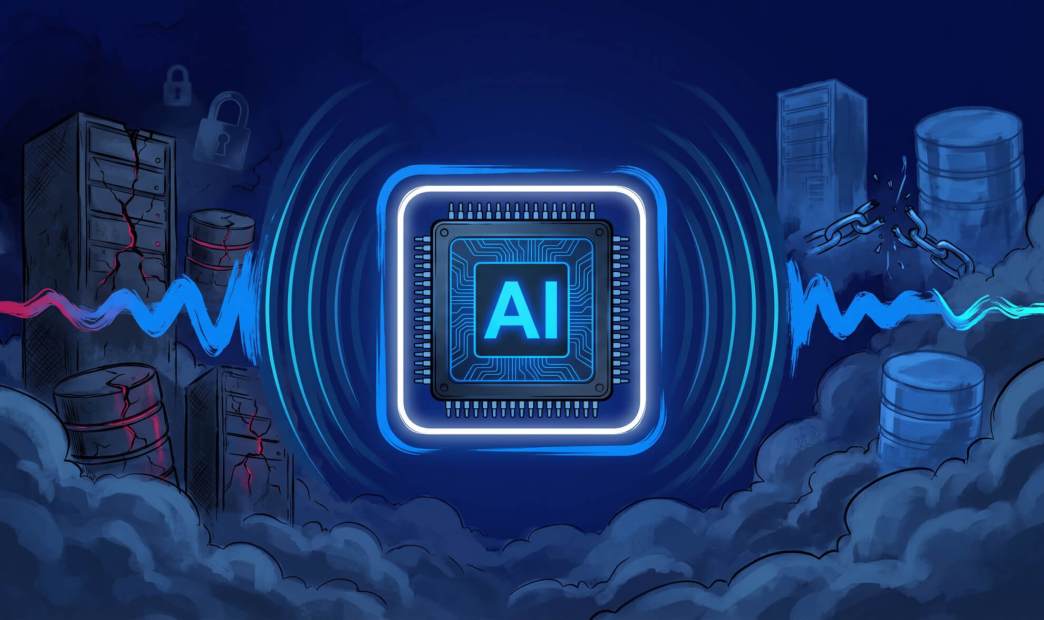
The window between a vulnerability existing and an attacker weaponizing it is collapsing. Anthropic’s new seven-part framework for AI-accelerated threats confirms what cloud security teams are already feeling and points directly at the gaps that matter most, which aligns strongly with Orca’s foundational beliefs. In this blog, we’ll show you how Orca addresses every dimension of AI-accelerated cyber threats, before they find you.
The offense side of cybersecurity is undergoing a fundamental transformation. AI models can now autonomously discover vulnerabilities, write exploits, and chain attacks together at a speed and scale that no human red team can match. The window between a vulnerability existing and an attacker weaponizing it is collapsing. Tools like Anthropic’s own Mythos preview, which autonomously found and exploited a 27-year-old vulnerability in OpenBSD that had survived millions of automated scans, make this vivid.
But here is the critical insight that often gets lost: faster attackers do not change the fundamental nature of the problem. Organizations were getting breached before AI red teamers existed, and the reason was almost never that attackers were too patient. It was that defenders had gaps: assets that were not inventoried, workloads that spun up and never got scanned, cloud environments that grew faster than security teams could instrument them.
AI-accelerated offense does not create new problems. It makes existing gaps catastrophic.
Anthropic’s seven recommendations map directly to those gaps. Below, we walk through each one and show exactly how Orca addresses it, with the architectural choices that matter most when the threat clock is ticking at machine speed.
1. Closing the Patch Gap with Context-Aware Vulnerability Prioritization
The first recommendation is deceptively simple: patch faster, prioritize smarter. CISA’s Known Exploited Vulnerabilities catalog and EPSS scoring give teams a rational starting point. The target for internet-facing systems is 24 hours from disclosure to patch.
The reason most organizations fail at this is not laziness. It is context. Traditional vulnerability scanners produce enormous lists of findings ranked primarily by CVSS score, a static severity rating that tells you nothing about whether a vulnerable package is actually running, whether it is reachable from the internet, or whether exploiting it would give an attacker access to anything worth having.
Orca combines EPSS and KEV data with cloud-native context, like asset exposure, blast radius, and lateral movement potential to give teams a prioritized, actionable list rather than an undifferentiated avalanche of findings. Our research shows organizations typically have capacity to address roughly 10% of vulnerabilities in any given month. The question is which 10%. Orca makes sure you are working on the ones that matter.
2. Scale Vulnerability Prioritization to Outpace AI-Driven Alert Noise
Anthropic predicts an order-of-magnitude increase in vulnerability findings over the next two years as AI-powered scanning proliferates. They are right.
The problem isn’t a shortage of findings. It’s an excess of noise.
Orca’s 2025 State of Cloud Security Report documented a troubling trend: cloud risks were already surging before AI-generated findings entered the picture. Security teams were drowning in alerts, missing critical risks on a daily basis not because the tools were failing to find issues, but because there was no coherent way to determine what was genuinely dangerous versus what was merely imperfect.
Orca’s platform addresses this through dynamic risk scoring: a model that incorporates not just the vulnerability itself, but the full cloud context around it. Is the affected asset exposed to the internet? Does it hold sensitive data? Could an attacker use it as a stepping stone to something worse? This context collapses thousands of findings into a manageable set of genuine priorities. The result is less time triaging noise and more time closing real risk.
3. Find Bugs Before Shipping: Closing Security Gaps with Shift Left Security” work?
Prevention is structurally cheaper than response. A vulnerability caught in a developer’s IDE before it ever reaches production costs a fraction of what it costs to remediate after deployment, and an infinitesimal fraction of what it costs after a breach. The framework recommends integrating static analysis and AI-assisted code review directly into CI/CD pipelines.
Orca’s approach to shifting security left now extends all the way into the developer’s workflow. With Orca’s MCP server integration, developers can surface security findings without ever leaving their IDE, catching misconfigurations in infrastructure-as-code, vulnerable dependencies, and exposed secrets before a single line hits production. IaC scanning covers Terraform, Ansible, CloudFormation, Kubernetes, and more, with over 1,100 security controls applied automatically.
This is not security bolted on at the end of the pipeline. It is security embedded into the development process itself—the only architecture that scales when AI-generated code starts shipping faster than human reviewers can read it.
4. Find Risks in Existing Workloads, Agentlessly
Most breaches do not happen through brand-new code. They happen through legacy systems. These production workloads have been running for years, accumulating technical debt and undiscovered vulnerabilities through years of incremental change.
Scanning these systems is notoriously difficult when you depend on agent deployment. Agents require coordination, change management, performance budget, and ongoing maintenance. In practice, the assets that most need coverage are often the ones least likely to have agents running on them.
Orca’s SideScanning™ technology reads cloud workloads at the block runtime storage layer (no agents, no network packets, no performance overhead). Every asset in your cloud environment is visible the moment it exists, whether it spun up yesterday or has been running since 2015. Orca’s Dynamic Runtime Reachability Analysis goes further: it confirms not just that a vulnerability exists, but that the vulnerable package is actively running at runtime, the critical distinction between a theoretical risk and an actual one.
5. Design for Breach: Map Attack Paths to Prevent Catastrophic Loss
The fifth recommendation reflects a maturity in how security programs are now built: assume compromise will happen, and design systems so that initial access does not translate into catastrophic loss. This means zero-trust architecture, short-lived tokens, service-to-service authentication, and identity-based rather than perimeter-based controls.
The key question in a breach-assumed environment is not whether an attacker got in. It is how far they can go once inside. The answer depends entirely on your attack paths: the chains of misconfiguration, over-privilege, and vulnerability that an attacker can traverse to move from an initial foothold to your most sensitive data.
Orca’s Attack Path Analysis maps these chains automatically, showing security teams the exact routes through their environment that an attacker would take and where those paths can be broken most efficiently. Orca’s CIEM capabilities identify over-privileged identities and excessive permissions across multi-cloud environments, the identity misconfigurations that turn a minor breach into a major one. Together, they operationalize the assume-breach mindset by making the breach path visible and fixable before anyone walks it.
6. Reduce the Exposed Attack Surface to Close Invisible Cloud Security Gaps
You cannot protect what you cannot see. Anthropic recommends maintaining accurate records of all internet-facing systems, removing unused legacy services, and applying default-deny network access. According to Orca’s own research, nearly a third of cloud assets are in a neglected state on average: forgotten dev environments, unused storage buckets, legacy APIs that nobody turned off.
This is not a hygiene problem. It is a structural one. Cloud environments grow faster than any manual asset management process can track. New services spin up in seconds. Shadow IT proliferates. Without continuous, automated visibility across the entire estate, the inventory is always wrong. A wrong inventory means the attack surface is always larger than anyone believes.
Orca’s Web and API Exposure Posture framework approaches the problem from the outside in, evaluating internet-facing endpoints exactly as an attacker would, revealing how your digital footprint appears on the public internet and where exposure exists that your internal view might miss. Combined with Orca’s continuous asset discovery, it closes the gap between what you think is exposed and what actually is.
7. Achieving Machine-Speed Incident Response to Counter AI-Driven Attacks
When an attacker is operating at AI speed, the mean time to investigate is no longer measured in days. The window between initial access and significant damage can be minutes. The framework recommends deploying triage agents for initial alert investigation, automating evidence collection, and pre-establishing emergency response procedures.
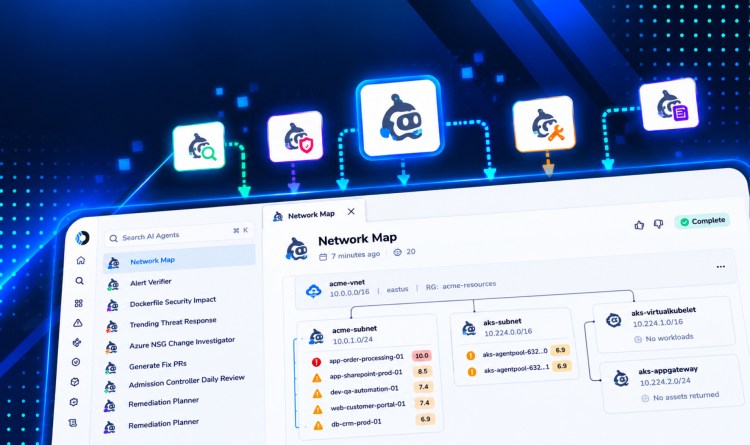
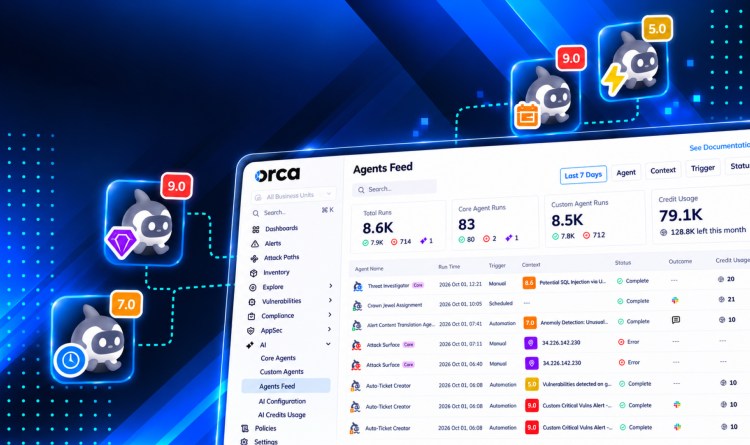
Orca’s acquisition of Opus brought agentic AI directly into the Orca platform, enabling autonomous threat investigation that correlates signals across the entire cloud environment, produces transparent investigation reports, and recommends containment actions without waiting for a human analyst to begin the process. Orca’s Runtime AI Security capabilities detect threats in real time, capturing outbound LLM requests, MCP activity, privilege escalations, and unusual network behavior the moment they occur.
This is not AI as a marketing feature. It is AI doing the triage work that used to require a senior analyst spending hours in a console. By the time a human looks at the screen, the context is already assembled and the path forward is clear.
The Underlying Architecture: Why Completeness is the Only Defense Against AI
Reading Anthropic’s seven recommendations together, a single theme emerges: none of them are primarily about speed. They are about completeness. Close every gap. Scan everything. See every attack path. Cover every asset. Respond before the blast radius expands.
Speed matters, but speed without coverage is just moving faster toward the wrong answer. A faster sensor deployment still leaves a gap between when an asset appears and when protection kicks in. A faster triage process still misses the asset that was never in inventory. A faster patch process still skips the legacy workload that nobody wanted to touch.
In an AI-accelerated threat environment, the security architecture that wins is not the fastest one. It’s the one where every asset and its risks are visible the moment they exist. It’s the one with coverage that doesn’t depend on an agent being deployed.
That is what Orca was built for. Agentless by design. Comprehensive by default. Context-aware at every layer. When coverage is instantaneous and complete, a faster attacker still finds nothing to exploit.
For security leaders, reducing risk while consolidating tools and reducing operational overhead, that completeness also means replacing a fragmented stack of point solutions with a single unified platform built for the cloud.
The threats are accelerating. The architecture question is whether you were already ready.
About Orca Security: The Leader in Agentless Cloud Security and CNAPP
The Orca Platform delivers a unified cloud security experience that helps organizations identify, prioritize, and remediate risk across their cloud environments, applications, and AI. Interested in seeing how we help you command your cloud? Schedule a personalized 1:1 demo.
Table of contents
- 1. Closing the Patch Gap with Context-Aware Vulnerability Prioritization
- 2. Scale Vulnerability Prioritization to Outpace AI-Driven Alert Noise
- 3. Find Bugs Before Shipping: Closing Security Gaps with Shift Left Security" work?
- 4. Find Risks in Existing Workloads, Agentlessly
- 5. Design for Breach: Map Attack Paths to Prevent Catastrophic Loss
- 6. Reduce the Exposed Attack Surface to Close Invisible Cloud Security Gaps
- 7. Achieving Machine-Speed Incident Response to Counter AI-Driven Attacks
- The Underlying Architecture: Why Completeness is the Only Defense Against AI
- About Orca Security: The Leader in Agentless Cloud Security and CNAPP



 Chat with an Orca Expert