


Table of contents
- Key Takeaways
- What Is Private Cloud Security?
- Public vs. Private vs. Hybrid Cloud Security: Key Differences
- Core Principles of Private Cloud Security
- Private Cloud Security Risks and Challenges
- Misconfigurations
- Limited Visibility and Monitoring Gaps
- Insider and Privileged-User Threats
- Patching Burden and Unpatched Vulnerabilities
- Integration and Hybrid Attack Surface
- Talent and Expertise Shortage and Operational Overhead
- Compliance Violations and Audit Failures
- Securing AI and Agentic Workloads in Private Clouds
- Private Cloud Security Best Practices
- Compliance and Regulatory Considerations
- How Orca Secures Private, Public, and Hybrid Cloud Environments
- Building a Secure Private Cloud
- Frequently Asked Questions
Key Takeaways
- Private cloud security is the set of controls, architecture, and practices that protect a single-tenant cloud environment, whether it runs on-premises, in a hosted facility, or inside a dedicated VPC.
- A private cloud gives you isolation and control. It does not give you security by default. You own more of the stack, so more of the security burden moves onto you.
- The same misconfigurations, weak access controls, and monitoring gaps that breach public clouds apply to private ones, often with less native visibility because there are no provider-side security APIs to lean on.
- Six principles decide whether a private cloud is actually secure: network isolation, identity, encryption, physical security, continuous monitoring, and patching, with zero trust connecting them.
- For teams running private and public cloud together, the hardest gap is unified visibility. Orca extends agentless, context-aware risk visibility across hybrid environments, including private workloads, so one risk view spans the whole estate.
A private cloud promises control and isolation, and both are real. What neither one buys you is security. “Private” describes who can reach the infrastructure, not whether the infrastructure is configured, patched, and monitored well enough to keep an attacker out once they gain a foothold.
That gap is where most private cloud incidents begin. An over-privileged admin, an unpatched hypervisor, a flat internal network, or a logging blind spot behaves the same way it would in a public cloud, except you have fewer built-in security services to help detect and respond to it.
This guide explains what private cloud security is, how it differs from public and hybrid cloud security, the core principles that protect a single-tenant environment, the risks that come with operating your own infrastructure, and the best practices that help secure it in 2026.
What Is Private Cloud Security?
Private cloud security is the architecture, controls, and operational practices that protect a single-tenant cloud environment, where the compute, storage, and network serve one organization rather than many. That environment can sit on-premises in your own data center, in a hosted private cloud run by a provider, or in a logically isolated VPC, and the security goal is the same across all three: keep the workloads, data, and identities inside it safe.
A private cloud is a dedicated cloud environment for one tenant, built on platforms like VMware, OpenStack, or a single-tenant VPC. What matters for security is the consequence of single tenancy: isolation removes the noisy-neighbor and shared-plane risks of public cloud, and in exchange it hands you the entire stack to defend yourself.
The Shared-Responsibility Shift
In public cloud, the shared responsibility model splits the work. The provider secures the physical facility, the hypervisor, and the host network, while you secure your data, identities, and configurations. In a private cloud, you own the building, the hardware, the virtualization layer, the guest operating systems, and everything above them.
That shift cuts both ways. You gain control over every layer, which is why many regulated organizations choose private cloud. You also inherit every layer’s failure modes and lose the provider-side security services that make public cloud easier to observe. There is no managed threat-detection feed or configuration-drift API watching your hypervisor unless you build and operate one yourself.
Public vs. Private vs. Hybrid Cloud Security: Key Differences
The key difference is not which deployment model is “more secure,” but where security responsibilities sit. Private cloud offers the most isolation and control, but also the greatest operational responsibility. Public cloud shifts more of the lower stack to the provider, while hybrid combines the challenges of both.
| Dimension | Public Cloud | Private Cloud | Hybrid Cloud |
|---|---|---|---|
| ClTenancy / isolation | Multi-tenant, logically isolated | Single-tenant, physically or logically dedicated | Mixed across both |
| Who secures the stack | Provider secures the lower layers; you secure config, data, identity | You secure every layer, hardware to application | Split, and you own the integration layer |
| Native visibility | High, via provider security APIs and logs | Low by default; you instrument it yourself | Fragmented across platforms and tools |
| Compliance fit | Strong, with shared attestations and inherited controls | Strong for data residency and sovereignty; full evidence burden is yours | Strong but harder to prove across boundaries |
| Cost and effort | Lower operational overhead, usage-based cost | High capital and operational overhead | Highest operational complexity |
| Biggest security weakness | Misconfiguration of provider services | Visibility gaps and the full patching and physical burden | The attack surface where private meets public |
The decision rule per row: choose private when isolation, data residency, or sovereignty is non-negotiable and you have the team to run every layer. Choose public when you want the provider to carry the lower stack and you can govern configuration discipline. Most enterprises run hybrid and inherit all of it.
When a Private Cloud Is the Right Security Choice
A private cloud earns its overhead when isolation is a compliance or contractual requirement, not simply a preference. Healthcare providers handling protected health information, financial institutions with data-residency requirements, and government workloads subject to sovereignty rules often choose private cloud because single tenancy gives them greater control over where data resides and who can access it.
The biggest misconception is that private automatically means secure. Isolation removes some risks but introduces others. A dedicated environment has no noisy neighbors or shared control plane, but it also lacks provider security telemetry and leaves patching, physical security, and infrastructure visibility entirely to your team. Isolation is a starting point, not a security posture.
Core Principles of Private Cloud Security
Six principles determine whether a single-tenant environment is actually secure, with zero trust tying them together. Each maps to a layer of the stack you own end to end, making private cloud security a distinct operational discipline.
Network Isolation and Segmentation
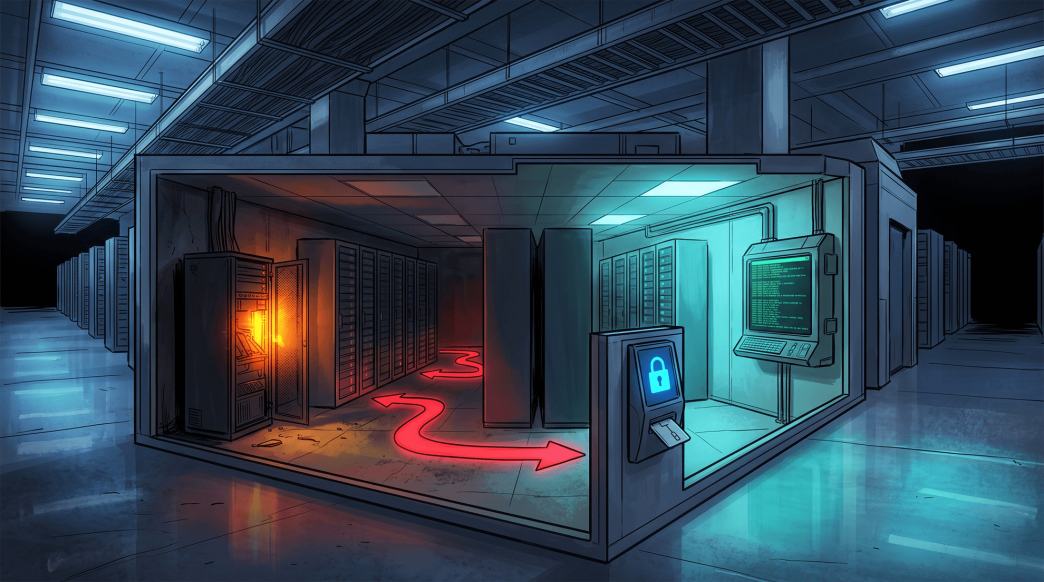
A flat internal network is the single biggest force multiplier for an attacker inside a private cloud. Once a web VM is compromised, an unsegmented Layer 2 network lets that foothold reach the database VM, the backup server, and the management plane with nothing in the way. Network segmentation and micro-segmentation break that path by enforcing policy on east-west traffic, not just the perimeter.
In practice this means VLANs or overlay segments per workload tier, firewall rules between segments, and a management network isolated from production. The goal is to make lateral movement expensive: a compromised front-end should not be able to open a session to a database it never needs to reach.
Identity and Access Management
Most private cloud breaches escalate through identity, not exploits. An over-privileged vCenter or OpenStack admin account is a single credential that controls every virtual machine in the estate, and attackers know it. Least privilege, role-based access control, and mandatory MFA on administrative accounts are the controls that contain the blast radius when a credential leaks.
Map entitlements to roles and review them, because permissions accrete over time and rarely get revoked. NIST SP 800-53 control AC-3 (access enforcement) is the reference, and the operational test is simple: if any one admin account can reach the entire environment unchecked, you have a single point of catastrophic failure, not an identity model.
Data Protection
Private cloud data security rests on encryption at rest and in transit, plus key management you actually control. Encrypt volumes and backups, enforce TLS for traffic between internal services, and keep keys in a hardware security module or a managed key store separated from the data they protect. Encryption without key separation is theater, because an attacker who reaches the data store usually reaches the keys beside it.
The harder discipline is knowing where sensitive data lives. A private cloud sprawls across datastores, snapshots, and test copies, and the sensitive data you forgot about is the data that leaks. Classification and discovery decide which assets get the strongest controls.
Physical Security of the Underlying Infrastructure
This is the layer public cloud users never think about, because the provider handles it. In a private cloud you own it: data center access control, badge and biometric entry, surveillance, chain-of-custody for hardware, and secure decommissioning all become your responsibility. The failure mode is concrete: a decommissioned disk or retired host that leaves the building without a verified wipe carries production data straight out the door. Physical and supply-chain controls are part of the threat model for single-tenant infrastructure, not a formality.
Continuous Monitoring, Logging, and Visibility
A private cloud is dark unless you light it. Public cloud gives you provider flow logs, audit trails, and threat feeds by default; a private environment gives you nothing until you deploy and correlate the telemetry yourself. Without centralized logging from the hypervisor, guest OS, network, and identity layers, an intrusion can run for weeks before anyone notices.
The control is a logging and monitoring pipeline that feeds a SIEM or a cloud detection and response capability, with alerting tuned to real exposure rather than raw event volume. Visibility is the principle most teams underinvest in, and it is the one the rest depend on.
Vulnerability and Patch Management Across the Owned Stack
In a private cloud, you patch everything: firmware, the hypervisor, the host OS, the guest OS, and the applications running on them. With tens of thousands of new vulnerabilities disclosed every year, the virtualization layer is one of the highest-priority patching targets because a critical hypervisor flaw can expose every VM on a host.
Run continuous vulnerability management across the whole stack and prioritize by exposure, not by raw severity, because no team patches 40,000 of anything. Patch management discipline on the layers a public-cloud provider would handle is the work private cloud adds.
Private Cloud Security Risks and Challenges
The risks below are the ones that actually breach single-tenant environments. Most are not exotic. They are the familiar cloud failures, amplified by the fact that a private cloud gives you less native visibility to catch them and a bigger stack to get wrong.
Misconfigurations
Misconfiguration is the leading cause of cloud compromise, public or private, and a private cloud multiplies the surface because you configure layers a provider would otherwise harden. An exposed management interface, a default credential left on a hypervisor, or an overly broad firewall rule opens a path, and the configuration that was correct at deployment quietly drifts as teams make changes no one reviews.
Limited Visibility and Monitoring Gaps
Private clouds lack the provider-side APIs that make public cloud observable, so teams often run partially blind. There is no managed configuration feed or built-in threat detection unless you build one, and the gaps between the hypervisor, network, and identity logs are where a small foothold turns into a long dwell time.
Insider and Privileged-User Threats
Single tenancy concentrates power: a handful of administrators hold credentials that control the entire estate. A privileged user, malicious or careless, who copies a datastore, disables logging, or grants themselves a new role can act faster than any monitoring tuned only to outside attackers will catch.
Patching Burden and Unpatched Vulnerabilities
You own every patch, the volume is relentless, and the most dangerous flaws sit in the infrastructure layers public cloud users never touch. An unpatched hypervisor or management appliance is a high-value target because one exploit reaches every workload it hosts, and “we will patch it next maintenance window” is how those CVEs stay live for months.
Integration and Hybrid Attack Surface
Few private clouds run alone. The moment you connect one to public cloud for burst capacity, backup, or SaaS integration, the link becomes attack surface: a VPN, peering connection, or sync service that bridges the two lets an attacker who lands on one side pivot to the other, exactly where visibility tends to be weakest.
Talent and Expertise Shortage and Operational Overhead
Running every layer securely demands skills across virtualization, networking, identity, and security operations, and that combination is hard to staff. The shortfall shows up as overhead: patches slip, reviews lapse, and monitoring goes untuned, and the controls that lapse first are the ones nobody has time to maintain.
Compliance Violations and Audit Failures
Private cloud is often chosen for compliance, which raises the stakes when controls slip. The full evidence burden is yours, with no provider attestation to inherit, so a missing audit log, an unencrypted backup, or a skipped access review becomes a finding, and drift between documented and running controls is the common path to a failed audit.
Securing AI and Agentic Workloads in Private Clouds
Regulated teams increasingly run AI and agentic workloads in private clouds to keep sensitive training data and models in-house, which introduces risks most private cloud guidance ignores. A model with broad data access, an agent that calls internal APIs with its own credentials, or a private GPU cluster that bypasses normal segmentation all widen the attack surface. Treat these as first-class workloads under AI security posture management, and the consolidated guidance on securing AI workloads in the cloud goes deeper than this single risk allows.
Private Cloud Security Best Practices
These practices map directly to the principles above, turned into a checklist a team can work through. Sequence matters: fix visibility and identity first, because the rest depends on being able to see the environment and control who acts in it.
- Harden and baseline every layer. Apply CIS Benchmarks or a vendor hardening guide to the hypervisor, host OS, and guest images, then detect drift against that baseline continuously rather than auditing once a quarter.
- Enforce least privilege and MFA. Scope admin roles tightly, require MFA on every administrative account, and review entitlements on a schedule so permissions do not accrete unchecked.
- Encrypt everything and separate the keys. Encrypt data at rest and in transit, and keep keys in an HSM or managed key store isolated from the data they protect.
- Segment the network. Use VLANs or micro-segmentation per workload tier, govern east-west traffic with policy, and isolate the management plane from production.
- Centralize monitoring and logging. Feed hypervisor, OS, network, and identity logs into a SIEM or CDR capability, and tune alerting to real exposure instead of event volume.
- Automate vulnerability and patch management. Scan the whole owned stack continuously, prioritize by exposure and exploitability, and treat hypervisor and management-appliance patches as non-deferrable.
- Back up and test recovery. Keep encrypted, segregated backups and rehearse restoration, because ransomware and insider deletion both target the recovery path first.
- Run regular audits and penetration tests. Validate controls against your compliance requirements and probe the private-to-public integration points where exposure concentrates.
- Close the hybrid visibility gap. Use a unified risk view across private and public environments so findings at the boundary do not fall between consoles.
Compliance and Regulatory Considerations
Compliance is often the reason a workload sits in a private cloud, so the regulatory burden deserves its own attention. HIPAA for health data, PCI DSS for cardholder data, and GDPR for personal data of EU residents all impose requirements on where data lives, who can reach it, and how access is logged, and single tenancy makes those answers cleaner to prove. Data residency and sovereignty rules, which require data to stay within a jurisdiction, are a common driver toward private and on-premises deployment.
The catch is that the evidence burden lands entirely on you. In public cloud you inherit provider attestations for the lower layers; in a private cloud you generate every control’s proof yourself, from encryption records to access reviews to immutable audit logs.
The practical work is mapping each regulatory control to a running, evidenced configuration and keeping the two from drifting apart. For the program detail, Orca’s PCI DSS compliance best practices and the NIST Cybersecurity Framework guide cover the controls and evidence model, and the batch’s PCI checklist (draft 02) and cloud-compliance checklist (draft 05) go deeper on building the program.
How Orca Secures Private, Public, and Hybrid Cloud Environments
The hardest private cloud problem is the visibility gap, and it widens the moment private meets public. The Orca Cloud Security Platform addresses that gap with agentless, context-aware risk visibility that extends across hybrid environments, including private workloads, so one risk view spans the estate instead of one console per platform.
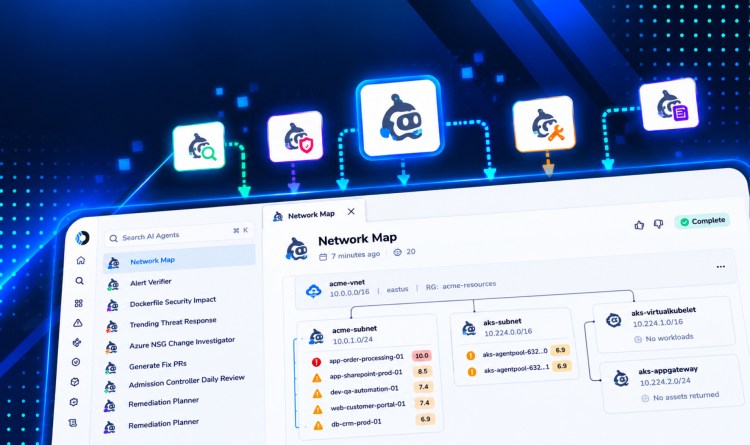
Rather than deploy a sensor on every host, Orca reads workloads, configurations, identities, and data and scores risk on a single context graph. Because the platform traces attack path analysis across that graph, it surfaces the chains that matter most, such as an exposed workload whose path leads to sensitive data, and prioritizes them by real exposure rather than raw severity. Orca is a hybrid CNAPP designed to provide unified visibility and risk prioritization across private and public environments while supporting the layer-by-layer security controls required to secure a private cloud.
By closing the visibility gap across private and public environments, Orca helps teams maintain visibility into those controls and prioritize the risks that matter most across the entire estate.
Building a Secure Private Cloud
A private cloud controls the perimeter. It does not decide the fundamentals. Isolation, identity, encryption, monitoring, and patching are what determine whether a single-tenant environment is secure, and zero trust is what keeps single tenancy from becoming a soft interior an attacker can roam. “Private” is a starting condition, not a finished posture.
The honest takeaway is that going private moves more of the stack, and more of the security burden, onto your team, with less native visibility to work from. For organizations running private and public together, closing that visibility gap with one unified, agentless risk view is what turns a collection of controls into a defensible estate.
Frequently Asked Questions
A secure private cloud typically combines identity and access management (IAM), network segmentation, vulnerability management, centralized logging, SIEM or cloud detection and response (CDR), encryption and key management, and backup and recovery tools. The exact stack depends on your environment, but visibility across the infrastructure is critical because private clouds lack many of the native security services available in public cloud.
Yes. Zero trust is increasingly considered a best practice for private cloud environments. Rather than trusting traffic because it originates inside the network, zero trust continuously verifies users, devices, and workloads before granting access, helping limit lateral movement if an attacker gains an initial foothold.
Critical security patches should be applied as quickly as operationally feasible, particularly for hypervisors, management appliances, and internet-facing systems. Most organizations combine regular maintenance windows with risk-based prioritization so actively exploited or highly exposed vulnerabilities are remediated first.
It depends on the environment. Some private cloud platforms support agentless visibility through virtualization APIs, snapshots, or integrations, while others still require agents for deeper runtime telemetry. Many organizations ultimately use a combination of agentless and agent-based approaches to balance deployment speed with runtime visibility.
Treat the connection between private and public environments as a primary attack surface. Apply consistent identity policies, network segmentation, encryption, centralized monitoring, and unified risk visibility across both environments so attackers cannot exploit gaps between separate security tools or management consoles.
Table of contents
- Key Takeaways
- What Is Private Cloud Security?
- Public vs. Private vs. Hybrid Cloud Security: Key Differences
- Core Principles of Private Cloud Security
- Private Cloud Security Risks and Challenges
- Misconfigurations
- Limited Visibility and Monitoring Gaps
- Insider and Privileged-User Threats
- Patching Burden and Unpatched Vulnerabilities
- Integration and Hybrid Attack Surface
- Talent and Expertise Shortage and Operational Overhead
- Compliance Violations and Audit Failures
- Securing AI and Agentic Workloads in Private Clouds
- Private Cloud Security Best Practices
- Compliance and Regulatory Considerations
- How Orca Secures Private, Public, and Hybrid Cloud Environments
- Building a Secure Private Cloud
- Frequently Asked Questions



 Chat with an Orca Expert