



Table of contents
A critical vulnerability (CVE-2026-33017, CVSS 9.8) was disclosed affecting Langflow, a widely used open-source AI application builder, allowing attackers to execute arbitrary code on the server via a single unauthenticated HTTP request. Due to the potential for full system compromise, data theft, and lateral movement across enterprise networks, immediate patching is required.
About CVE-2026-33017
The issue originates from Langflow’s public flow-building API endpoint (/api/v1/build_public_tmp/{flow_id}/flow), where a lack of input sanitization and sandboxing for user-supplied flow definitions leads to arbitrary Python code execution on the server. By sending a specially crafted POST request containing malicious Python code in a node definition, attackers can gain full remote code execution without any authentication or user interaction, potentially compromising the entire host and any connected cloud infrastructure.
An active campaign exploiting this vulnerability was observed by Trend Micro researchers over a 19-day window in spring 2026. Attackers weaponized the flaw within 20 hours of the advisory’s publication, before any public proof-of-concept existed. The attack chain delivers “lambsys,” a Go-based binary that kills 39 rival cryptominer processes, disables security controls including AppArmor, SELinux, UFW, and iptables, wipes system logs, and deploys a customized XMRig Monero miner with geo-aware pool selection. The malware also harvests environment variables, .env files, database credentials, and API keys from compromised hosts.
Affected Systems
The following components are affected: Langflow, all versions up to and including 1.8.2. Langflow has over 145,000 GitHub stars and is widely deployed in AI/ML pipeline infrastructure across enterprise and cloud environments, particularly when flow-building endpoints are exposed to the internet. Approximately 7,000 Langflow servers were found internet-accessible at the time of discovery. Other frameworks or services relying on Langflow as a backend may also be impacted.
Users should upgrade to Langflow version 1.9.0 or later immediately. Notably, version 1.8.2 was widely reported as patched but remains vulnerable according to JFrog Security Research. Organizations that cannot deploy 1.9.0 immediately should install the nightly build (1.9.0.dev18 or later) as an interim fix. All API keys, database credentials, and SSH keys on any previously exposed instances should be rotated, and teams should monitor for outbound connections to 83.142.209[.]214 and the presence of the “lambsys” binary or unexpected cron entries.
Risk Impact
At the time of writing, working exploits are actively used in the wild, and the vulnerability has been added to CISA’s Known Exploited Vulnerabilities catalog with a federal remediation deadline. No authentication is required to exploit this issue. The severity and ease of exploitation make this vulnerability extremely high risk, especially in internet-facing deployments.
Successful exploitation could allow attackers to execute arbitrary code on the server, steal credentials and sensitive data from environment variables and configuration files, and laterally move through enterprise networks using harvested SSH keys, leading to service disruption, data exposure, or full infrastructure compromise.
How Orca Can Help
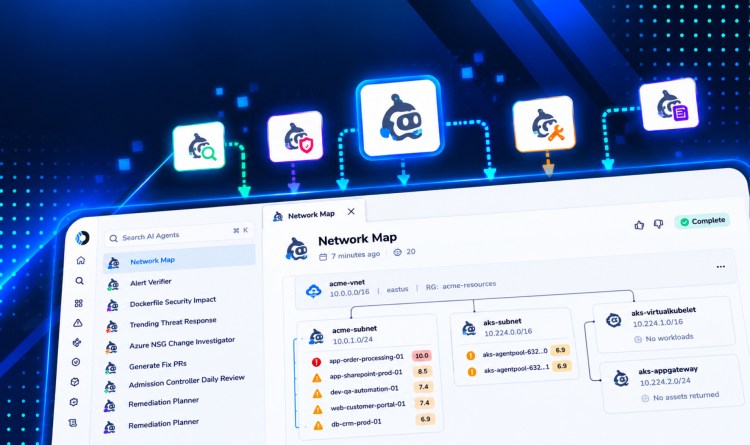
Orca enables customers to quickly identify assets running vulnerable Langflow versions, understand their exposure in context, including internet accessibility, runtime reachability, and asset criticality, and prioritize remediation based on real risk rather than CVSS alone. Orca’s platform highlights affected assets directly in the newItem view, helping security teams focus on the most critical remediation paths first





 Chat with an Orca Expert