


Table of contents
- Key Takeaways
- ASPM vs CNAPP at a glance (quick answer)
- What is ASPM (Application Security Posture Management)?
- What is CNAPP (Cloud-Native Application Protection Platform)?
- ASPM vs CNAPP: The Key Differences
- Where ASPM and CNAPP Overlap: The Code-to-Cloud Middle
- ASPM vs. Adjacent Categories (Quick Reference)
- ASPM or CNAPP: Which Do You Need?
- How Orca Connects ASPM and CNAPP
- Frequently Asked Questions about ASPM vs CNAPP
Key Takeaways
- Teams often evaluate ASPM vs CNAPP as two competing purchases. They solve different halves of the same problem: ASPM (Application Security Posture Management) secures the application from code through the pipeline, while a CNAPP (Cloud-Native Application Protection Platform) secures the cloud from posture through runtime.
- The categories grew from opposite origins. ASPM is application-centric and starts at the code; a CNAPP is cloud-centric and starts at the runtime environment. They converge in the middle, at code-to-cloud.
- Unlike CSPM, ASPM is not a clean subset of a CNAPP. Some CNAPPs now fold ASPM in as a component, and some ASPM specialists argue the category should stay independent for deep code and pipeline analysis.
- The real decision is which view you lead with. Lead with ASPM if AppSec owns your risk, lead with a CNAPP if cloud security does, and unify both when you need to connect a code finding to its running cloud workload.
- Orca ties the two together under one data model, reading code and cloud agentlessly with SideScanning™ and correlating each application finding to the running, internet-exposed workload and sensitive data around it, so a code risk surfaces with its full code-to-cloud attack path attached.
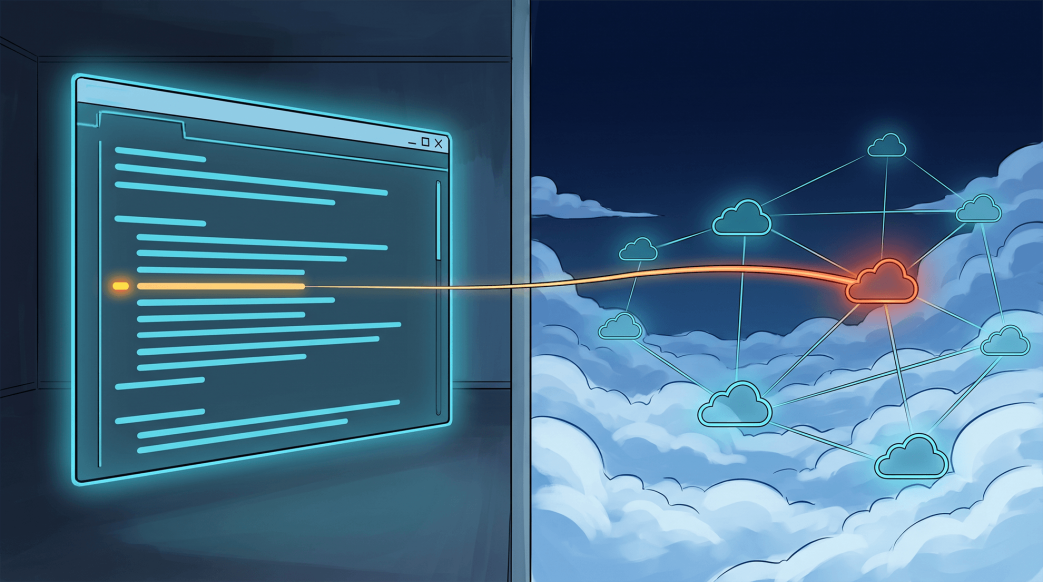
Most teams size up ASPM vs CNAPP as a choice between two competing products. They are not rivals. ASPM (Application Security Posture Management) unifies and prioritizes application risk from code through the pipeline. A CNAPP (Cloud-Native Application Protection Platform) unifies cloud risk from posture through runtime, across workloads, identities, and data. So the CNAPP vs ASPM question is not which category wins.
The question is which view you lead with, and whether your platform connects the two. This guide gives you a direct answer, an accurate side-by-side, a coverage matrix showing where each category sees only half the picture, and a profile-based way to choose. The two meet at code-to-cloud, and that overlap is where real risk lives.
ASPM vs CNAPP at a glance (quick answer)
ASPM secures the application by correlating findings across code, dependencies, IaC, pipelines, and AppSec scanners. A CNAPP secures the cloud environment by unifying posture, workloads, identity, and data at runtime. They overlap on code-to-cloud risk and are increasingly used together, so for most teams it is not either/or.
| Dimension | ASPM | CNAPP |
|---|---|---|
| Primary focus | Application and code risk | Cloud infrastructure, workload, and data risk |
| What it protects | Code, dependencies, IaC, pipelines, and secrets | Cloud posture, workloads, identities, and data |
| Where it works | The SDLC, from commit to build to deploy | The cloud environment, from configuration to runtime |
| Primary users | AppSec teams and developers | Cloud security and platform teams |
| Relationship | Converging with the CNAPP at code-to-cloud | Increasingly folds ASPM in as a component |
Each row marks a place where one category runs deep and the other runs shallow. The sections below work through the load-bearing differences, starting with what each category actually does.
What is ASPM (Application Security Posture Management)?
ASPM aggregates, correlates, and prioritizes findings from across the software development lifecycle into a single application-risk view with clear ownership. It pulls from SAST, SCA, DAST, secrets scanning, IaC, and container scanners, then deduplicates the noise and ranks what matters. This section stays short by design because application security posture management is a topic in its own right.
To disambiguate: this is the Application Security meaning of ASPM, not the PCIe Active State Power Management hardware setting that shares the acronym.
What ASPM covers
ASPM sits across the development pipeline and answers one question well: which of your application risks are real and who owns the fix. It normalizes the output of every scanner so a single vulnerable dependency does not show up as five separate tickets. It maps each finding to the service and team that produced it, then prioritizes by whether the vulnerable code is actually reachable in the application.
The scanner-orchestration layer is the core. Two of the most common inputs are SAST and SCA, while the broader goal is improving application security across the software development lifecycle. For this comparison, the key point is that ASPM secures the code and everything the code depends on.
What is CNAPP (Cloud-Native Application Protection Platform)?
A CNAPP consolidates several cloud security functions into one platform: posture, workloads, identity, and data protection, tied together by shared context. Gartner named the category to replace a stack of disconnected point tools with one that sees how their findings relate. As with ASPM, this definition stays intentionally brief because cloud-native application protection platforms deserve their own discussion.
CNAPP meaning, in one line: the platform that unifies the cloud security tools you would otherwise buy, deploy, and reconcile separately.
The components of a CNAPP
A CNAPP brings these functions together under one data model:
- CSPM for cloud configuration and compliance posture.
- CWPP for workload protection across VMs, containers, and serverless functions.
- CIEM for cloud identity and entitlement risk.
- DSPM for sensitive-data discovery and exposure.
- KSPM for Kubernetes posture, and increasingly ASPM for the application layer.
Gartner and other analysts note that CNAPPs increasingly fold ASPM in as the application-security component, though the depth of that coverage varies widely from vendor to vendor. That convergence is the setup for the overlap section below, and it is a market trend rather than a settled rule.
ASPM vs CNAPP: The Key Differences
The core difference is orientation. ASPM is application-centric and starts at the code, while a CNAPP is cloud-centric and starts at the runtime environment. They converge in the middle, at code-to-cloud.
| Axis | ASPM | CNAPP |
|---|---|---|
| Primary focus | Application and code risk | Cloud infrastructure and workload risk |
| Scope of coverage | Code, dependencies, IaC, pipelines, secrets, AppSec scanners | Posture, workloads, identity, data, runtime |
| Where it starts | Shift-left, in the SDLC | The cloud environment, at runtime |
| Risk prioritization | In-app reachability and exploitability | Attack-path context across cloud assets |
| Primary users | AppSec teams and developers | Cloud security and platform teams |
| Runtime enforcement | Limited to application context | Strong, at the workload and runtime layer |
| Best for | Consolidating AppSec tooling and proving exploitable app risk | Securing multi-cloud posture, workloads, and identity |
Orientation: application-centric (code-first) vs cloud-centric (runtime-first)
ASPM starts where code is written and reads the pipeline from commit to deploy. A CNAPP starts where code runs and reads the cloud account from configuration to runtime. Take a vulnerable logging library pulled into a service: ASPM catches it in the dependency graph at build time, and the CNAPP catches the container running it and whether that container faces the internet. Same risk, opposite ends of the pipe.
Coverage & primary users: AppSec/developers vs cloud-security/platform teams
Ownership follows orientation. AppSec leads and developers run ASPM because the fixes land in their code and their pull requests. Cloud security and platform teams run the CNAPP because the fixes land in cloud configuration, identity policy, and runtime controls. When those two groups use separate tools with separate data, a finding that spans both, such as vulnerable code on an over-permissioned workload, falls into the gap between them.
Prioritization: in-app reachability vs cloud attack-path context
ASPM prioritizes by reachability inside the application: is the vulnerable function actually called on a path an attacker can trigger. A CNAPP prioritizes by attack path across cloud assets: is the workload internet-facing, over-permissioned, and close to sensitive data. Each answer is half of the same risk calculation, which is exactly why the overlap between them carries so much weight.
Where ASPM and CNAPP Overlap: The Code-to-Cloud Middle
ASPM and CNAPP overlap wherever application risk meets cloud runtime. A vulnerable dependency only matters if the workload running it is deployed, reachable, and exposed to something worth stealing. That code-to-cloud correlation is exactly where a standalone ASPM and a separate CNAPP each see only half the picture.
| Capability | ASPM | CNAPP |
|---|---|---|
| Code and SDLC findings | Yes | Partial |
| Cloud configuration and posture | Partial | Yes |
| Workload and runtime protection | No | Yes |
| Identity and access context | Partial | Yes |
| Sensitive-data exposure | No | Yes |
| Code-to-cloud attack-path correlation | Partial | Partial |
Read the last row carefully. ASPM knows the vulnerable code but loses the trail once the code is deployed. The CNAPP knows the exposed, over-permissioned workload but rarely traces it back to the exact line or dependency that introduced the flaw. Bolt the two tools together without a shared data model and you rebuild the same silo both were meant to remove, now spread across two consoles. The value is one model that spans both halves and connects them into a single path.
ASPM vs. Adjacent Categories (Quick Reference)
Buyers weighing ASPM often confuse it with two neighbors. Placing it correctly against them makes the CNAPP comparison sharper.
ASPM vs. CSPM
ASPM manages the posture of your applications; CSPM manages the posture of your cloud infrastructure. ASPM asks whether your code, dependencies, and pipelines are safe, while CSPM asks whether your cloud accounts are configured safely. They are different postures of different layers, and both feed a CNAPP.
ASPM vs. ASOC
ASPM grew out of Application Security Orchestration and Correlation (ASOC), the earlier category for tools that aggregate and deduplicate scanner output. ASOC solved the noise problem: too many findings from too many scanners. ASPM extends that foundation with posture, ownership, reachability-based prioritization, and a continuous view of application risk rather than a one-time correlation pass.
How ASPM, CSPM, CWPP & CNAPP fit together
Picture four layers of the same cloud-native stack. ASPM covers the application and its code, CSPM covers cloud configuration, CWPP covers running workloads, and the CNAPP unifies the cloud-side categories under shared context while increasingly reaching into the application layer too. Understanding how CWPP, CSPM, CIEM, and CNAPP fit together makes it easier to see where each category starts and stops.
ASPM or CNAPP: Which Do You Need?
The honest answer depends on where your risk concentrates and who owns security, not on which platform is broader. Use your org’s center of gravity to decide which view to lead with.
Lead with ASPM if you are AppSec- or developer-led, drowning in unprioritized scanner findings across many applications, and your priority is consolidating AppSec tooling and proving which app risks are actually exploitable.
Lead with a CNAPP if you are cloud-security- or platform-led, run multi-cloud production workloads, and your priority is posture, workload, identity, and data risk at runtime. Standalone application posture will not show you an over-permissioned role or an exposed data store.
Unify both if you want to connect application findings to their running cloud workloads without stitching two data models together by hand. That is the code-to-cloud case, and it is where a single platform earns its keep.
Industry opinion splits here, and the split is worth knowing. Some CNAPP vendors embed ASPM and argue the two belong under one roof. Some ASPM specialists argue the category must stay independent, because a cloud-first data model struggles to go deep on code, dependencies, and pipeline logic. Both positions are defensible, which is why the standalone-versus-platform trade-off is a real decision rather than a foregone one. Organizations weighing that tradeoff should also consider how CNAPP tools reduce security tool sprawl compared with dedicated solutions.
How Orca Connects ASPM and CNAPP
ASPM and CNAPP solve different parts of the same problem, but the biggest risks appear where application and cloud context meet. A vulnerable dependency only becomes a meaningful priority when you know whether the workload running it is internet-facing, what identities can access it, and what sensitive data it can reach. Connecting those signals requires a shared view across code and cloud rather than separate security silos.
Orca Security unifies application and cloud security under one unified data model. Using patented SideScanning™, Orca takes an agentless approach to correlating findings across code, cloud posture, workloads, identities, and data, helping security teams prioritize the risks that are actually exploitable instead of reviewing disconnected alerts.
For example, a vulnerable application dependency might appear as a code finding in an ASPM tool, while a CNAPP separately identifies an internet-facing container with excessive permissions. Orca connects those signals into a single code-to-cloud attack path, showing the vulnerable dependency, the workload running it, the identities it can assume, and the sensitive resources it can access. If you’re evaluating unified platforms, the five considerations for evaluating CNAPP vendors can help you assess code-to-cloud capabilities. Request a demo to see how Orca prioritizes real-world cloud risk.
Frequently Asked Questions about ASPM vs CNAPP
ASPM is typically owned by application security teams because it focuses on code, dependencies, and software delivery pipelines. CNAPP is usually managed by cloud security or platform teams responsible for cloud infrastructure, workloads, identities, and runtime security. In many organizations, both teams share responsibility when securing applications from code through production.
Yes. Most organizations start with the platform that addresses their biggest source of risk. If application security is the priority, ASPM may be the better first investment. If securing cloud infrastructure and production workloads is the immediate concern, a CNAPP often delivers broader coverage. As cloud environments mature, many teams look for ways to connect both perspectives.
Rather than comparing feature lists, validate how well each platform prioritizes real risk. Check whether it correlates application findings with cloud posture, workload exposure, identities, and sensitive data, reduces duplicate alerts, integrates into existing developer and security workflows, and provides actionable remediation guidance.
Separate tools can still be effective, but they often require manual investigation to connect application findings with cloud context. Security teams may spend more time correlating alerts across multiple consoles before determining whether a vulnerability is actually exploitable and what assets it affects.
No. ASPM does not replace technologies such as SAST or SCA. Instead, it brings their findings together, removes duplicate alerts, assigns ownership, and prioritizes the risks that matter most, helping teams make better use of the security tools they already have.
Table of contents
- Key Takeaways
- ASPM vs CNAPP at a glance (quick answer)
- What is ASPM (Application Security Posture Management)?
- What is CNAPP (Cloud-Native Application Protection Platform)?
- ASPM vs CNAPP: The Key Differences
- Where ASPM and CNAPP Overlap: The Code-to-Cloud Middle
- ASPM vs. Adjacent Categories (Quick Reference)
- ASPM or CNAPP: Which Do You Need?
- How Orca Connects ASPM and CNAPP
- Frequently Asked Questions about ASPM vs CNAPP




 Chat with an Orca Expert