



Table of contents
- Key Takeaways
- What Is AI-SPM (AI Security Posture Management)? The 60-Second Version
- The AI-SPM Vendor Landscape: 4 Types of Tools (and Which One You Need)
- What to Look For in an AI-SPM Tool: Evaluation Criteria
- The 10 Best AI-SPM Tools in 2026
- AI-SPM Tools Compared: Side-by-Side
- How to Choose the Right AI-SPM Tool
- How Orca Approaches AI-SPM
- Frequently Asked Questions about AI-SPM Tools
Key Takeaways
- An AI Security Posture Management (AI-SPM) tool discovers your whole AI footprint, including shadow AI, assesses how it is configured and exposed, and ranks the AI risks an attacker could actually reach.
- “AI-SPM” is a young, crowded label. Four different kinds of vendors claim it, and most roundups mix them without telling you which type your AI risk actually needs.
- Read the evaluation criteria before the rankings. The two that separate real platforms from dashboards are agentless discovery of the AI estate and attack-path prioritization, not a flat wall of AI misconfigurations.
- Most buyers get AI-SPM as a module inside a broader cloud platform rather than as a standalone point tool, so the consolidation decision matters as much as the feature list.
- Orca delivers agentless AI-SPM through SideScanning™, correlating each AI misconfiguration to the exposed workloads, identities, and sensitive data around it, and is recognized as a G2 Leader and Best Free AI-SPM.
Your engineering teams are shipping AI faster than security can track it. Models, training datasets, notebooks, vector stores, managed AI services, and now autonomous agents spin up across every cloud account. Most of it never lands in the CSPM, DSPM, or AppSec tools you already run. An AI-SPM tool exists to close that blind spot: it discovers the sprawling AI footprint, finds the misconfigurations and exposures around it, and prioritizes the risks that are genuinely reachable.
The catch is the label. Search for AI security posture management tools and you get lists that mix cloud-native platforms, data-security tools, agent-security startups, and model-runtime firewalls under one word, without telling you which you need.
This guide gives you the four vendor types, an evaluation rubric, a ranked shortlist for 2026, a side-by-side comparison table, and the questions to ask before you buy. Criteria come first, so you judge every vendor against one standard instead of ten sales pages.
What Is AI-SPM (AI Security Posture Management)? The 60-Second Version
AI Security Posture Management (AI-SPM) helps organizations discover AI assets, assess their configuration, permissions, and exposure, and prioritize the risks that matter most. This guide focuses on choosing an AI-SPM platform rather than explaining AI security posture management in depth.
AI-SPM follows the same posture management lifecycle as other security disciplines: discover, assess, prioritize, and remediate. The difference is the assets it protects. Instead of traditional cloud resources, AI-SPM focuses on AI services, self-hosted models, training and retrieval data, notebooks, vector stores, and the identities that interact with them. A misconfigured model endpoint, a service account that can read fine-tuning data, or a forgotten notebook with a live key are AI-specific risks that a general cloud security tool was never designed to detect.
What AI-SPM is not
AI-SPM is easy to confuse with three neighboring categories, and the distinction affects which vendors belong on your shortlist. It is not an LLM firewall or a prompt-injection runtime guardrail. Those are part of LLM security and protect models at runtime. It is not data security posture management on its own, which secures the data layer. And it is not an AI-governance or GRC platform for policy and audit.
AI-SPM manages the security posture of the AI estate itself. Related disciplines such as shadow AI and the AI workload security framework are important to AI security, but they address different problems than choosing an AI-SPM platform.
The AI-SPM Vendor Landscape: 4 Types of Tools (and Which One You Need)
Vendors selling “AI-SPM” fall into four buckets with very different centers of gravity, and the most useful thing you can do before a demo is match the type to your AI risk rather than the label. A cloud-AI builder and a data-heavy enterprise need different tools, even though both vendors say “AI-SPM” on the homepage.
Cloud-native / CNAPP-native AI-SPM
This type manages posture for AI running in your cloud, such as managed AI services, model registries, and pipelines, and unifies it with the rest of your cloud security. Because it already sees the workloads, identities, and networks around a model, it can tell a buried misconfiguration from an exposed one.
It fits teams building AI in AWS, Azure, or Google Cloud who want AI posture inside their cloud-native application protection platform rather than a separate console. Vendors here include Orca, Wiz, Palo Alto Networks, Microsoft, CrowdStrike, and Tenable.
Data-first AI-SPM (DSPM-leaning)
Data-first tools anchor on discovering and classifying the training, fine-tuning, and retrieval data that feeds your models, then flag where sensitive data is exposed to an AI system. They fit data-sensitive and regulated organizations whose primary AI risk is a model reaching data it should not.
Keep this lane in perspective when you shortlist: the data layer is one criterion, and dedicated data-security coverage belongs in a DSPM tool, not a data-security-for-AI section on every AI-SPM. Vendors here include Cyera and Securiti.
AI-agent / copilot posture
This newer type secures autonomous agents, copilots, and the connections they open, including Model Context Protocol (MCP) links to tools and data. As agents gain the ability to act, an over-scoped agent becomes an identity and access problem, not just a model problem.
This type fits agent-heavy and copilot-heavy shops. Vendors here include Zenity, and the discipline overlaps with how you reason about AI agents versus agentless and agent-based approaches.
Model / ML-runtime defense (adjacent, not ranked here)
Model-runtime tools guard the model at request time with AI firewalls, prompt-injection defense, and model red-teaming. Vendors such as HiddenLayer specialize here, and the space is consolidating fast, with Palo Alto acquiring Protect AI and Check Point acquiring Lakera.
This is a distinct category from posture management, so this guide does not rank it. Teams evaluating runtime model defense should instead compare AI cybersecurity providers.
What to Look For in an AI-SPM Tool: Evaluation Criteria
The criteria that separate AI-SPM vendors come down to how completely a tool finds your AI, how well it tells a reachable risk from a cosmetic one, and how much cloud context it carries. Use the seven below as your rubric before you look at a single ranking.
AI asset discovery & inventory
Discovery is the table-stakes capability, and it is where the noisy lists quietly fail. A serious tool finds all of it: managed AI services, self-hosted and fine-tuned models, training and retrieval datasets, notebooks, vector stores, and the shadow AI that teams stand up without telling security.
It should produce an AI bill of materials (an AI-BOM) so you hold one current inventory, not a survey. Ask each vendor what it does when an engineer spins up a model it has never seen.
Agentless coverage & time-to-value
Pin down how the tool gets its data, because it decides how fast you see value and how much you miss. Agentless approaches read the AI estate from the cloud layer through APIs, so they cover an environment in hours and see assets nobody remembered to instrument.
Agent or sidecar models leave gaps wherever no one installed them, and a shadow model is exactly the asset that never gets an agent. Ask what the tool cannot see without something deployed on the workload.
Posture & misconfiguration assessment across the AI pipeline
Once a tool knows what exists, it has to judge configuration across the pipeline: public or unauthenticated model endpoints, over-broad permissions on AI services, unencrypted training stores, and drifted settings on model registries.
This is the security posture assessment work applied to AI resources and the identities attached to them. A tool that only lists your models without grading their configuration has built an inventory, not a posture.
Context & attack-path prioritization
This is the criterion buyers underweight and regret most. Ranking AI findings by raw severity floats a low-risk internal notebook above a real exposure, so what matters is whether a misconfiguration is reachable and what it chains to.
A self-hosted model endpoint open to the internet, running under a role that can read the bucket holding your fine-tuning data, is one attack path, not four separate alerts. Tools that trace that chain, using reachability analysis plus exposure, turn a wall of AI misconfigurations into a short, ranked list.
Data + identity coverage for AI
Risk in the AI estate almost always runs through data and identity, so check who and what can reach your models and training data. The tool should surface the human and non-human identities with access to AI resources and connect a model to the sensitive data behind it.
Keep the depth honest: this is coverage inside AI-SPM, and deep data classification still belongs to a dedicated DSPM.
Agentic-AI / MCP governance (emerging)
The fastest-moving criterion in 2026 is visibility into AI agents and the tools they can call. As agents connect to systems through MCP and similar protocols, you need to see which agents exist, what connectors they hold, and where an over-permissioned agent could act on its own.
Treat this as a differentiator to probe, and weigh it heavily only if your teams already run agents in production.
Compliance & governance mapping
The last criterion is evidence. A capable tool maps AI findings to the frameworks your auditors ask about, such as the NIST AI Risk Management Framework, ISO/IEC 42001, and the EU AI Act, so posture data doubles as audit evidence.
This matters most in regulated settings, where AI security best practices for regulated industries become increasingly important. It is a mapping capability, not a governance platform.
Before you move to the rankings, run each shortlisted tool through this checklist:
- Does it discover all AI, including self-hosted models and shadow AI, without an agent on every workload?
- Does it produce a current AI-BOM you can query, or only a point-in-time scan?
- Does it grade configuration and permissions, or just list the models it found?
- Does it prioritize by reachability and real exposure, or by raw severity counts?
- Can it connect an AI finding to the exposed workload, identity, and sensitive data around it?
- Does it give you visibility into AI agents and their connectors, and map findings to AI compliance frameworks?
The 10 Best AI-SPM Tools in 2026
The ten tools below cover the credible, current AI-SPM market for 2026, scoped to posture management for the AI estate. Each entry gives a one-line positioning, the capabilities that matter, who it fits, and an honest limitation, including for the entry that leads the list.
Because this market moves monthly through releases and acquisitions, treat each product claim as current at publish and verify it before you shortlist.
Orca Security: agentless, CNAPP-native AI-SPM with unified AI attack-path context
Orca Security delivers AI-SPM inside an agentless CNAPP, so AI findings arrive already correlated to the cloud they run in. Agentless SideScanning™ reads workloads, cloud configuration, and the AI resources on them from a single read-only connection, then a unified data model ties each AI misconfiguration to the exposed workload, the identity that can reach it, and the sensitive data behind it. That AI attack path pushes the genuinely reachable risks to the top, and Orca is recognized as a G2 Leader and Best Free AI-SPM.
Best for: teams that want AI posture scored by real cloud exposure, with no agents to deploy across models and pipelines.
Limitations: buyers who want a narrow, standalone AI scanner with no cloud footprint may use more of the platform than that single need requires.
Wiz
Wiz brought AI-SPM into its CNAPP and security graph, so teams already on Wiz get AI inventory and misconfiguration findings connected to their broader cloud risk. It discovers AI services and SDKs across cloud accounts and folds the results into the same graph as workloads and identities.
Best for: enterprises consolidating cloud and AI security on one graph-based platform.
Limitations: premium pricing, and the strongest context favors environments already standardized on Wiz.
Palo Alto Networks
Palo Alto splits the work across two products. Prisma Cloud, now folded into Cortex Cloud, carries AI-SPM posture for cloud AI services, while Prisma AIRS is its broader AI security platform spanning model scanning, posture, red teaming, and runtime, built up through the Protect AI acquisition it completed in July 2025.
Best for: existing Palo Alto customers consolidating AI and cloud security onto one vendor.
Limitations: breadth brings platform complexity and cost, and the posture and runtime pieces sit in different products.
Microsoft Defender for Cloud
Microsoft Defender for Cloud provides AI security posture management for AI workloads, with its deepest coverage across Azure OpenAI and Azure Machine Learning. While it supports some multi-cloud scenarios, its AI security capabilities are strongest within Azure.
Best for: Azure-centric organizations already invested in Microsoft Defender and Purview.
Limitations: coverage and context are richest inside Azure, and depth outside it is lighter.
CrowdStrike Falcon Cloud Security
CrowdStrike Falcon Cloud Security extends its cloud platform with AI-SPM, discovering AI services and shadow AI and flagging misconfigured or over-permissioned AI resources beside its existing cloud and endpoint coverage.
Best for: existing CrowdStrike customers who want AI posture in the Falcon console.
Limitations: the AI-SPM capability is newer than the endpoint and cloud core it grew from.
Tenable Cloud Security
Tenable Cloud Security offers AI-SPM built on its exposure management platform, with AI Aware capabilities that discover AI and machine learning services and identify related exposures alongside the vulnerabilities Tenable already tracks.
Best for: organizations standardized on Tenable for exposure and vulnerability management.
Limitations: cloud runtime and attack-path context is lighter than in the graph-based CNAPPs.
Cyera
Coming from the data side, Cyera approaches AI posture through the data an AI system can reach, discovering and classifying sensitive data and flagging risky AI access to it. Cyera approaches AI security from the data layer, making it a strong complement to an AI-SPM program rather than a full cloud-native AI-SPM platform.
Best for: data-sensitive and regulated organizations whose main AI risk is data exposure.
Limitations: cloud-workload and pipeline context is thinner than in a full CNAPP, so it often runs alongside one.
Zenity
Zenity focuses on the agent layer, securing AI agents, copilots, and low-code and no-code automations, along with the connectors and MCP links they use. It governs what an agent can access and act on, which is a different problem from scanning a model registry.
Best for: organizations rolling out copilots and autonomous agents at scale.
Limitations: it is specialized for agent and copilot posture, not broad cloud-AI or data coverage.
Cycode
Cycode extends its application security posture platform to help organizations identify AI components, models, and packages entering the software pipeline, connecting them to the code and CI/CD context it already maps. Its strength is securing AI in the software development pipeline rather than providing cloud-wide AI posture management.
Best for: engineering organizations centralizing AI and application posture in the pipeline.
Limitations: context stops at the pipeline and the signals it ingests, with less native cloud-infrastructure correlation than a CNAPP.
Sysdig
Sysdig approaches AI security from runtime, using its cloud-native detection roots to watch AI workloads for active risk as they run. It adds posture context on top, but the center of gravity is runtime visibility into containers and workloads hosting AI.
Best for: container-heavy teams that want runtime detection across AI workloads.
Limitations: the runtime strength depends on instrumentation, and posture breadth is narrower than the CNAPP-native options.
How we shortlisted these tools: each had to discover the AI footprint including shadow AI, assess AI posture and configuration, prioritize by reachability, and unify AI risk with surrounding context. That filter excludes vendors focused primarily on model-runtime defense and AI firewalls, which are covered separately in AI cybersecurity providers, as well as pure data-catalog tools without AI posture capabilities. Vendor positioning reflects publicly available information at the time of publication and should be verified before shortlisting.
AI-SPM Tools Compared: Side-by-Side
The table compares the ten tools on the criteria that differentiate them. Capabilities in this market shift quarterly, so treat it as a starting rubric and confirm each cell against current vendor documentation before you shortlist.
| Tool | Agentless? | AI asset & shadow-AI discovery | Posture/config assessment | Attack-path prioritization | Model + data + pipeline coverage | Agentic-AI / MCP | CNAPP-native | Multi-cloud |
|---|---|---|---|---|---|---|---|---|
| Orca Security | Yes (SideScanning) | Yes | Yes | Yes, unified data model | Yes | Partial | Yes | Yes |
| Wiz | Yes | Yes | Yes | Yes, security graph | Yes | Partial | Yes | Yes |
| Palo Alto (Prisma Cloud / AIRS) | Agent + agentless | Yes | Yes | Partial | Yes | Partial | Yes | Yes |
| Microsoft Defender for Cloud | Yes (connector) | Yes | Yes | Partial | Partial | No | Yes | Partial (Azure-first) |
| CrowdStrike Falcon Cloud Security | Agent + agentless | Yes | Yes | Partial | Partial | No | Yes | Yes |
| Tenable Cloud Security | Yes | Yes | Yes | Partial | Partial | No | Partial | Yes |
| Cyera | Yes | Partial (data-first) | Partial | No | Partial (data-centric) | No | No | Yes |
| Zenity | Yes | Partial (agents/copilots) | Yes (agent posture) | Partial | Partial | Yes | No | Partial |
| Cycode | Yes (connectors) | Partial (pipeline AI) | Yes | Partial | Partial (pipeline) | No | No | Yes |
| Sysdig | Agent (runtime) + agentless | Partial | Yes | Partial | Partial (runtime) | No | Partial | Yes |
How to Choose the Right AI-SPM Tool
The right AI-SPM tool depends on where your AI risk actually sits, not on which vendor tops which list. Match the tool type to your profile, then confirm the fit against your own environment before you commit.
Cloud-AI builders should weight CNAPP-native context; data-sensitive and regulated teams, data coverage and compliance mapping; agent-heavy shops, agent and MCP posture. Any team fighting alert fatigue should weight agentless discovery and attack-path prioritization, since those are what shrink a wall of findings to a workable list.
Questions to ask an AI-SPM vendor in a demo
Push past the pitch with questions that expose the gaps:
- How do you discover shadow AI and self-hosted models, and what do you miss without an agent on the workload?
- Do you prioritize by reachability and exposure, or by raw severity, and can you show it on our data?
- Which clouds and AI services do you cover in depth, and which only shallowly?
- How do you handle AI agents and their MCP or tool connections?
- Where does our data go, and what access does your tool require to run?
Standalone AI-SPM vs. AI-SPM inside a CNAPP
Most buyers get AI-SPM as a module inside a broader platform, not as a separate point tool, and there is a reason. A standalone tool can be quicker to stand up for a narrow need, but AI findings are far more useful when they share context with your cloud, identity, and data risk.
Reducing security tool sprawl is one of the biggest advantages of a CNAPP, because one more siloed console rarely earns its keep when the risk it finds only matters in relation to everything around it.
Pricing & packaging considerations
Pricing in this category is young and inconsistent, so compare packaging, not just a number. Some vendors bundle AI-SPM into a CNAPP or cloud-security license, some meter it per AI asset or account, and a few offer free tiers for AI discovery.
Ask whether AI-SPM is included in a platform you already own, whether cost scales with the AI assets you expect to add, and what a proof of value covers. Confirm any figure with the vendor, because published pricing here goes stale fast.
How Orca Approaches AI-SPM
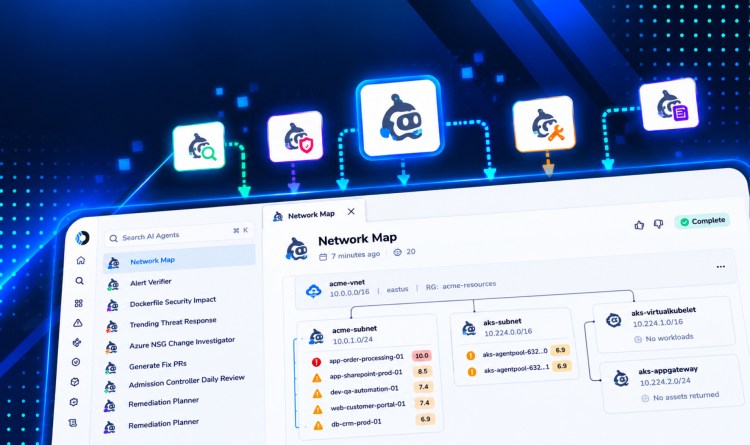
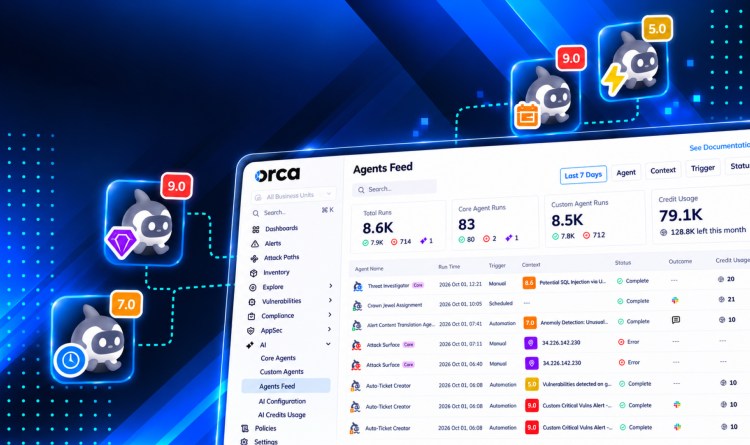
Orca approaches AI security posture management by combining agentless AI discovery with cloud-wide context, helping security teams identify the AI risks that actually matter. Using SideScanning™, Orca discovers AI assets, workloads, cloud configuration, identities, and sensitive data through a single read-only connection, then correlates them in one unified data model. Instead of producing isolated AI findings, Orca prioritizes the AI risks that are actually reachable by mapping misconfigurations to the workloads, identities, and data they can expose.
As AI adoption grows, choosing an AI-SPM platform is about more than discovering models. The right platform should help you understand which AI risks matter, how they fit into your broader cloud environment, and what to remediate first. Orca delivers that context through agentless AI-SPM integrated into its CNAPP. Get a demo to see it in your own environment.
Frequently Asked Questions about AI-SPM Tools
Many compare feature lists before confirming which type of AI-SPM platform they actually need. Cloud-native platforms, data-first platforms, agent-security platforms, and runtime AI security tools solve different problems. Choosing the wrong category usually creates bigger security gaps than choosing the wrong vendor.
The strongest platforms can discover unmanaged or “shadow” AI resources by identifying AI services, models, notebooks, and related infrastructure directly from the cloud environment. Exactly what can be discovered varies by vendor, so ask how the product identifies unmanaged AI assets and what requires additional deployment or instrumentation.
That depends on how your security program operates. Organizations already consolidating cloud security often benefit from AI-SPM inside a CNAPP because AI findings automatically inherit workload, identity, and data context. Teams with a very specific AI security requirement may prefer a dedicated tool if it offers capabilities their existing platform lacks.
Focus on your own environment rather than vendor demos. Measure how completely each product discovers AI assets, how accurately it prioritizes real exposures instead of generating alert noise, and how quickly your team can move from a finding to remediation. Those outcomes usually matter more than the total number of reported features.
The market is moving in that direction. Many CNAPP vendors now include AI-SPM capabilities, while specialist vendors continue to push deeper into areas such as AI agents, governance, or runtime protection. The important question is less whether AI-SPM is bundled and more whether the platform provides the depth of coverage your AI environment requires.
Table of contents
- Key Takeaways
- What Is AI-SPM (AI Security Posture Management)? The 60-Second Version
- The AI-SPM Vendor Landscape: 4 Types of Tools (and Which One You Need)
- What to Look For in an AI-SPM Tool: Evaluation Criteria
- The 10 Best AI-SPM Tools in 2026
- AI-SPM Tools Compared: Side-by-Side
- How to Choose the Right AI-SPM Tool
- How Orca Approaches AI-SPM
- Frequently Asked Questions about AI-SPM Tools




 Chat with an Orca Expert