


Table of contents
- Key Takeaways
- What Is CIEM (Cloud Infrastructure Entitlement Management)?
- Why CIEM Tools Matter: Entitlement Sprawl & Identity Risk
- What to Look For in CIEM Tools and Vendors
- The 10 Best CIEM Tools in 2026
- Orca Security: agentless CIEM with unified attack-path context
- Wiz
- Microsoft Defender for Cloud (native CIEM for Azure)
- Tenable Cloud Security (formerly Ermetic)
- CyberArk (Cloud Entitlements / Secure Cloud Access)
- Palo Alto Prisma Cloud (now Cortex Cloud)
- SentinelOne (Singularity Cloud)
- CrowdStrike Falcon Cloud Security
- Sonrai Security
- SailPoint Cloud Access Management
- CIEM Tools Compared: Side-by-Side
- How to Choose the Right CIEM Solution
- How Orca Approaches CIEM
- Choosing the Right CIEM Tool
- Frequently asked questions about CIEM Tools
Key Takeaways
- CIEM tools discover every cloud identity, measure the permissions each one actually uses, and right-size the gap between granted and used access. The best ones tie that identity risk to the data and workloads it can reach.
- Machine and service identities now outnumber human users many times over in a typical cloud account, and most carry permissions they never touch. That standing, unused access is one of the most reliable paths an attacker takes through the cloud.
- The evaluation criteria that separate strong CIEM tools are agentless coverage and deployment speed, multi-cloud correlation, attack-path context, least-privilege automation, identity threat detection, and audit-ready reporting.
- This roundup curates ten credible cloud-CIEM vendors and compares them side by side, then helps you decide between a standalone CIEM and CIEM delivered inside a CNAPP.
- Orca delivers CIEM agentlessly inside its CNAPP, mapping identity risk to reachable sensitive data through a unified data model so teams fix the entitlements that actually open an attack path.
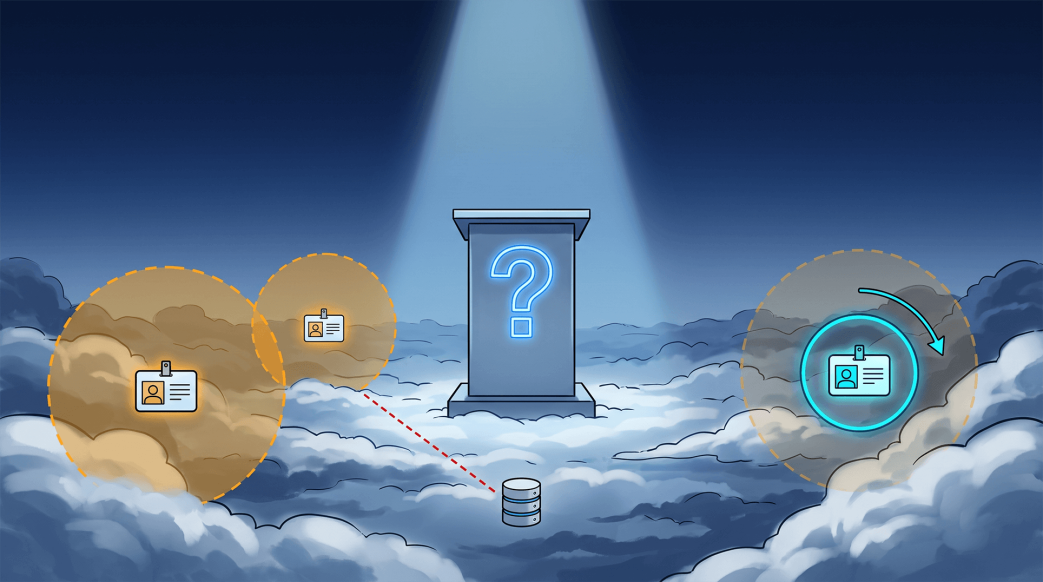
CIEM tools find, prioritize, and right-size the permissions attached to cloud identities. They matter because cloud environments have become increasingly driven by identities: machine and service identities now outnumber human users many times over in a typical account, and most of them hold permissions they never use. That gap between granted and used access is what attackers exploit to move from a single foothold to your data.
The right CIEM tool closes that gap. It inventories every human and non-human identity across your clouds, calculates the permissions each one actually exercises, flags the standing access that creates risk, and helps you remove it without breaking production. Gartner introduced the term Cloud Infrastructure Entitlement Management to name this category, and the market has since split into standalone identity tools and CIEM modules built into broader cloud platforms.
This guide covers what to look for before you shortlist, ranks ten credible CIEM tools for 2026 with their tradeoffs, compares them in a side-by-side table, and helps you decide whether you need a point CIEM or CIEM inside a CNAPP. The guide starts with the evaluation criteria so you can assess every vendor against the same rubric rather than its marketing claims.
What Is CIEM (Cloud Infrastructure Entitlement Management)?
CIEM (Cloud Infrastructure Entitlement Management) is a category of security tooling that discovers cloud identities and their entitlements, measures effective permissions against actual usage, and drives those permissions toward least privilege. It answers a question native cloud consoles struggle with: who can do what, where, and should they still be able to?
A CIEM tool works across the identities that live in a cloud environment: human users, roles, groups, and the larger population of non-human identities such as service accounts, functions, and workload roles. It reads the policies attached to each one, resolves the effective permissions after all the inheritance and conditions, and compares that to what the identity has used in practice. The output is a prioritized list of over-permissioned, inactive, or risky identities you can remediate.
CIEM vs. IAM — the 30-second version
IAM (Identity and Access Management) grants and authenticates access. CIEM watches what happens to that access once it exists across the cloud and continuously pulls it back toward least privilege. Native IAM lets you create a role and attach a policy; it does not tell you that the role has held write access to a production bucket for eight months and never used it. CIEM does. The differences between CIEM, IAM, and PAM become more apparent when you compare where each fits in a cloud security strategy.
Why CIEM Tools Matter: Entitlement Sprawl & Identity Risk
CIEM tools matter because cloud permissions grow faster than anyone reviews them, and over-permissioned identities are a leading cloud attack path. Every new service, pipeline, and integration adds identities and grants, almost always broader than the task requires, and those grants rarely get revoked.
The result is entitlement sprawl: thousands of identities, each carrying standing permissions far beyond what they use, plus a long tail of inactive accounts nobody owns. If an attacker compromises one over-permissioned identity, they inherit everything it can reach, turning a single leaked key into access to sensitive systems and data. Understanding entitlement sprawl and how to control it in the cloud is a key part of reducing that risk.
Native IAM consoles cannot solve this problem at scale, especially across multiple clouds. AWS, Azure, and Google Cloud each model identities differently and each has its own management console, making it difficult to understand effective permissions across an entire environment. CIEM tools bring those views together, turning scattered identity data into prioritized action. The strongest platforms also trace the path from an exposed identity to the non-human identities and sensitive data it can reach, helping teams focus on the attack paths that matter most.
What to Look For in CIEM Tools and Vendors
The CIEM tools worth shortlisting share six capabilities: agentless deployment, multi-cloud correlation, attack-path context, least-privilege automation, identity threat detection, and compliance reporting.
Use these as your evaluation rubric before you look at any vendor’s ranking, because they separate a real cloud entitlement platform from a permissions report.
Agentless vs. agent-based coverage & deployment speed
The first question is how the tool gets its data, because it dictates how fast you deploy and how much you see. Agent-based tools require you to install and maintain software on every workload, which slows rollout, leaves coverage gaps wherever an agent is missing, and adds operational overhead.
Agentless CIEM connects through cloud APIs and reads identity and configuration data directly, so coverage is complete on day one and deployment takes hours rather than a quarter-long rollout. For teams that need CIEM tools with fast deployment, this is the wedge: you cannot right-size permissions on workloads your tool never enrolled.
Multi-cloud & cross-cloud correlation
Most organizations run more than one cloud, and a permission problem rarely respects a provider boundary. The best CIEM tools for multi-cloud environments normalize AWS, Azure, and Google Cloud (and often Oracle and Kubernetes) into one identity model, so an analyst reviews effective permissions once instead of learning three consoles.
Cross-cloud correlation is the harder, more valuable feature. A federated identity that authenticates in one cloud and assumes a role in another creates an access path no single-cloud view can see, so ask whether the tool resolves these chains rather than inventorying each cloud in isolation.
Risk-based prioritization & attack-path context
A permissions inventory tells you an identity is over-permissioned. It does not tell you which of ten thousand findings to fix first. Risk-based prioritization ranks entitlements by what they expose, so the team works the access that actually reaches sensitive data or critical workloads ahead of the access that reaches nothing.
Attack-path context is what makes that ranking trustworthy. A tool that connects an over-permissioned identity to a reachable database holding customer data is describing a real attack path, not a policy violation. This identity-to-data view is the difference between a list of risks and a list of priorities, and it draws on the same attack path analysis that prioritizes cloud risk elsewhere.
Least-privilege automation & remediation / IAM right-sizing
Finding over-permissioned identities is the easy half. Fixing them at scale, without breaking the applications that depend on those permissions, is where tools separate. Look for least-privilege automation that generates a right-sized policy from observed usage, so an engineer applies a recommendation instead of reverse-engineering one.
Strong tools deliver the fix in the form your team already uses: a tightened IAM policy, a Terraform change, or a ticket with the exact permissions to remove. Some add just-in-time access that grants elevated permissions only for the window they are needed, then revokes them. The depth of cloud least privilege principles, best practices, and enforcement deserves its own discussion. Here, focus on whether the tool automates remediation or simply reports the problem.
Cloud identity threat detection & response (ITDR)
Right-sizing permissions reduces the attack surface, but it does not catch an attacker using a credential that still looks legitimate. ITDR (Identity Threat Detection and Response) watches identity behavior at runtime and flags the anomalies that signal compromise: a dormant service account that suddenly enumerates permissions, or a role used from an unfamiliar location.
Treat ITDR as a CIEM evaluation criterion, not a separate purchase, and check how far a given tool goes. Some CIEM products surface risky configurations only; others add behavioral detection on identity activity. Understanding how ITDR works in cloud environments helps clarify where runtime identity monitoring fits alongside CIEM.
Compliance reporting & audit alignment
Auditors increasingly ask organizations to prove least privilege, not just claim it. A CIEM tool earns its keep at audit time by producing the evidence: who has access to what, which permissions were removed, and how access maps to frameworks like SOC 2, PCI DSS, ISO 27001, and HIPAA. Look for reporting that ties entitlement data to specific controls, so an auditor sees enforced least privilege rather than a spreadsheet. Regulated teams value this most, because the entitlement review is a recurring control they would otherwise run by hand.
The 10 Best CIEM Tools in 2026
The CIEM tools below are a curated cloud-CIEM set, ranked for buyers evaluating enterprise cloud security. Each entry follows the same shape: what it is, key capabilities, who it fits best, and where it falls short. The list is deliberately tight, leaving out the audio and SaaS-posture tools that pad noisier roundups.
Orca Security: agentless CIEM with unified attack-path context
Orca delivers CIEM agentlessly as part of its CNAPP, usingSideScanning™ to read identity, workload, data, and configuration from the cloud APIs without deploying agents. Its differentiator is the unified data model: Orca connects an over-permissioned identity to the reachable sensitive data and workloads behind it, so teams prioritize the entitlements that actually open an attack path to data rather than working an undifferentiated list.
Capabilities span full multi-cloud coverage, effective-permission analysis for human and non-human identities, IAM remediation with right-sized policy recommendations, just-in-time access, and identity threat detection.
Best for: teams that want agentless, fast-deploying CIEM with attack-path context inside one platform.
Limitations: CIEM ships as part of the wider Orca platform, so buyers seeking an identity-only point tool get more breadth than a narrow brief requires.
Wiz
Wiz is an agentless CNAPP with a capable CIEM module built on its security graph. It analyzes effective permissions across clouds, surfaces toxic combinations of identity and exposure, and visualizes attack paths through its graph model.
Capabilities include multi-cloud effective-permission analysis, attack-path mapping, and least-privilege recommendations.
Best for: enterprises standardizing on Wiz as their cloud security platform and wanting CIEM in the same console.
Limitations: CIEM is one module of a broad platform priced for enterprise, so smaller teams or identity-only buyers may find it more than they need.
Microsoft Defender for Cloud (native CIEM for Azure)
Microsoft delivers CIEM capabilities natively through Microsoft Defender for Cloud. It analyzes effective permissions, identifies over-permissioned identities through its Permission Creep Index, recommends right-sized roles, and is deepest where organizations already run Azure and Microsoft Entra ID.
Capabilities include effective-permission analysis, automated right-sizing, and tie-in with Entra identity protection.
Best for: Azure-centric organizations that want native CIEM inside the Microsoft stack.
Limitations: AWS and Google Cloud are supported but less deeply than Azure, and licensing across Defender and Entra add-ons takes work to untangle.
Tenable Cloud Security (formerly Ermetic)
Tenable Cloud Security carries the identity-first heritage of Ermetic, which Tenable acquired in 2023. It is one of the stronger pure-play CIEM lineages, with deep effective-permission analysis, automated least-privilege, and just-in-time access, now folded into Tenable’s exposure-management portfolio.
Capabilities include multi-cloud entitlement analysis, anomaly detection on identities, and policy automation.
Best for: organizations that want identity-first cloud security and already lean on Tenable for exposure management.
Limitations: the integration into the broader Tenable One platform is still maturing for teams that want a single unified console.
CyberArk (Cloud Entitlements / Secure Cloud Access)
CyberArk approaches cloud entitlements from its privileged-access roots. Secure Cloud Access focuses on zero standing privilege and just-in-time elevation for cloud, extending the PAM (Privileged Access Management) discipline that CyberArk is known for into cloud infrastructure.
Capabilities center on JIT access, zero standing privilege, and entitlement analysis for privileged cloud identities.
Best for: organizations already running CyberArk PAM that want to extend it to cloud access.
Limitations: the strength is privileged access and session control rather than broad cloud posture, so it pairs better with a CNAPP than it replaces one.
Palo Alto Prisma Cloud (now Cortex Cloud)
Palo Alto Networks offers CIEM capabilities through Prisma Cloud / Cortex Cloud as part of its broader CNAPP platform. It analyzes effective permissions across clouds and ties entitlement findings to its wider posture and workload data.
Capabilities include multi-cloud permission analysis, least-privilege recommendations, and integration with the platform’s broader risk context.
Best for: existing Palo Alto Networks customers consolidating cloud security onto one vendor.
Limitations: the platform mixes agent and agentless collection, and its breadth brings deployment and licensing complexity that smaller teams feel.
SentinelOne (Singularity Cloud)
SentinelOne added CIEM to Singularity Cloud through its PingSafe acquisition, pairing cloud entitlement analysis with the company’s endpoint and threat-detection heritage. The CIEM capability sits inside its agentless CNAPP scanning.
Capabilities include multi-cloud effective-permission analysis, misconfiguration detection, and ties to SentinelOne’s detection stack.
Best for: organizations wanting endpoint and cloud security from a single vendor.
Limitations: CIEM is newer to the portfolio than SentinelOne’s endpoint products, so its identity depth trails the longer-standing CIEM lineages.
CrowdStrike Falcon Cloud Security
CrowdStrike brings strong identity-threat heritage from Falcon Identity Protection into its cloud security module, with CIEM analyzing entitlements alongside its workload and detection telemetry. Its identity-threat detection is a genuine strength.
Capabilities include effective-permission analysis, identity threat detection, and tie-in with Falcon’s broader detection and response.
Best for: CrowdStrike Falcon customers extending the platform to cloud entitlements and ITDR.
Limitations: the deepest value comes with the Falcon agent deployed, so fully agentless buyers see a narrower slice of the platform.
Sonrai Security
Sonrai is an identity-graph specialist that built its name on deep effective-permission and data-access analysis. It traces complex identity-to-data relationships across clouds and is strong on the chained access paths that simpler inventories miss.
Capabilities include a detailed identity graph, effective-permission resolution, and least-privilege workflows.
Best for: organizations that need deep, identity-graph-led analysis of who can reach which data.
Limitations: as a focused identity platform rather than a full CNAPP, it covers less of the broader posture and workload surface, and it is a smaller vendor than the platform players.
SailPoint Cloud Access Management
SailPoint extends its identity governance (IGA) heritage into cloud entitlements, applying governance and certification workflows to cloud access. It fits organizations that already treat identity as a governed, audited program.
Capabilities include access certification, entitlement governance, and policy enforcement across cloud identities.
Best for: enterprises with SailPoint IGA that want cloud entitlements under the same governance umbrella.
Limitations: the orientation is governance and certification rather than runtime cloud context or attack-path analysis, so it complements a cloud-native tool more than it replaces one.
CIEM Tools Compared: Side-by-Side
The table below maps each tool against the six criteria that matter most for cloud entitlements. Read it as a shortlisting aid, then validate the cells that matter to you against current vendor documentation, since platforms ship new capabilities every quarter.
| Tool | Agentless | Multi-Cloud | Attack-Path Context | Least-Privilege Automation | ITDR | Deployment Time |
|---|---|---|---|---|---|---|
| Orca Security | Yes | AWS, Azure, GCP, OCI, Kubernetes | Yes (identity-to-data) | Yes | Yes | Hours |
| Wiz | Yes | AWS, Azure, GCP, OCI | Yes (graph) | Yes | Partial | Hours |
| Microsoft Defender for Cloud | Yes (native) | Azure, AWS, GCP | Partial | Yes | Yes / Entra-linked | Fast in Azure |
| Tenable Cloud Security | Yes | AWS, Azure, GCP | Yes | Yes | Partial | Hours |
| CyberArk | API-based | AWS, Azure, GCP | Limited | Yes (JIT/ZSP) | Partial | Moderate |
| Palo Alto Cortex Cloud | Agent + agentless | AWS, Azure, GCP | Yes | Yes | Yes | Moderate |
| SentinelOne | Yes | AWS, Azure, GCP | Yes | Yes | Partial | Moderate |
| CrowdStrike Falcon | Agent + agentless | AWS, Azure, GCP | Yes | Yes | Yes | Agent adds time |
| Sonrai Security | Yes | AWS, Azure, GCP | Yes (identity graph) | Yes | Partial | Hours |
| SailPoint | API-based | AWS, Azure, GCP | Limited | Yes (governance) | Limited | Moderate |
The pattern the table makes visible: agentless tools generally deploy faster and reduce coverage gaps, while agent-based collection can add runtime depth but also adds rollout overhead.
Where Orca separates is the identity-to-data column, mapping each entitlement to the sensitive data it can actually reach.
How to Choose the Right CIEM Solution
Choose a CIEM tool by matching it to your cloud footprint, your team’s size, and whether you already own a broader cloud platform. The right answer for a three-cloud enterprise with a large security team is rarely the right answer for a fast-moving team of four.
A multi-cloud organization should weigh cross-cloud correlation and agentless coverage heavily, because the cost of three separate permission models is paid every day. A regulated organization should prioritize the compliance and audit reporting that turns entitlement reviews into repeatable evidence. A small or DevSecOps-led team should optimize for deployment speed and automated remediation, because nobody has a quarter to roll out agents or hand-tune policies.
The larger decision is standalone CIEM versus CIEM inside a CNAPP. A point CIEM goes deeper on identity governance and suits organizations whose primary problem is entitlements alone. CIEM inside a CNAPP wins when you want identity risk correlated with vulnerabilities, misconfigurations, and exposed data in one model, because that context is what ranks an over-permissioned identity by the attack path it opens. Most teams replacing a collection of native cloud tools are better served by the platform approach, particularly when the goal is to reduce security tool sprawl.
How Orca Approaches CIEM
Orca treats cloud entitlements as one layer of a single cloud risk picture rather than a standalone identity silo. Its agentless SideScanning™ reads identity, workload, data, and configuration from the cloud APIs, then builds a unified data model that connects an over-permissioned identity to everything it can reach.
That connection is the point. A standing permission matters because of where it leads, and Orca maps the path from an identity to the reachable sensitive data behind it, so teams fix the entitlements that open a real attack path first. The platform analyzes effective permissions for human and non-human identities across clouds, recommends right-sized policies through IAM remediation, supports just-in-time access to cut standing privilege, and surfaces inactive identities through ongoing identity hygiene. Because it is agentless, coverage is complete from day one and a new cloud account is onboarded in minutes. For the broader category framing, Orca’s read on the Gartner CIEM report covers where the market is heading.
To see agentless CIEM map identity risk to your real cloud data, get a demo.
Choosing the Right CIEM Tool
Entitlement sprawl is one of the most dependable attack paths in the cloud, and it grows every time a team ships a new service. The best CIEM tools turn that sprawl into a prioritized, fixable list: they discover every identity, measure real usage, and right-size access before an attacker finds the gap. The criteria that matter most are agentless coverage, multi-cloud correlation, and attack-path context, because those decide whether a tool gives you a permissions report or a ranked set of risks worth fixing.
For most teams, the choice comes down to whether identity risk is judged in isolation or against the data it can reach. Orca’s agentless CIEM ties every entitlement to its blast radius inside one platform, so the access that opens a real attack path gets fixed first. Get a demo to see it against your environment.
Frequently asked questions about CIEM Tools
Deployment depends on the product. Agentless CIEM platforms typically connect through cloud APIs and can begin analyzing identities within hours, while agent-based approaches usually require software deployment across workloads before they provide full visibility.
Often, yes. Most modern CNAPP platforms include CIEM alongside capabilities such as CSPM, CWPP, and DSPM. The advantage is that identity risk is correlated with vulnerabilities, misconfigurations, workloads, and sensitive data, giving security teams the context to prioritize the attack paths that matter most.
Yes. CIEM helps demonstrate least privilege by identifying excessive permissions, documenting who has access to what, and providing evidence for recurring access reviews. Many platforms also support reporting aligned with frameworks such as SOC 2, PCI DSS, ISO 27001, and HIPAA, making audit preparation more efficient.
Usually, yes. CSPM identifies cloud misconfigurations, but it does not analyze effective identity permissions or determine whether access is broader than necessary. CIEM complements CSPM by addressing the identity layer of cloud security and helping reduce entitlement risk.
That depends on your priorities. A standalone CIEM may be the better choice if identity governance is your primary focus and you already have mature cloud security tooling. A CNAPP with built-in CIEM is often the better fit when you want identity risk correlated with vulnerabilities, workloads, misconfigurations, and sensitive data in a single platform.
Table of contents
- Key Takeaways
- What Is CIEM (Cloud Infrastructure Entitlement Management)?
- Why CIEM Tools Matter: Entitlement Sprawl & Identity Risk
- What to Look For in CIEM Tools and Vendors
- The 10 Best CIEM Tools in 2026
- Orca Security: agentless CIEM with unified attack-path context
- Wiz
- Microsoft Defender for Cloud (native CIEM for Azure)
- Tenable Cloud Security (formerly Ermetic)
- CyberArk (Cloud Entitlements / Secure Cloud Access)
- Palo Alto Prisma Cloud (now Cortex Cloud)
- SentinelOne (Singularity Cloud)
- CrowdStrike Falcon Cloud Security
- Sonrai Security
- SailPoint Cloud Access Management
- CIEM Tools Compared: Side-by-Side
- How to Choose the Right CIEM Solution
- How Orca Approaches CIEM
- Choosing the Right CIEM Tool
- Frequently asked questions about CIEM Tools




 Chat with an Orca Expert